

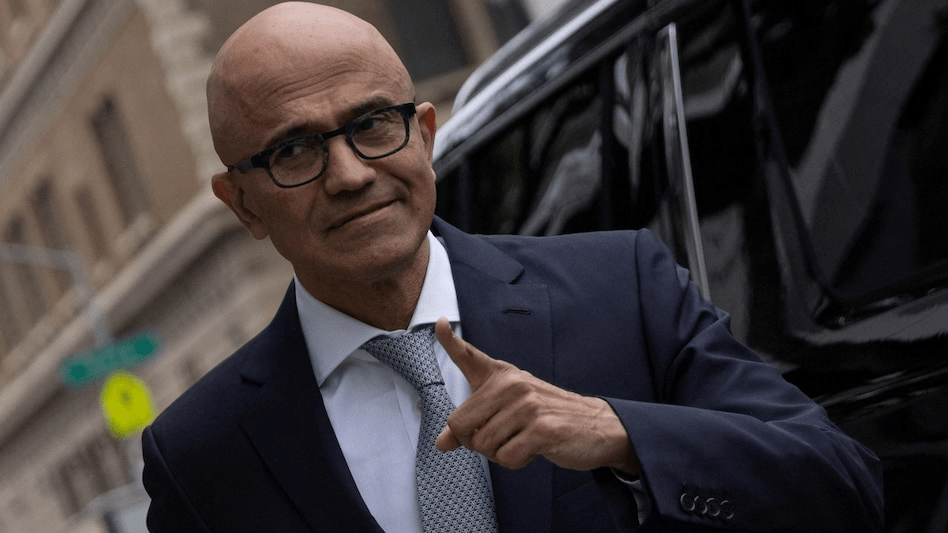
Now the internal mechanics of one of the most chaotic weekends in Silicon Valley history have been laid bare in a court of law. Microsoft CEO Satya Nadella revealed during testimony on Monday, May 11, 2026, that his company had prepared a $25 billion contingency plan to absorb Sam Altman and the entire OpenAI workforce. Therefore, as Nadella took the witness stand in the Elon Musk vs. OpenAI trial, he characterized the board’s sudden decision to fire Altman in November 2023 as “amateurish.” Meanwhile, the testimony highlighted Microsoft’s urgent mechanical necessity to protect its multi-billion dollar investment and its strategic AI roadmap. Following the legal proceedings in Oakland, California, it is now clear that Microsoft was ready to create a new subsidiary within 24 hours to house the departing talent.
Also Read | Imran Khan and Bushra Bibi Sentenced to 17 Years in Jail
The $25 Billion Price Tag: Calculating the Cost of Talent Acquisition
Now the scale of Microsoft’s commitment to AI has been quantified in a way the public had never seen. Nadella revealed that Microsoft estimated a cost of approximately $25 billion to fully integrate Sam Altman and the OpenAI team. Therefore, this figure was not just about salaries but matching the complex equity and stock compensation structures that define top-tier AI talent.
First, convincing OpenAI employees to move required Microsoft to offer packages that mirrored their expected future value at the startup. Next, the sheer number of employees—potentially reaching into the hundreds—made this a high-stakes financial gamble. Thus, the mechanical necessity of retaining the “brain trust” behind ChatGPT justified the astronomical price tag.
So while the plan was ultimately shelved after Altman’s reinstatement, it serves as a testament to the value Microsoft places on human capital. Meanwhile, the $25 billion figure highlights the extreme inflation of compensation in the generative AI sector. Therefore, Microsoft’s preparedness was as much about financial firepower as it was about strategic foresight.
The 24-Hour Subsidiary: How Microsoft Moved at Light Speed
Now the speed at which Microsoft reacted to the November 17, 2023, firing was nothing short of extraordinary. Nadella testified that within a single day, the company had finalized all legal documentation to establish a new, Microsoft-controlled organization. Therefore, the goal was to provide an immediate “landing pad” for Altman and Greg Brockman.
First, Microsoft’s legal and HR teams worked through the night to ensure that the transition would be seamless for any OpenAI employee who chose to leave. Next, the readiness of this backup plan was communicated to the world to stabilize market fears. Thus, the quick action prevented a potential “talent drain” to competitors like Google or Meta.
So the plan was designed to activate the moment negotiations with the OpenAI board hit a stalemate. Meanwhile, Nadella was personally involved in coordinating the response to ensure Microsoft’s interest remained protected. Therefore, the 24-hour turnaround remains a masterclass in corporate crisis management.
‘Amateurish’ Governance: Nadella’s Assessment of the Board’s Lapses
Now Satya Nadella did not mince words when describing the OpenAI board’s behavior during the 2023 crisis. He characterized the firing of Altman as “amateurish,” particularly given the lack of clear communication to Microsoft—OpenAI’s largest investor. Therefore, the confusion felt by the tech world was shared even at the highest levels of 1000 Microsoft Way.
First, Nadella sought to understand if the firing was due to serious issues like fraud, security concerns, or ethical violations. Next, the only public explanation provided—that Altman was not “consistently candid”—failed to satisfy Nadella’s need for clarity. Thus, the lack of a proper explanation was viewed as a failure of professional governance.
So the “vague phrase” used by the board nearly caused a total collapse of the partnership. Meanwhile, Nadella used his testimony to emphasize that transparency is a mechanical necessity for high-value business relationships. Therefore, his critique serves as a formal indictment of the old board’s decision-making process.
Also Read | Imran Khan and Bushra Bibi Sentenced to 17 Years in Jail
The Reconstitution Struggle: Microsoft’s Limited Influence on the Board
Now even after Sam Altman was reinstated, Microsoft’s attempts to shape the new board met with significant resistance. Nadella admitted during his testimony that while Microsoft suggested 13 to 14 candidates for the “reconstituted” board, none were initially selected. Therefore, the power struggle between the nonprofit board and its commercial partner was very real.
First, Nadella confessed that Microsoft had “none”—no formal power to force the board to accept its recommendations. Next, this admission highlighted the unique and often strained governance structure of OpenAI as a nonprofit-controlled entity. Thus, the multibillion-dollar investment did not translate into direct boardroom control.
So the standoff revealed the limits of Microsoft’s influence over the core decision-making of its partner. Meanwhile, the board’s independence was fiercely guarded despite the financial pressure. Therefore, the struggle for board seats remains one of the most contentious chapters of the OpenAI story.
Strategic Objections: Blocking Google and Amazon Influences
Now while Microsoft could not force its own candidates onto the board, it did exercise its right to object. Nadella revealed that he personally opposed certain candidates to prevent competitors from gaining an inside track. Therefore, the board selection process was treated as a battlefield for competitive advantage.
Nadella’s Noted Objections:
-
Diane Greene: Opposed due to her significant historical connections to Google.
-
Bing Gordon: Opposed because of his deep ties and advisory roles with Amazon.
First, these objections demonstrate Microsoft’s fear of intellectual property or strategic direction leaking to its rivals. Next, it shows that while Microsoft lacked “appointing” power, it utilized “veto” power to protect its interests. Thus, the mechanical necessity of competitive secrecy was at the forefront of Nadella’s mind.
Ilya Sutskever’s Testimony: The Failed Anthropic Merger Talks
Now another co-founder has added a new layer to the crisis narrative. Ilya Sutskever, OpenAI’s former chief scientist, testified under cross-examination that the board explored drastic measures to stabilize the company during Altman’s absence. Therefore, the possibility of a merger with Anthropic was formally considered.
First, Sutskever noted that the board looked at Anthropic as a potential “safe harbor” or partner to maintain the organization’s continuity. Next, he admitted that he was “not excited” about the proposal and did not support combining the two rivals. Thus, the merger talks were a sign of just how desperate the situation had become for the remaining board members.
So the rivalry between OpenAI and Anthropic—founded by former OpenAI executives—remains a central theme in the AI industry. Meanwhile, the failed merger talks suggest that the board was looking for any alternative to a Microsoft-led absorption. Therefore, Sutskever’s testimony confirms the extreme volatility of those nine days.
Also Read | Imran Khan and Bushra Bibi Sentenced to 17 Years in Jail
Musk’s Legal Claim: Was Microsoft Controlling OpenAI?
Now the context for all this testimony is the ongoing legal battle initiated by Elon Musk. Musk’s legal team has used Nadella’s revelations to claim that Microsoft was actively attempting to shape OpenAI’s governance. Therefore, the “backup plan” and the board objections are being framed as evidence of Microsoft’s overreach.
First, Musk argues that OpenAI has strayed from its original mission to benefit humanity and has instead become a “closed-source” subsidiary of Microsoft. Next, the $25 billion plan is being portrayed as a move to bypass the nonprofit structure entirely. Thus, the trial is focusing on whether Microsoft’s influence has compromised OpenAI’s altruistic goals.
So Nadella’s admission of attempting to influence board seats is a key part of Musk’s narrative. Meanwhile, Microsoft continues to maintain that its partnership is strictly commercial and focused on technical excellence. Therefore, the court’s final ruling will define the legal boundaries of the most powerful alliance in tech.
FAQ: Understanding the Nadella OpenAI Testimony
1. What was the $25 billion Microsoft plan? Now, it was a contingency plan to hire Sam Altman and the OpenAI team if they left the company after Altman’s firing in November 2023.
2. Why did Satya Nadella call the firing “amateurish”? First, because the OpenAI board failed to provide a clear explanation for the firing to its largest investor and acted in a way that threatened the stability of the entire AI ecosystem.
3. Did Microsoft have the power to appoint OpenAI board members? So, according to Nadella’s testimony, no. Microsoft had no formal power to force the nonprofit board to accept its candidates, though it did object to certain rivals.
4. Why did Nadella oppose Diane Greene and Bing Gordon for the board? Next, because of their ties to competitors Google and Amazon, respectively. Nadella wanted to prevent rival influence within OpenAI.
5. Was a merger between OpenAI and Anthropic really discussed? Now, yes. Ilya Sutskever confirmed that the board explored a merger with Anthropic as a backup option during the 2023 leadership crisis.
6. What is the Musk vs OpenAI trial about? Finally, Elon Musk is suing OpenAI and its leadership, claiming they breached the company’s original nonprofit mission and have become too closely tied to Microsoft’s business interests.
Also Read | Imran Khan and Bushra Bibi Sentenced to 17 Years in Jail
End….

