

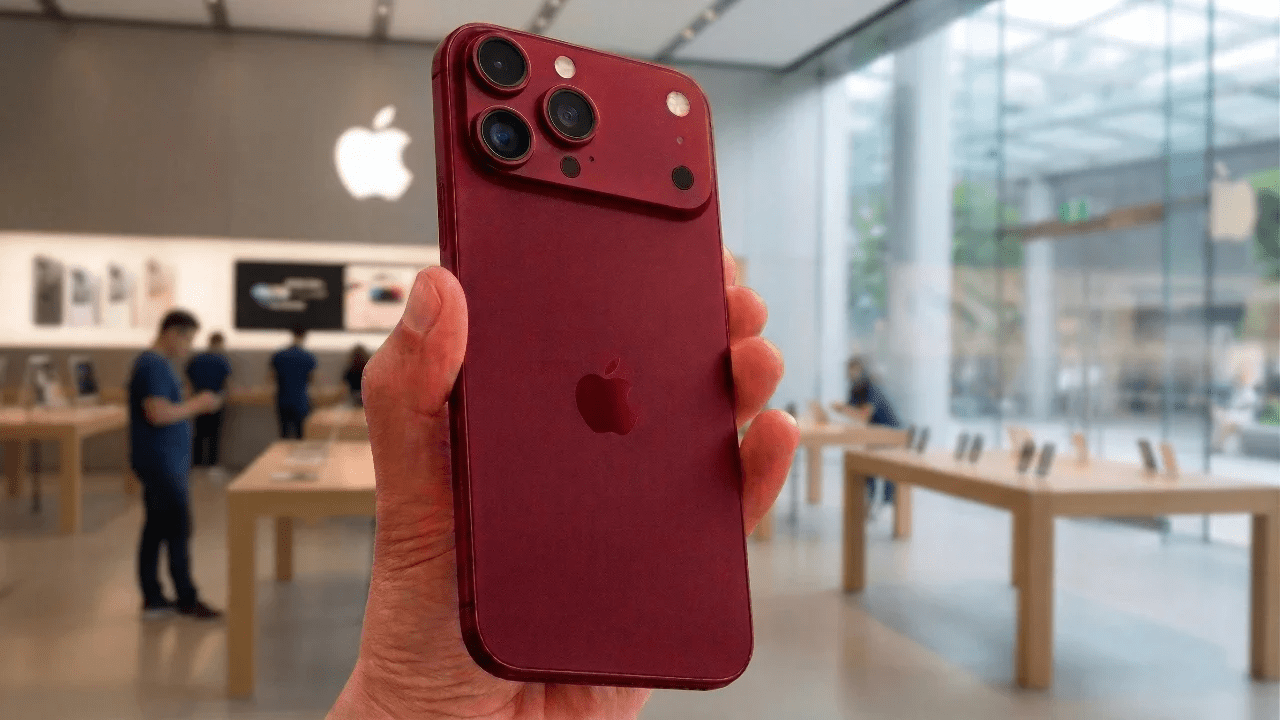
iPhone 18 Pro Max Leaks: 2nm Chip, Variable Aperture, And Apple C2 Modem Revealed
September lineup targets top hardware frustrations with a 35% narrower Dynamic Island, customized silicon packaging, and advanced photography physics.
📱 Next-Gen Flagship Spec Matrix
- The Silicon Shift: Apple A20 Pro chip jumps to TSMC’s cutting-edge 2nm node, boosting energy efficiency by an estimated 30%.
- Camera Physics: Main lens adopts a physical variable aperture system alongside a new 3-layer stacked sensor developed by Samsung.
- In-House Baseband: Qualcomm components are replaced by Apple’s proprietary C2 5G modem, featuring expanded satellite networking.
- Chassis Refinement: Screen real estate remains at 6.9 inches, but the controversial Dynamic Island is shrunk by nearly 35%.
Also Read | GUNMAN DEAD AFTER OPENING FIRE AT WHITE HOUSE CHECKPOINT; SECRET SERVICE UNHARMED
The roadmap for Apple’s upcoming premium hardware tier has come into sharp focus following an extensive consolidation of supply chain leaks and analyst assessments. The iPhone 18 Pro Max, scheduled for its traditional launch window this September, appears systematically engineered to address multi-generational user pain points rather than chasing purely aesthetic redesigns.
Industry consensus indicates that the tech giant is focusing its capital on deep component integration, structural efficiency, and physical optics. As production scaling ramps up across Asian assembly corridors, tracking data indicates that while raw performance increases remain stable, the real-world utility gains in thermal management and battery endurance will be the most significant seen in years.
Also Read | GUNMAN DEAD AFTER OPENING FIRE AT WHITE HOUSE CHECKPOINT; SECRET SERVICE UNHARMED
| Hardware Vector | Leaks & Technical Specifications | Real-World Operational Value |
|---|---|---|
| Application Processor | A20 Pro (2nm TSMC) with Wafer-Level Multi-Chip Module (WMCM) packaging | 15% speed increase; 30% power reduction; hyper-accelerated localized Apple Intelligence processing. |
| Primary Camera Hub | Variable aperture main lens; wider telephoto assembly; 3-layer stacked Samsung sensor | True mechanical depth-of-field control; sharp low-light telephoto capture; lower noise floors. |
| Power Cell & Radio | 5,100–5,200mAh capacity paired with proprietary Apple C2 5G modem | Extended daily screen-on metrics; drastically lower idle drain caused by background network hunting. |
| Display & Ergonomics | 6.9-inch display; 35% narrower Dynamic Island; seamless frame-to-glass edge | Minimized screen obstruction; smoother hand feel; signature “Dark Cherry” flagship color variant. |
The Mechanical Camera Leap and Silicon Density
According to Bloomberg’s Mark Gurman, the camera array changes on the iPhone 18 Pro lineup represent a significant historical shift for the product family. Apple is actively testing a physical variable aperture system for its primary imaging lens. This mechanism gives mobile photographers manual control over physical light exposure and native depth-of-field, eliminating total reliance on computational background blurring algorithms.
Also Read | GUNMAN DEAD AFTER OPENING FIRE AT WHITE HOUSE CHECKPOINT; SECRET SERVICE UNHARMED
Complementing this mechanical upgrade is a transition to a high-density, three-layer stacked image sensor sourced from Samsung. This architecture isolates the photodiode layer from the processing circuitry, ensuring faster readout speeds and lower dynamic noise in high-contrast environments. Look, adding true moving parts to a phone’s camera module is a massive engineering risk—but it’s the only way Apple can push past the physical limitations of tiny glass elements and combat competing large-sensor mobile arrays.
The internal architecture is simultaneously undergoing a major restructuring. The upcoming A20 Pro system-on-chip will leverage TSMC’s pioneering 2nm node, utilizing an advanced Wafer-Level Multi-Chip Module packaging strategy. By stack-integrating high-speed RAM directly alongside the main computational cores, Apple can bypass traditional bus latencies—dramatically cutting down the processing times for heavy, on-device AI model executions.
💬 Supply Chain Analysis
The Silicon Paradox: Green Disconnects
Despite the highly marketed efficiency jumps, the transition to 2nm silicon brings forward an uncomfortable environmental paradox. While a 30% reduction in daily power consumption looks clean on marketing materials, the ultra-precise lithography tools and cleanroom systems required to manufacture these chips demand massive infrastructure inputs before the phone ever ships.
Furthermore, independent repair networks point out that advanced multi-chip packaging models render component-level repairs almost impossible outside of specialized factory environments. While the outer casing relies heavily on highly recyclable aluminum and titanium alloys, the dense core silicon remains difficult to process sustainably at its end-of-life cycle.
Initial consumer focus groups remain divided. While early upgrades from older platforms like the iPhone 15 Pro series will find immediate value in the vastly improved battery capacity and modem performance, users currently holding the current-generation iPhone 17 Pro Max may find the overall visual layout too familiar to justify an immediate baseline upgrade cycle when pre-orders open this coming autumn.

