

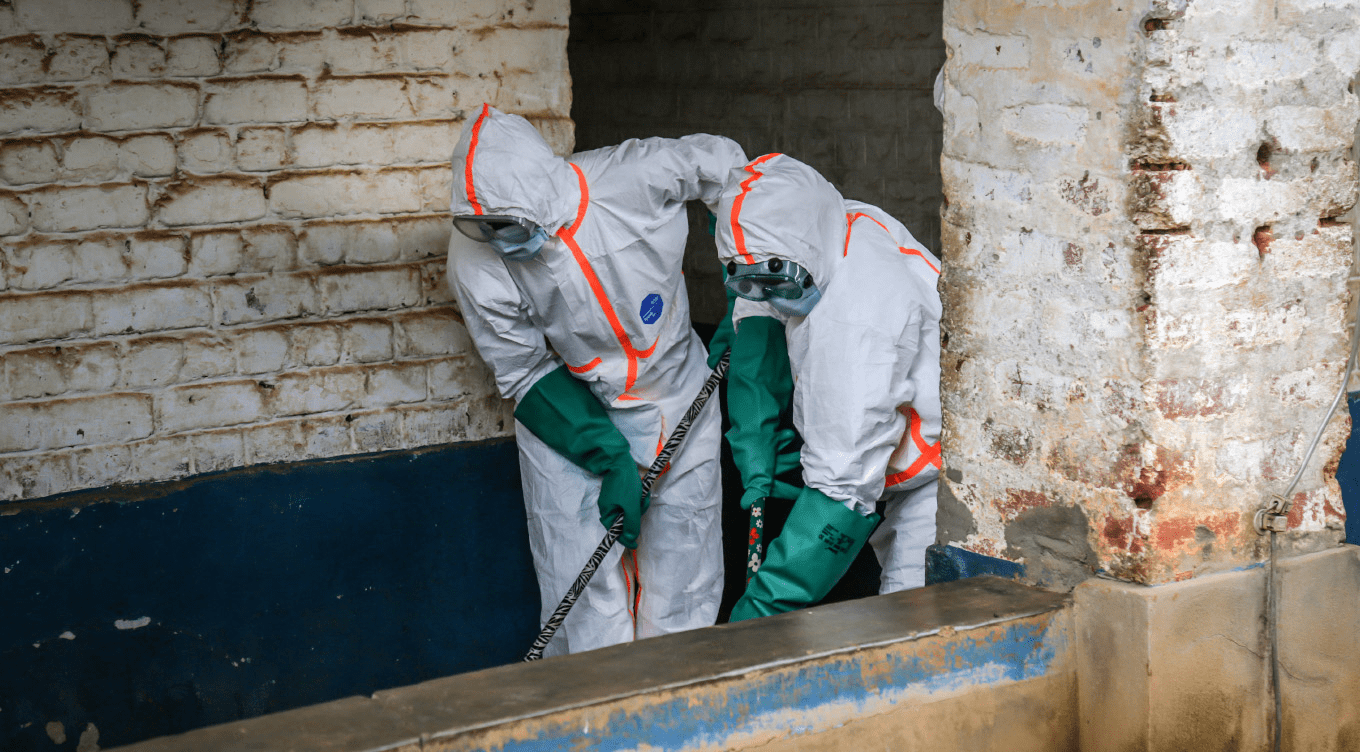
Ebola Death Toll Rises To 204 In Dr Congo As Regional Transmission Risks Escalate
Health Ministry registers 867 suspected cases while Africa CDC warns ten neighboring nations to brace for cross-border transmission.
🚨 Epidemiological Emergency Breakdown
- The Mortality Toll: Total verified fatalities inside the Democratic Republic of Congo (DRC) have climbed to 204 individuals.
- Case Manifest: Provincial surveillance teams have officially isolated and documented 867 highly suspected clinical cases.
- Frontline Vulnerability: The International Federation of the Red Cross confirmed the tragic loss of three community healthcare volunteers.
- Continental Threat: The African Union’s health architecture has placed adjacent geographical corridors on high alert following confirmed viral footprints in Uganda.
The institutional health infrastructure of the Democratic Republic of Congo is facing severe operational pressure as the mortality index of the active Ebola virus outbreak escalates. In a formal data release issued by the national Ministry of Health, medical authorities confirmed that the death toll has officially climbed to 204 individuals, drawn from a expanding baseline of 867 clinically tracked or suspected cases.
The structural management of the biological crisis has grown increasingly complex following warnings from the African Union’s centralized health authority (Africa CDC). Epidemiologists have issued strict warnings indicating that transit channels and regional high-mobility corridors face imminent exposure vectors, threatening a wider geographic footprint beyond the primary hot zones currently being managed within the DRC and Uganda.
Frontline Realities, Containment Friction, and Humanitarian Losses
Local mitigation frameworks suffered an immediate operational blow following an official statement from the Red Cross network, which confirmed that three localized humanitarian volunteers succumbed to the virus. These field operators contracted the pathogen while deploying safe, dignified burial protocols and executing fundamental community containment strategies in heavily restricted interior zones.
Look, the loss of these frontline workers isn’t just tragic—it exposes the extreme difficulty of containing this specific outbreak. When community volunteers lack optimal protective gear or face deep local skepticism, containment lines break down rapidly. It shows that managing an epidemic requires trust and airtight logistics just as much as it requires medical intervention.
Because the disease vector spreads rapidly via direct biological contact, international response teams are prioritizing several immediate structural interventions:
- Zonal Isolation Hubs: Erecting specialized field triage units across borders to intercept suspected carriers displaying early hemorrhagic or febrile symptoms.
- Surveillance Overhauls: Deploying real-time contact tracing tools along high-traffic commercial trade routes linking the DRC directly to East African transport nodes.
- Burial Management Restructuring: Redesigning emergency sanitation mandates to safeguard community handlers without alienating sensitive local cultural practices.
Evaluating Regional Transmission Risks Across Border Corridors
The declaration of cross-border risks highlights long-standing structural vulnerabilities within regional public health networks. Bilateral border checkpoints between the DRC and Uganda are notorious for experiencing massive volumes of undocumented informal trade, making systematic thermal scanning and health documentation enforcement incredibly difficult. Public health analysts indicate that if containment measures fail within these high-traffic transit hubs, secondary infection clusters could emerge in surrounding metropolitan centers within weeks.
| Administrative Jurisdiction | Reported Case Status | Primary Risk Vectors | Mandated Response Tier |
|---|---|---|---|
| DR Congo (Health Ministry) | 867 Suspected / 204 Dead | Localized community spread, frontline gear shortages. | Tier 1 — Full Outbreak Containment |
| Uganda Border Authorities | Active Footprint Identified | High-mobility market corridors, transit networks. | Tier 1 — Cross-Border Interdiction |
| Adjacent African Union States | Zero Confirmed Clusters | Secondary transport lanes, migratory population flows. | Tier 2 — Active Defensive Surveillance |

