

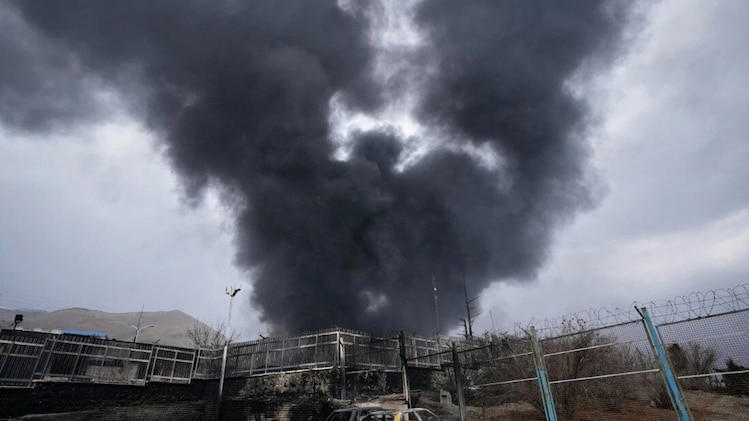
Ambassador officials complete the two-phase return process while visiting 66 recovering workers in Al Khor hospitals, as QatarEnergy rules out foul play and launches an investigation into the transient restart blast.
The cross-national consular frameworks, regional expatriate support networks, and sovereign labor protections that shield India’s massive overseas workforce have completed a highly solemn crisis response. Issuing an official diplomatic statement from Doha, the Indian Embassy confirmed that the formal Ras Laffan gas facility fire repatriation 2026 protocol wrapped up on Friday, June 26, 2026. The final group of eight mortal remains was flown back to their respective hometowns on Friday, following an earlier deployment on Thursday, June 25, that returned the first four victims. The tragedy struck during a major industrial accident on Sunday night, June 21, 2026, when an explosion tore through a processing plant inside Qatar’s massive Ras Laffan Industrial City.
The rapid completion of these diplomatic transport steps brings painful closure to twelve grieving subcontinental households.
The catastrophic incident at the onshore Barzan local gas supply facility claimed a total of 13 lives—including 12 Indian technicians and one Pakistani operator—while leaving 66 multi-national workers injured.
Moving with extreme speed, Indian Ambassador officials collaborated directly with Qatari interior ministries, corporate employer boards, and local community volunteer networks to bypass standard administrative processing delays, ensuring all victims were returned to their families within five days of the blast.
Also Read | Imran Khan and Bushra Bibi Sentenced to 17 Years in Jail
The Operational Hazard: Unpacking the Transient Plant Restart Explosion
The initial findings from process safety investigators show that the disaster was a technical failure, occurring during one of the most volatile phases of a gas facility’s operational lifecycle.
According to a formal brief delivered by Saad bin Sherida Al-Kaabi, Qatar’s Minister of State for Energy Affairs and CEO of QatarEnergy, the explosion occurred while crews were actively restarting the Barzan facility.
The processing infrastructure had been taken completely offline in December 2025 to undergo extensive, long-delayed maintenance.
When operators began feeding pressurized natural gas back into the conditioning units on June 19, the facility entered a high-risk “transient operating state.”
Late Sunday evening, an unidentified mechanical failure caused a sudden loss of containment.
The leaking high-pressure gas instantly ignited, causing a massive explosion that shook windows 70 kilometers away in central Doha and sparked a severe structural fire.
Slicing Through the Transnational Casualty and Support Matrix
While Qatar’s extensive automated fire teams brought the secondary blaze under control within hours, the human toll required a coordinated response across several diplomatic missions:
| Monitored Expatriate Support Axis | Total Impacted Count Registered | Primary Nationalities Involved | On-Site Medical / Consular Status | Direct Legal Enforcement Action Executed |
| Fatal Industrial Casualties | 13 Lives Lost Absolute | 12 Indian, 1 Pakistani | 100% Repatriated to hometowns. | Consular units expedite death certificates and insurance filings. |
| Active Trauma Injuries | 66 Workers Hospitalized | Indian, Nepali, Bangladeshi, Nigerian | Receiving full care at Al Khor medical wings. | State emergency physicians confirm all patients are stable. |
| Sovereign Infrastructure Damage | Localized Processing Unit | Qatari Domestic Supply Grid | Export pipelines are unaffected. | QatarEnergy launches an internal process safety audit. |
| Expatriate Labor Force Pool | Over 830,000 Residents | India (Largest Expat Community) | Active across petrochemical fields. | Regulators review mandatory safety rules for foreign workers. |
Also Read | Imran Khan and Bushra Bibi Sentenced to 17 Years in Jail
“An Operational Accident”: QatarEnergy Rules Out Sabotage
Beyond managing immediate logistics, Qatari authorities have been careful to separate this industrial accident from recent regional geopolitical tensions.
The underlying text of the official corporate briefings confirms that this explosion was a pure technical accident, completely unrelated to the geopolitical drone strikes that impacted alternative parts of the Ras Laffan complex back in March.
Minister Al-Kaabi visited both the Indian and Pakistani embassies in Doha to deliver formal condolences to the families of the deceased.
He emphasized that while the Barzan plant is critical for processing 1.4 billion standard cubic feet of local sales gas per day to power Qatar’s domestic electricity and water desalination networks, its temporary closure will not harm international shipments.
The country’s massive liquefied natural gas (LNG) export train networks remain fully operational, with backup fuel stores stepping in to cover domestic needs while engineers repair the damaged units.
Five Sequence Steps Consular Desks Execute for Emergency Repatriations
To ensure the remains of citizens lost in overseas industrial accidents are returned to their families safely and with dignity, preventing international legal delays, consular teams follow this sequence:
Ultimately, managing the human costs of global industrial development requires combining deep empathy with efficient administrative execution. While domestic direct tax desks guide citizens through over-the-counter filings—such as taxpayers utilizing the physical Pay at Bank Counter income tax challan for AY 2026-27 returns this week—overseas consular teams must focus on protecting workers’ families.
By building strong, cooperative links with host nations, handling sensitive transport logistics cleanly, and tracking insurance benefits carefully, diplomats provide an essential safety net for our global workforce.
Following these vital consular updates keeps your understanding of international labor policy perfectly accurate, showing how cooperative diplomacy stands strong to support migrant communities during unexpected global tragedies.
FAQ Section
What is the final status of the Ras Laffan gas facility fire repatriation 2026 process?
The Indian Embassy in Doha has successfully completed the repatriation process, returning the remains of all 12 Indian nationals killed in the explosion back to India in two phases on June 25 and June 26, 2026.
What caused the deadly industrial explosion inside Qatar’s Ras Laffan Industrial City?
Qatar’s Ministry of Interior and QatarEnergy confirmed the blast was a technical operational accident that occurred during the restart of the Barzan local gas supply facility. The plant had been offline since December 2025 for maintenance, and an unexpected loss of containment during start-up triggered the explosion.
Will the tragic accident affect international energy markets or global LNG exports?
No. Minister of State for Energy Affairs Saad bin Sherida Al-Kaabi explicitly assured international markets that the accident will not affect Qatar’s LNG export capabilities. The Barzan facility operates separate lines dedicated to processing sales gas for local electricity generation and water desalination.
Also Read | Imran Khan and Bushra Bibi Sentenced to 17 Years in Jail
End…..

