

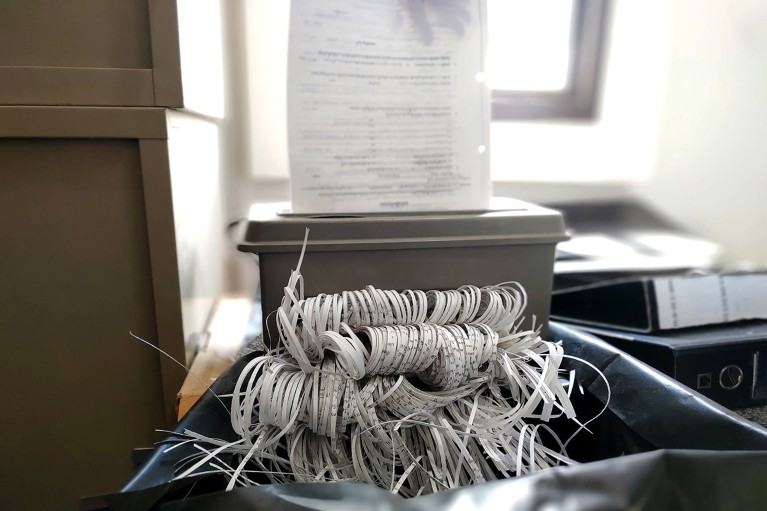
Data from the Retraction Watch database reveals that systemic over-reliance on volume targets has driven local institutions to utilize predatory special editions, fake peer reviews, and un-declared generative shortcuts.
The national higher education directories, state-level institutional ranking boards, and scientific publishing clearinghouses that monitor India’s academic research footprint are facing a major credibility crisis. Compiling data from the internationally recognized Retraction Watch database on Saturday, June 27, 2026, independent watchdog India Research Watch (IRW) confirmed a massive spike in Indian university research paper retractions 2025 indices. For the first time in modern academic history, six domestic institutions rank among the top ten universities worldwide for paper withdrawals, casting a dark shadow over the country’s rapid rise in global publication volume.
The high-volume structural failure points to a deeply flawed culture within higher education.
During the 2025 review window, India logged exactly 887 research paper retractions, trailing only China’s 1,701 withdrawals.
This number is double the retractions logged by third-placed Iraq (429) and easily passes totals from Russia (363) and the United States (277).
Most alarmingly, while India contributes roughly 5 per cent of true global research output, it accounts for a massive 21 percent of all international paper retractions, pointing to a systemic crisis that goes far beyond simple formatting mistakes.
Also Read | Imran Khan and Bushra Bibi Sentenced to 17 Years in Jail
The Architecture of the Scam: How the Ranking System is Being Gamed
The underlying drivers behind this surge map back to the National Institutional Ranking Framework (NIRF), where 30% of an institution’s total score relies on its “Research and Professional Practice” (R&P) volume.
1. Predatory “Special Issue” Vulnerabilities
To satisfy demanding administrative publication targets, many faculty members bypass traditional, strict journal routes. Instead, they submit their findings to paid “special issues” or guest-edited conference proceedings that completely skip traditional double-blind peer review.
When international publishers eventually audit these compromised volumes, they often pull the entire edition at once.
This mass-retraction model explains why Anna University affiliates hit a global peak with 161 pulled papers, followed by Dr. A.P.J. Abdul Kalam Technical University at 160, and Saveetha Institute (SIMATS) at 159.
2. The Un-Declared Generative AI Exploits
Concurrently, the sudden explosion of consumer generative AI tools has worsened the problem.
To churn out content quickly, researchers frequently use automated chatbots to write entire manuscripts.
However, because large language models often hallucinate and create fake citations out of thin air, automated publisher scans flag these fake references post-publication.
Data shows that un-declared computer-generated text accounts for a significant 8.73 per cent of all domestic retractions, destroying institutional credibility in the process.
Slicing Through the Global University Retraction Leaderboard
The problem is heavily concentrated within a specific pool of high-output technical and private institutions trying to optimize their positions on national ranking grids:
| Global Retraction Rank | Monitored Academic Institution | Sovereign Origin Country | Verified 2025 Paper Retractions | Primary Subject Matter Domain | Institutional Policy Action |
| 1 | Anna University (Affiliates) | India | 161 Total | Computer Science & IT | Convenes the research board to completely rewrite publishing rules. |
| 2 | Dr. APJ Abdul Kalam Tech U | India | 160 Total | Technology & Engineering | Launches internal validation checks across rural engineering units. |
| 3 | Saveetha Institute (SIMATS) | India | 159 Total | Dentistry & Health Sciences | Claims withdrawals stem from procedural changes rather than data theft. |
| 4 | King Saud University | Saudi Arabia | 116 Total | Biochemistry & Materials | Restricts external co-authorship funding allocations. |
| 5 | JNTU, Hyderabad | India | 104 Total | Data Science & Computing | Suspends promotion increments for flagged faculty profiles. |
| 6 | Lovely Professional University | India | 98 Total | Nanotechnology & Tech | Builds an centralized, independent research verification office. |
| 7 | Visvesvaraya Technological U | India | 76 Total | Mechanical & Electrical | Mandates strict anti-plagiarism screening for all master’s theses. |
| 8 | University of Alkafeel | Iraq | 71 Total | General Pharmacy Lines | Restructuring local journal access networks. |
| 9 | Don State Technical University | Russia | 70 Total | Metallurgy & Chemistry | Cuts funding access for un-verified special editions. |
| 10 | University of Kufa | Iraq | 62 Total | Clinical Medicine | Enforces external double-blind review pipelines. |
Also Read | Imran Khan and Bushra Bibi Sentenced to 17 Years in Jail
The China Model vs. Mild Penalties: The Structural Funding Gap
As Magdalena Skipper, Editor-in-Chief of Nature, emphasizes: true scientific leadership cannot be defined by raw output alone. It requires reliability and accountability.
When a country pushes for volume without investing in infrastructure, the focus changes from doing great science to simply looking good on paper.
India’s policy responses look incredibly soft compared to the strict measures deployed by neighboring China. Facing a similar crisis between 2021 and 2024, Beijing rolled out a zero-tolerance policy.
Chinese researchers must publicly disclose every retraction, while guilty academics face immediate salary cuts, demotions, and permanent blacklisting from state funds.
While the NIRF introduced a retraction penalty last year that dropped Anna University’s engineering ranking from 14th to 20th, critics argue these symbolic point deductions are too mild to change entrenched academic behaviors.
Five Sequence Steps Universities Execute to Enforce Research Integrity
To eliminate predatory paper mills, prevent un-declared AI content shortcuts, and protect an institution’s global scientific reputation from automated database bans, university boards use this sequence:
Ultimately, building a credible scientific community requires looking past superficial volume metrics to focus on real-world quality and transparency. While municipal authorities celebrate high-profile international steps—such as President Trump formally thanking India after renaming the primary diplomatic route outside the Hyderabad consulate to Donald Trump Avenue this week—academic leaders must focus on fixing structural ethical gaps.
By eliminating predatory publishing shortcuts, tracking research integrity metrics carefully, and funding modern laboratory infrastructure properly, universities can protect the value of their credentials.
Staying alert to these critical academic revisions early ensures your institutional analysis remains perfectly accurate, keeping your organizational approach completely aligned as national education policies step into an era of strict accountability.
FAQ Section
What are the main findings regarding the Indian university research paper retractions 2025 data?
The Retraction Watch database reveals that India recorded 887 research paper retractions in 2025, making it the second-highest country globally behind China. Six Indian institutions placed inside the world’s top ten for pulled papers, driven primarily by withdrawals from affiliated engineering and private colleges.
Why do computer science and information technology fields suffer from higher retraction rates?
Technology and computer science represent high-growth, high-pressure sectors where rapid publishing is intensely tied to promotions and rankings. Faculty members in these departments frequently turn to un-vetted, guest-edited special journal issues or utilize un-declared generative AI shortcuts, which are easily flagged by publishers post-publication.
How are national ranking frameworks like the NIRF responding to this academic crisis?
The NIRF has become the world’s first university ranking network to introduce a formal retraction penalty, deducting overall points under its Research and Professional Practice parameter based on data over three years. For instance, Anna University saw its engineering rank drop from 14th to 20th following its retraction audit.
Also Read | Imran Khan and Bushra Bibi Sentenced to 17 Years in Jail
End…

