

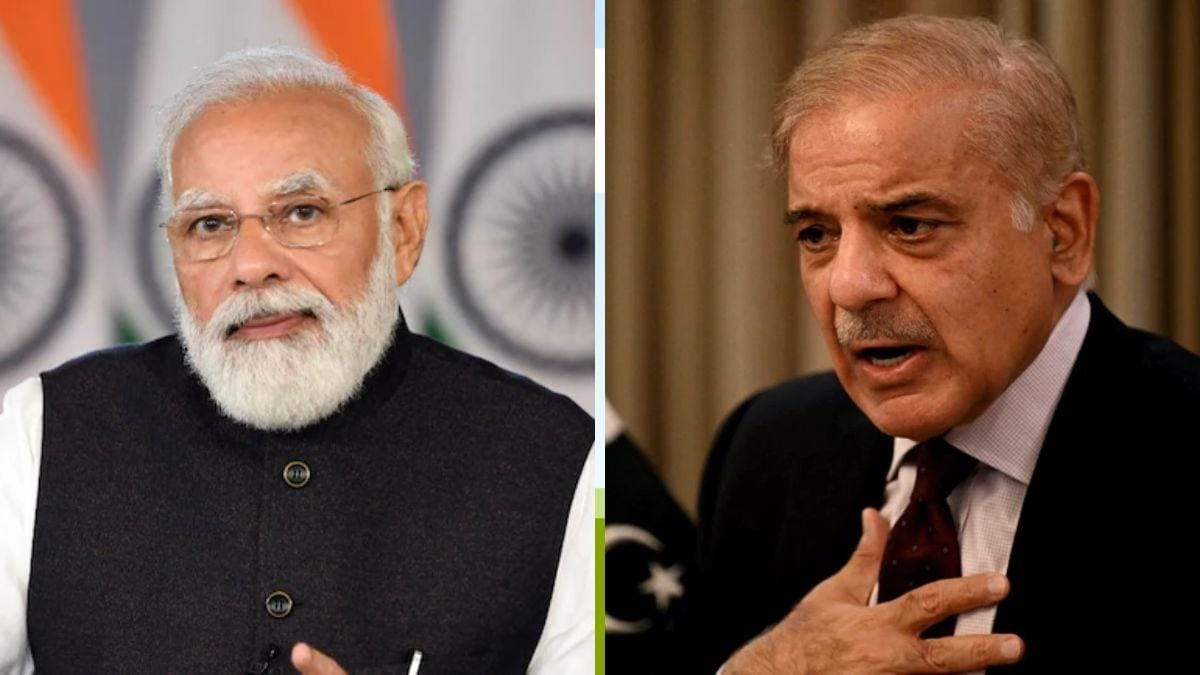
Led by the Centre for Peace and Progress, an elite civil coalition urges Prime Ministers Modi and Sharif to re-engage, proposing a series of high-stakes cross-border trade and transport concessions.
NEW DELHI — In a synchronized civil intervention, a coalition of 117 eminent personalities from both India and Pakistan has issued a joint open letter to Prime Minister Narendra Modi and Pakistani Prime Minister Shehbaz Sharif. The cross-border petition urgently requests both nuclear-armed administrations to dismantle administrative blockades, reinstate senior ambassadors, and return to structured, comprehensive bilateral negotiations.
The initiative arrives amidst an intensely icy period in bilateral relations following India’s severe defensive measures during Operation Sindoor. Regulated by the New Delhi-based Centre for Peace and Progress, the appeal marks a collective effort by civil, military, and political elites to break the diplomatic deadlock.
The Human and Humanitarian Cost of Hostility
Speaking to the media, OP Shah, Chairman of the Centre for Peace and Progress and primary facilitator of the initiative, stated that the current political freeze is entirely unsustainable and continuously erodes the economic livelihoods of ordinary citizens across the subcontinent.
Related Article Suggestions
Hardik Pandya Set to Exit Mumbai Indians: CSK, KKR Lead 7-Team Race in IPL Transfer Window
Daily Horoscope: How the July 1 Jupiter-Chiron Clash Impacts Your Zodiac Sign
Ramayana Part 1 Tops IMDb’s Most Anticipated Indian Movies List for Late 2026
Centre Extends Status Quo on Small Savings Scheme Interest Rates for Ninth Consecutive Quarter
Landlords Cannot Charge Tenants for Routine Repainting, Rules Delhi High Court
The text of the letter highlights that India and Pakistan collectively house nearly one-fifth of humanity, with an overwhelmingly young demographic profile. The signatories stress that the financial, structural, and social costs of prolonged state hostility systematically deprive millions of young people of baseline economic security, development, and regional integration.
Bilateral Peace Blueprint: Proposed Confidence-Building Measures (CBMs)
├── [Diplomatic Tier] ──> Reinstate High Commissioners in New Delhi & Islamabad
├── [Logistical Tier] ──> Reopen airspace for commercial aviation routes
└── [Commercial Tier] ──> Reactivate Attari-Wagah land border for direct trade
Proposing concrete Confidence-Building Measures
Rather than issuing a purely ideological statement, the 117 signatories outlined a granular roadmap of Confidence-Building Measures (CBMs) intended to rapidly de-escalate regional tensions:
-
Restoration of High Commissions: Reinstating full diplomatic titles and appointing High Commissioners back to New Delhi and Islamabad to stabilize official communication.
-
Border and Transit Re-activation: Fully reopening the critical Attari-Wagah land border for commercial trade, alongside reviving the legacy Srinagar-Muzaffarabad and Delhi-Lahore transport links.
-
Airspace Re-opening: Permitting commercial carriers to utilize cross-border airspace, directly dropping regional operational costs and flight travel times.
-
Civil and Cultural Exchange: Re-authorizing normal visa channels to permit monitored movement for divided families, academic researchers, journalists, and religious pilgrims visiting historical heritage sites like Kartarpur Sahib and Sharada Peeth.
High-Profile Signatories Bridging the Divide
The list of endorsements spans former cabinet ministers, senior intelligence veterans, and human rights figures from both nations.
From India, prominent political signatures include National Conference chief Dr. Farooq Abdullah, Peoples Democratic Party (PDP) leader Mehbooba Mufti, Congress’s Mani Shankar Aiyar, and former chief of the Research and Analysis Wing (RAW) A.S. Dulat. The Pakistani delegation is anchored by former Minister of Foreign Affairs Khurshid Mahmud Kasuri, nuclear physicist Pervez Hoodbhoy, and veteran diplomat Ashraf Jehangir Qazi.
Navigating the Terror-vs-Talks Paradox
When pressed on India’s rigid policy position following historic and recent cross-border security breaches—including the 26/11 Mumbai strikes, Pulwama, and the Pahalgam incursions that preceded Operation Sindoor—OP Shah maintained an uncompromising defense of unconditional dialogue.
“I have complete faith in continuous discussion,” Shah remarked, stating that deep-seated intelligence friction, national security concerns, and terrorism cannot be resolved without active, multi-level diplomatic channels. He asserted that the letter does not endorse any singular political position, but rather pleads for human survival above geopolitical confrontation.
What Happens Next
The appeal faces a steep climb in New Delhi’s official policy circles. Leaders within the ruling Bharatiya Janata Party (BJP) have already publicly dismissed the letter, characterizing its demands as a dangerous echo of external narratives that undermine India’s firm stance.
With the Indian government maintaining that “talks and terror cannot coexist,” any formal relaxation of visa limits, trade borders, or airspace restrictions remains strictly contingent on verified, structural crackdowns on terror infrastructure by the Pakistani establishment.
Frequently Asked Questions (FAQs)
Who organized this joint India-Pakistan open letter?
The letter was organized and spearheaded by OP Shah, the chairman of the New Delhi-based Centre for Peace and Progress.
Which prominent figures signed the peace petition?
The letter features 117 high-profile signatories, including Indian politicians Farooq Abdullah and Mehbooba Mufti, former RAW chief A.S. Dulat, and former Pakistani Foreign Minister Khurshid Mahmud Kasuri.
What is the Indian government’s official stance on resuming trade and talks?
New Delhi continues to adhere to a strict security doctrine, stating that comprehensive diplomatic dialogue and open trade cannot resume until Pakistan takes verifiable, permanent steps to eliminate cross-border terror facilities.
Related Article Suggestions
Hardik Pandya Set to Exit Mumbai Indians: CSK, KKR Lead 7-Team Race in IPL Transfer Window
Daily Horoscope: How the July 1 Jupiter-Chiron Clash Impacts Your Zodiac Sign
Ramayana Part 1 Tops IMDb’s Most Anticipated Indian Movies List for Late 2026
Centre Extends Status Quo on Small Savings Scheme Interest Rates for Ninth Consecutive Quarter
Landlords Cannot Charge Tenants for Routine Repainting, Rules Delhi High Court

