

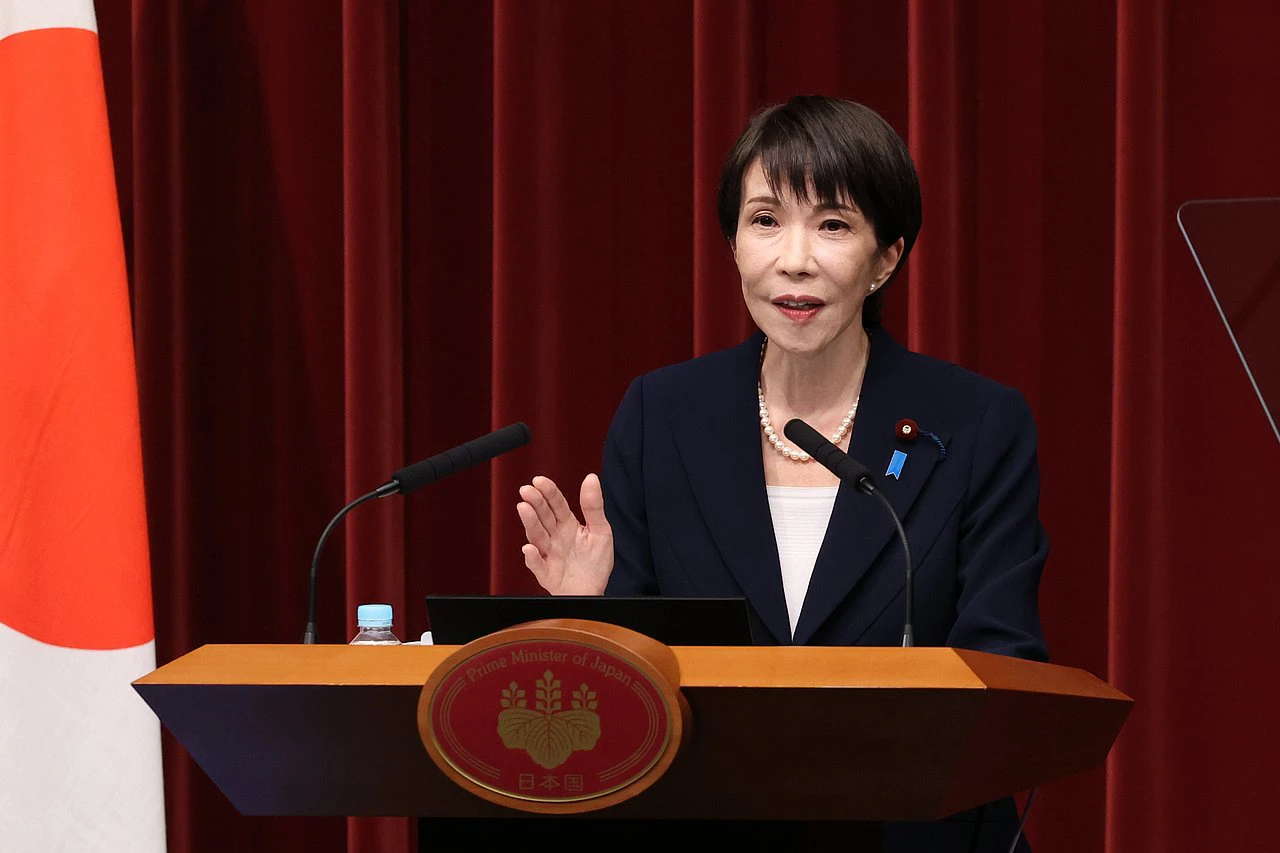
A formal ceremonial welcome at Rashtrapati Bhavan launches the 16th India-Japan Annual Summit, centering heavily on economic decoupling, technology infrastructure, and regional defense.
NEW DELHI — Japanese Prime Minister Sanae Takaichi received a formal ceremonial welcome at the forecourt of Rashtrapati Bhavan on Thursday morning, marking her first official diplomatic visit to India since taking office. Prime Minister Narendra Modi warmly received his Japanese counterpart upon her arrival, establishing the tone for advanced bilateral talks. Following the review of the guard of honour, both leaders formally introduced members of their respective ministerial delegations before transitioning into private, high-stakes diplomatic deliberations.
Laying the Framework for a Critical Partnership
The diplomatic reception follows Prime Minister Takaichi’s arrival on Wednesday evening, where she was received at the airport by Minister of State Jitendra Singh. Highlighting the strategic weight of the encounter, Ministry of External Affairs (MEA) spokesperson Randhir Jaiswal noted that this three-day official visit serves as a foundational pivot to advance the established India-Japan Special Strategic and Global Partnership.
The primary vehicle for these discussions is the 16th India-Japan Annual Summit, an active diplomatic assembly hosted in the national capital following PM Modi’s visit to Tokyo last August. The current summit is heavily engineered to evaluate and strengthen mutual interests, specifically focusing on creating economic buffer systems independent of regional manufacturing dominance.
Related Article Suggestions
Hardik Pandya Set to Exit Mumbai Indians: CSK, KKR Lead 7-Team Race in IPL Transfer Window
Daily Horoscope: How the July 1 Jupiter-Chiron Clash Impacts Your Zodiac Sign
Ramayana Part 1 Tops IMDb’s Most Anticipated Indian Movies List for Late 2026
Centre Extends Status Quo on Small Savings Scheme Interest Rates for Ninth Consecutive Quarter
Landlords Cannot Charge Tenants for Routine Repainting, Rules Delhi High Court
Key Pillars of the Summit Agenda
As both democracies navigate evolving defense and maritime realities within the Indo-Pacific theater, the formal talks are structured to finalize agreements across several core operational sectors:
-
Economic Security and Supply Chain Resilience: Accelerating a 10-trillion-yen investment roadmap with an emphasis on migrating high-tech corporate manufacturing capitals directly into India’s industrial corridors.
-
Critical and Emerging Technologies: Finalizing resource allocations and research sharing for semiconductor fabrication, artificial intelligence frameworks, and next-generation battery ecosystems.
-
Defense & Maritime Interoperability: Elevating joint military infrastructure programs and finalizing collaborative frameworks to ensure navigational security across major sea lanes.
-
Energy Infrastructure Support: Assessing technical and financial support architectures to fortify long-term oil and clean energy safety buffers amid global supply chain shocks.
What Happens Next
Over the remaining duration of her three-day visit, Prime Minister Takaichi, alongside a heavyweight delegation of over 50 prominent Japanese corporate executives, will engage in a series of roundtable meetings with Indian business leaders. The final sessions of the summit are widely expected to conclude with the signing of enhanced economic security protocols and a consolidated technological framework before the Japanese delegation departs New Delhi.
Frequently Asked Questions (FAQs)
What is the purpose of Japanese PM Sanae Takaichi’s visit to India?
Prime Minister Takaichi is on an official three-day visit to participate in the 16th India-Japan Annual Summit, intended to review and deepen bilateral cooperation regarding regional trade, security, and joint technical investments.
Why is the 16th Annual Summit being held in New Delhi instead of other regions?
While alternative venues like Guwahati were initially considered for previous summit iterations, recent schedules and tight parliamentary commitments kept the focus and operational hub entirely within the national capital.
Which key corporate areas are expected to see the highest investment?
Economic discussions are focused extensively on securing semiconductor supply chains, expanding electronic component manufacturing, advancing clean mobility infrastructure, and accelerating high-speed rail integration.
Related Article Suggestions
Hardik Pandya Set to Exit Mumbai Indians: CSK, KKR Lead 7-Team Race in IPL Transfer Window
Daily Horoscope: How the July 1 Jupiter-Chiron Clash Impacts Your Zodiac Sign
Ramayana Part 1 Tops IMDb’s Most Anticipated Indian Movies List for Late 2026
Centre Extends Status Quo on Small Savings Scheme Interest Rates for Ninth Consecutive Quarter
Landlords Cannot Charge Tenants for Routine Repainting, Rules Delhi High Court

