

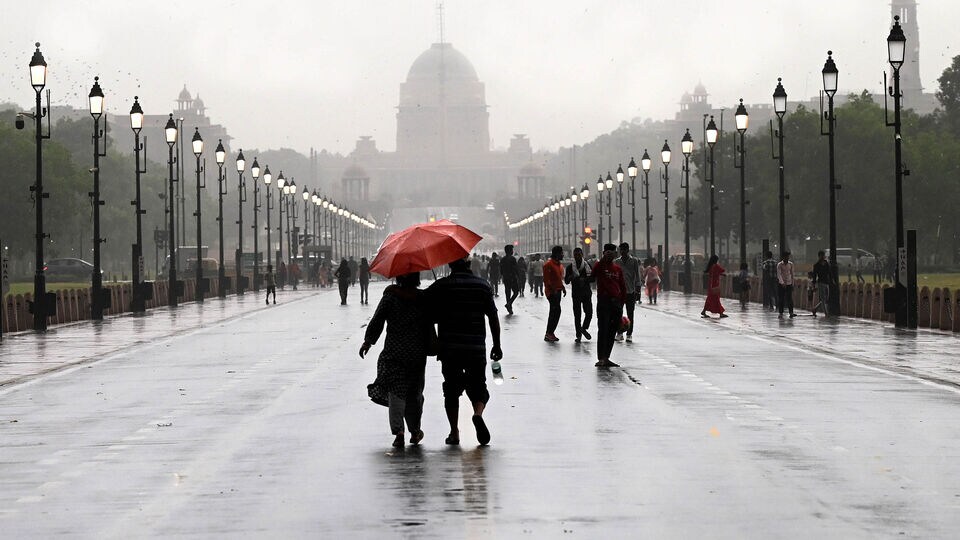
The Southwest Monsoon officially hit the national capital on July 2, marking its first July onset since 2021. Concurrently, intense downpours have triggered localized transit crises in Mumbai and flash flood alerts in Jammu and Kashmir.
NEW DELHI — The India Meteorological Department (IMD) officially declared the arrival of the Southwest Monsoon in Delhi on Thursday morning. Reaching the capital five days after its historical baseline benchmark of June 27, the system brought widespread, highly anticipated relief from prolonged summer humidity, alongside immediate waterlogging in lower-tier neighborhoods.
Meteorological records show that this is the first time since 2021 that the monsoon’s formal entry into the capital has slipped past the June boundary into July.
Extreme Suburban Downpours Inundate Mumbai
While Delhi experienced its initial seasonal showers, Mumbai continued to struggle under a relentless, highly concentrated precipitation cycle. The financial capital woke up to widespread civic disruptions on Thursday as continuous heavy rain overwhelmed local drainage infrastructure.
Related Article Suggestions
Hardik Pandya Set to Exit Mumbai Indians: CSK, KKR Lead 7-Team Race in IPL Transfer Window
Daily Horoscope: How the July 1 Jupiter-Chiron Clash Impacts Your Zodiac Sign
Ramayana Part 1 Tops IMDb’s Most Anticipated Indian Movies List for Late 2026
Centre Extends Status Quo on Small Savings Scheme Interest Rates for Ninth Consecutive Quarter
Landlords Cannot Charge Tenants for Routine Repainting, Rules Delhi High Court
24-Hour Peak Rainfall Metrics (Mumbai Suburbs):
Surface Stations:
├── Juhu:          ████████████████████ 205 mm
└── Suburb Avg:    ██████████████████░░ >200 mm
According to regional data compiled by the Brihanmumbai Municipal Corporation (BMC), multiple suburban pockets logged over 200 mm of intense rainfall over a 24-hour window. The torrential activity severely slowed traffic along major expressways and impacted suburban rail timetables, prompting the IMD to issue extended warnings for sustained downpours through the remainder of the evening.
Flash Flood and Landslide Threats in Jammu & Kashmir
The outer bands of the heavy weather system also advanced aggressively into the northern hill territories. Torrential downpours hit Bhalesa, located within Jammu and Kashmir’s mountainous Doda district.
Local administrative teams have been placed on high alert due to rapid water accumulation in seasonal streams. Environmental authorities have warned that the persistent intensity increases the immediate risk of:
-
Sudden structural landslides along steep, unstable slopes
-
Flash floods throughout narrow river valleys
-
Extended road blockages on primary transit highways
Deficit Concerns Loom Despite the Onset
Despite the aggressive, visual nature of the current rainfall spanning major metros, broader national accumulation statistics paint a far more cautious picture. In an analytical bulletin released alongside active tracking metrics, the IMD indicated that the overall national monsoon deficit currently hovers around 40 percent.
Furthermore, central long-range climate models project that the monthly average rainfall for the entirety of July is expected to trend slightly below normal levels, a reality that could impact agricultural sowing schedules across rural states.
What Happens Next
The IMD projects steady cloud cover and recurring thunderstorm intervals across Delhi and its surrounding National Capital Region (NCR) over the next 48 to 72 hours. In Mumbai, civic bodies are keeping high-capacity water pumps on standby to combat localized urban flooding during upcoming high-tide phases. Travelers navigating the mountainous routes of Jammu and Kashmir are strongly urged to verify highway clearance logs before moving toward high-elevation passes.
Frequently Asked Questions (FAQs)
When does the monsoon usually arrive in Delhi?
The standard baseline date for the monsoon to officially reach Delhi is June 27. The current arrival on July 2 reflects a five-day delay.
Which parts of Mumbai recorded the highest rainfall?
Areas around Mumbai’s Juhu suburb recorded some of the highest metrics, crossing 205 mm of concentrated downpour over a single 24-hour cycle.
Is India out of the monsoon deficit with these heavy rains?
No. Despite heavy localized downpours in Mumbai and Delhi, the overall national monsoon deficit remains at roughly 40 percent, with the IMD projecting below-normal average rainfall totals for July.
Related Article Suggestions
Hardik Pandya Set to Exit Mumbai Indians: CSK, KKR Lead 7-Team Race in IPL Transfer Window
Daily Horoscope: How the July 1 Jupiter-Chiron Clash Impacts Your Zodiac Sign
Ramayana Part 1 Tops IMDb’s Most Anticipated Indian Movies List for Late 2026
Centre Extends Status Quo on Small Savings Scheme Interest Rates for Ninth Consecutive Quarter
Landlords Cannot Charge Tenants for Routine Repainting, Rules Delhi High Court

