

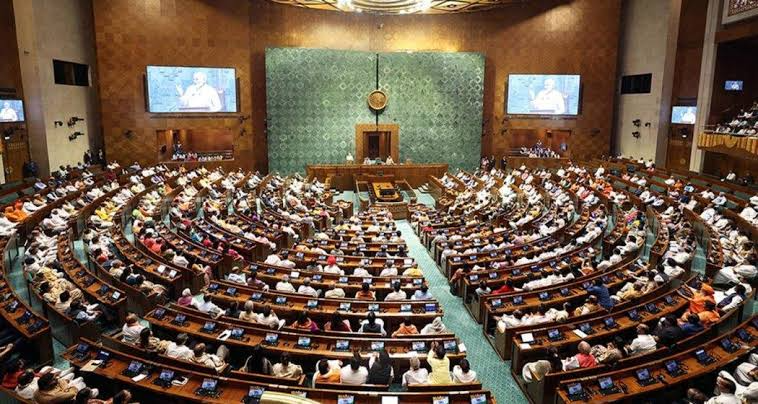
The legislative framework mandating immediate termination for any Prime Minister, Chief Minister, or Cabinet member held in custody for over a month heads to the floor with its central provisions intact.
NEW DELHI — A major legislative battle is brewing for the upcoming Monsoon Session of Parliament, scheduled to begin on July 20, as a specialized review panel prepares to finalize its report on a law that ends “governance from prison.”
According to internal legislative sources, the 31-member Joint Parliamentary Committee (JPC) is on track to officially adopt its final, revised draft of the 130th Constitution Amendment Bill during its crucial assembly on July 17.
Related Article Suggestions
Hardik Pandya Set to Exit Mumbai Indians: CSK, KKR Lead 7-Team Race in IPL Transfer Window
Daily Horoscope: How the July 1 Jupiter-Chiron Clash Impacts Your Zodiac Sign
Ramayana Part 1 Tops IMDb’s Most Anticipated Indian Movies List for Late 2026
Centre Extends Status Quo on Small Savings Scheme Interest Rates for Ninth Consecutive Quarter
Landlords Cannot Charge Tenants for Routine Repainting, Rules Delhi High Court
Operational Mechanics of the 30-Day Eviction Rule
The core objective of the draft statute—originally moved in the Lok Sabha last year by Union Home Minister Amit Shah—is to establish a strict moral and operational threshold for top-tier political positions. Rather than waiting years for a formal judicial conviction, the bill targets the immediate interim period of detention:
Proposed Ministerial Disqualification Workflow:
[Arrest Under Serious Charge] ──> Crime carries 5+ years minimum penalty
             │
             ▼
[30 Consecutive Days in Custody] ──> Remand, judicial custody, or police detention
             │
             ▼
[Day 31: Mandatory Termination] ──> Automatic exit or direct removal by President/Governor
Under this structure, if an executive figure is accused of an offense carrying a potential prison term of five years or more, they must secure bail within a month. If they remain behind bars on the 31st consecutive day, their authority is nullified legally.
Severe Pushback and Dissent From the Opposition
The draft has split the political spectrum, sparking intense accusations of constitutional overreach. Prominent figures from the opposition bloc have heavily boycotted the committee’s sessions under Chairperson Aparajita Sarangi, a ruling party MP, claiming the process is merely being used to rubber-stamp an aggressive executive tool.
Opposition lawmakers argue that the bill is explicitly anti-federal, violates the basic tenets of natural justice, and weaponizes pre-trial detention. Their primary concern is that an official loses power solely based on an arrest, completely flipping the democratic principle of “innocent until proven guilty.”
Furthermore, critics have explicitly cited the prolonged jail terms of opposition leaders—such as Arvind Kejriwal and Hemant Soren, who both spent well over 100 days incarcerated during central agency corruption probes—as a template for how the law could be used to intentionally collapse rival state administrations. Panel members Asaduddin Owaisi (AIMIM) and Supriya Sule (NCP-SP) are reportedly compiling robust, formal notes of dissent to challenge the report’s submission.
Safeguards Introduced to Address Potential Abuse
In response to concerns regarding political misuse, treasury bench members note that the updated committee text will introduce narrow legislative guardrails. While the core 30-day automatic exit clause remains unchanged, the JPC is expected to recommend tightening the list of applicable crimes to specific economic defaults or major security violations, preventing local administrations from triggering the law using minor municipal infractions.
Government defenders reject the claim that the law violates natural justice, stating that a 30-day window provides a truly innocent leader with ample opportunity to seek judicial relief from independent courts.
What Happens Next
Once the JPC adopts the draft on July 17, the bill moves directly to the parliamentary floor. Because this represents a core modification to the text of the Constitution affecting Articles 75 and 164, it requires a strict two-thirds majority in both houses to become law—meaning the ruling coalition must secure significant voting numbers to successfully enact the statute when the session begins on July 20.
Frequently Asked Questions (FAQs)
What does the 130th Constitution Amendment Bill change?
It creates a rule where any Minister, Chief Minister, or Prime Minister automatically loses their executive post if they are held in custody for 30 consecutive days under serious criminal allegations.
How does this contrast with current qualification laws?
Under the current Representation of the People Act, an elected official is only stripped of power after a court issues a formal criminal conviction and a sentence of two years or more. This amendment makes a 30-day detention an immediate ground for losing executive office.
Can a removed minister return if they get bail later?
Yes. The proposed text allows a disqualified individual to be reappointed to their post if they are subsequently cleared or granted bail by the judiciary.
Related Article Suggestions
Hardik Pandya Set to Exit Mumbai Indians: CSK, KKR Lead 7-Team Race in IPL Transfer Window
Daily Horoscope: How the July 1 Jupiter-Chiron Clash Impacts Your Zodiac Sign
Ramayana Part 1 Tops IMDb’s Most Anticipated Indian Movies List for Late 2026
Centre Extends Status Quo on Small Savings Scheme Interest Rates for Ninth Consecutive Quarter
Landlords Cannot Charge Tenants for Routine Repainting, Rules Delhi High Court

