

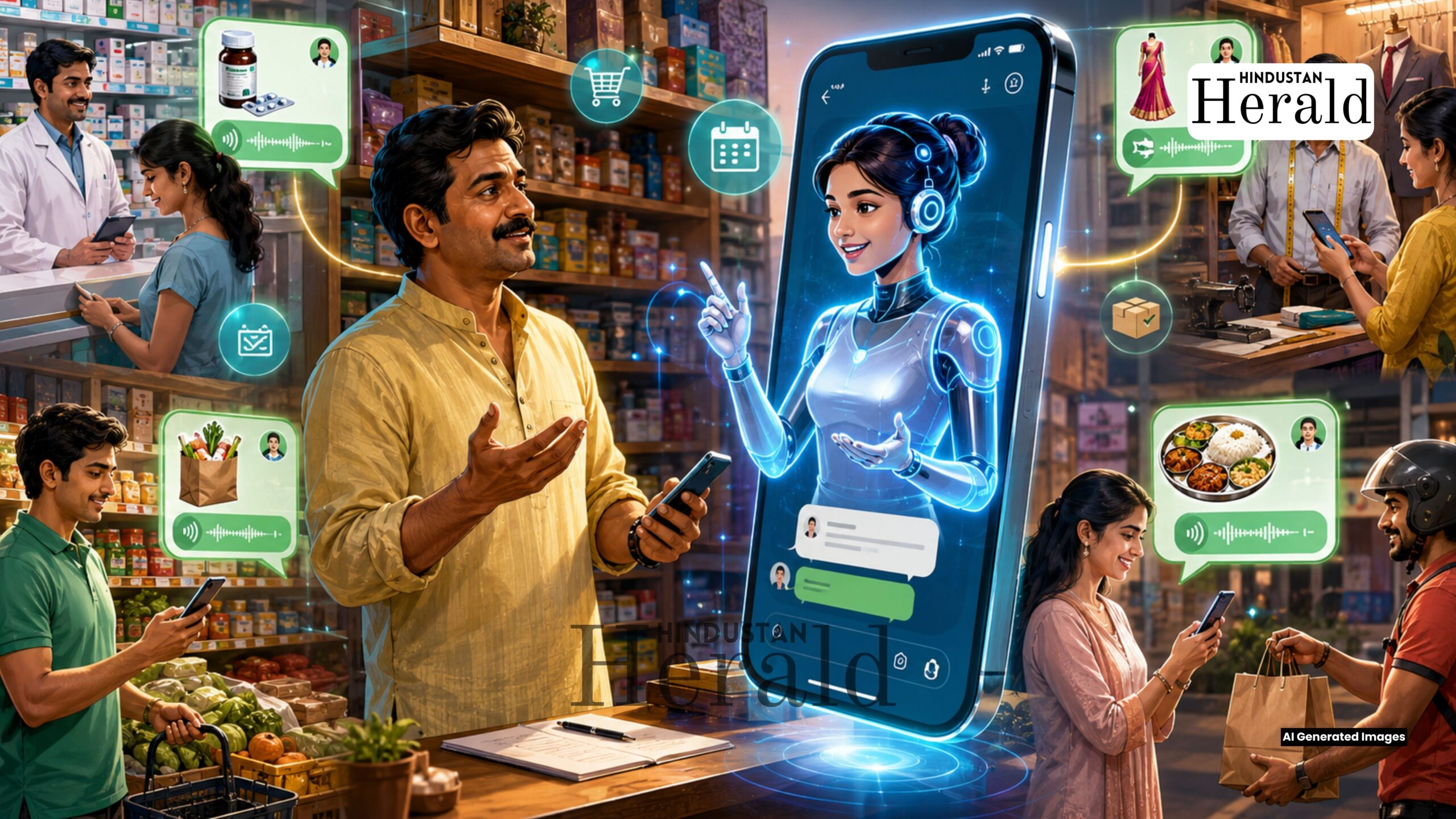
As Meta expands its business automation tools across India, unlabelled corporate support channels are replacing human desks with conversational large language models.
The customer service landscape across India has undergone a massive, silent transformation. If you filed a food delivery complaint, tracked an e-commerce refund, or checked a flight booking balance on WhatsApp this week, your instant support agent was highly likely an unlabelled piece of software. In early 2026, WhatsApp AI customer care systems transitioned from experimental pilot features into the operational standard for major corporate entities nationwide.
The shift follows a global rollout by tech parent Meta, which officially opened its advanced corporate artificial intelligence suite after extensive field testing in the Indian market. More than one million enterprise brands tested the framework to automate highly repetitive customer queries, drastically reducing ticket queues and support payroll expenses. However, this shift means consumers must now learn how to tell if they are dealing with a human or a machine.
Also Read | Imran Khan and Bushra Bibi Sentenced to 17 Years in Jail
The Architecture of the WhatsApp Automation Boom
The math driving corporate onboarding is incredibly simple. While a traditional customer support call center requires extensive human staffing across multiple shifts to manage overlapping queues, a single generative AI engine can instantly process thousands of unique conversations simultaneously.
The automated business systems are built to handle basic transactions flawlessly. They can cross-reference shipping databases, pull up dynamic menu options, or book consumer appointments in seconds. If a conversation encounters complex issues that fall outside its programming, the system executes a smooth background handoff, transferring the active chat history to a live human representative.
Five Ways to Expose an AI Support Agent
While corporate support chats may look like standard human messaging channels, the underlying code always leaves distinct footprints. If a business profile does not explicitly declare its automated status using a “virtual assistant” or “AI support” label, you can use these five behavioral clues to spot the machine:
When Automation Fails: Navigating the Loop
Automated support channels work exceptionally well for basic, binary requests. However, when a transaction involves financial disputes, failed banking payments, or identity verification crises, algorithmic scripts quickly become a major source of frustration.
| Customer Support Vector Scenario | Automated Bot System Capability | Human Agent Necessity Threshold |
| Basic Logistics Tracking | Fully autonomous; retrieves database records instantly. | Not required; automated scripts handle this efficiently. |
| Simple Booking Updates | Changes schedules and issues digital confirmation passes smoothly. | Minimal need; required only during severe network drops. |
| Failed Financial Transactions | Returns generic bank timeline scripts and canned responses. | Absolute Necessity: Demands manual portal audits and human intervention. |
| Complex Identity Adjustments | Fails to verify unusual documentation anomalies. | Absolute Necessity: Requires human oversight to clear security locks. |
If you find yourself stuck in a conversational loop where the automated answers feel irrelevant, the best approach is to demand a human representative. Typing clear, direct commands such as “Connect me to a human manager,” “Speak to an agent,” or “Raise a formal complaint” will usually trigger the system’s handoff protocol, forcing the software to route your chat stack to a live operator.
Critical Safety Notice: Digital security experts warn consumers to remain highly vigilant when using messaging platforms for support. Regardless of whether you are interacting with an advanced generative bot or a live human employee, never share financial credentials, account passwords, debit card PINs, or Aadhaar-linked OTPs inside a chat window.
A legitimate enterprise will never request sensitive security credentials over text. By understanding how these automated systems operate, you can easily bypass robotic loops, protect your personal data, and get to the root of your customer service issues without wasting time.
FAQ Section
Why are Indian brands shifting to WhatsApp AI customer care?
Companies use automated chat agents to answer thousands of basic questions simultaneously at any hour of the day. This infrastructure dramatically reduces customer wait times, eliminates the need for large overnight support teams, and cuts overall operational costs.
How can I quickly test if a WhatsApp agent is an AI or a real person?
The fastest method is to execute a context disruption test. Change the topic completely or ask an unexpected, nuanced question. A human support worker will adjust their language naturally, whereas an AI bot will usually try to steer you back to its predefined script options.
What should I do if a WhatsApp support bot gets stuck in a loop?
If a bot provides unhelpful, repetitive responses during a complex payment or refund dispute, type direct, command phrases like “Talk to a human executive” or “Connect to an agent.” This language overrides the basic chat loop and routes the ticket to a live employee.
Also Read | Imran Khan and Bushra Bibi Sentenced to 17 Years in Jail
End….

