

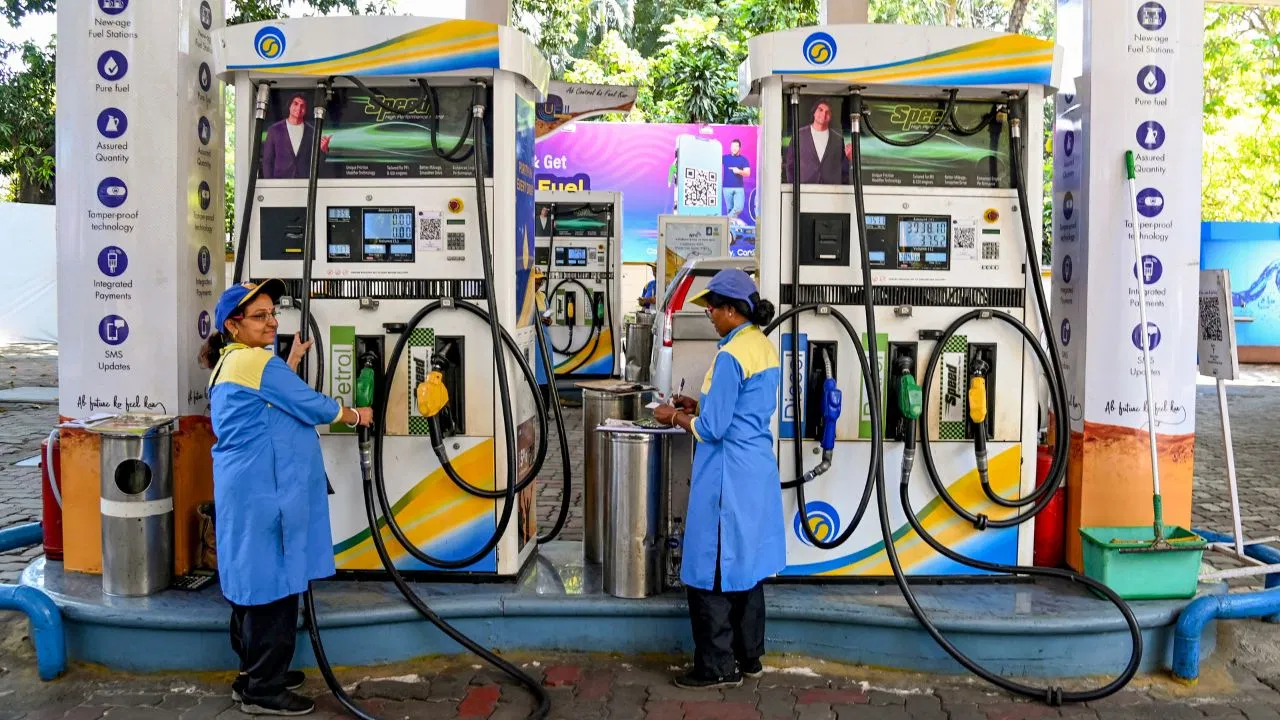
Backed by rigorous ARAI field trials, the Ministry of Petroleum dismantles viral social media claims targeting the nation’s highly successful 20% ethanol-blending framework.
NEW DELHI — Moving to counter a sudden wave of alarmist social media posts, the Ministry of Petroleum and Natural Gas on Friday issued a comprehensive, data-backed 10-point clarification defending the safety, efficiency, and environmental metrics of India’s E20 ethanol-blended petrol.
Government officials slammed the circulating rumors—which range from claims of unprovoked engine corrosion and voided insurance policies to allegations that the fuel attracts insects due to its sugar content—characterizing them as baseless misinformation completely detached from established scientific consensus.
The ministry emphasized that the national E20 program, which hit its milestone target of 20% ethanol blending ahead of schedule in December 2025, operates under strict regulatory supervision and aligns with decadal safety practices implemented across global markets like Brazil and the United States.
Dismantling the Top Technical & Operational Myths
To restore public confidence and protect consumer choices at fuel retail outlets, the official government advisory systematically broke down the primary false narratives currently circulating online:
Also Read | National Film Awards Live Stream: Watch the 72nd Edition Winners Reveal Online
The E20 Myth vs. Reality Architecture
├── Engine Impact: ARAI trials show zero major drivability loss over 40,000 km
├── Resource Drainage: Distilleries use 3–5 liters of water per liter, not 10,000
└── Insect Attraction: Fuel-grade distillation strips out all residual sugars
1. The Myth of Engine Corrosion and Voided Warranties
Social media videos have frequently claimed that E20 fuel rapidly corrodes metal fuel tanks and breaks down internal engine components, thereby voiding manufacturer warranties.
The ministry explicitly rejected this, pointing to multi-agency trials spearheaded by the Automotive Research Association of India (ARAI), the Indian Institute of Petroleum, and the Society of Indian Automobile Manufacturers (SIAM). Extensive road tests—spanning 40,000 kilometers for passenger cars and 20,000 kilometers for two-wheelers—uncovered zero compatibility issues with modern metal or plastic fuel parts, noting only a “marginal” adjustment in mileage.
Furthermore, both vehicle manufacturers and insurance consortia have officially confirmed that any vehicle designated or approved for E20 fuel remains fully covered under standard warranty terms.
2. The 10,000-Liter Water Consumption Rumor
An environmental critique gaining online traction claimed that manufacturing a single liter of ethanol drains up to 10,000 liters of fresh water.
The ministry clarified that modern Indian ethanol production utilizes surplus rice stocks left over after meeting all national food security mandates. Actual industrial processing requires just 3 to 5 liters of processed water per liter of ethanol. Furthermore, these processing plants are legally required to operate under Zero Liquid Discharge (ZLD) protocols, recycling water inside closed loops.
Additionally, maize—which now feeds over 40% of the national ethanol supply—requires minimal irrigation and is actively promoted through higher Minimum Support Prices (MSP) to preserve critical water tables.
Technical Profile: E20 vs. Conventional Petrol
The government reiterated that fuel-grade ethanol is a highly refined industrial product, vastly different from raw crop juices or home-brewed mixtures shown in fabricated online videos.
| Evaluation Metric | Conventional Petrol (E0/E5) | Current National E20 Blend |
| Ethanol Volume Share | 0% to 5% | Up to 20% |
| Octane Rating Profile | Base standard performance | Significantly higher due to ethanol’s natural octane boost |
| Residual Sugar Level | None | Zero (Completely removed during industrial multi-stage distillation) |
| Insect/Pest Attraction | Repelled by chemical scent | Repelled; dominant hydrocarbon scent masks alternative odors |
| Water Ingress Risk | Standard safety risk | Fully protected via modern retail pumps and sealed vehicle tanks |
The ministry also firmly denied claims that the government had classified the E20 program as a temporary “experiment” in front of the Supreme Court. The Office of the Attorney General clarified that the legal proceedings in question involved standard commercial contract disputes over corporate procurement timelines, rather than any structural skepticism regarding the safety or viability of ethanol blending.
Also Read | National Film Awards Live Stream: Watch the 72nd Edition Winners Reveal Online
Macro Economic Impact Since 2014-15
The integration of ethanol has drastically transformed India’s macroeconomic indicators over the last decade, shifting the country away from absolute reliance on foreign oil imports.
-
Foreign Exchange Shield: Saved more than ₹1.9 lakh crore in foreign exchange reserves by substituting imported crude oil.
-
Agricultural Infusion: Disbursed over ₹1.6 lakh crore in direct, expedited payments to domestic grain and sugarcane farmers.
-
Carbon Suppression: Successfully eliminated around 930 lakh metric tonnes of carbon dioxide emissions, driving national green energy transitions.
-
Import Displacement: Displaced over 310 lakh metric tonnes of physical crude oil imports.
With an installed domestic production capacity that has scaled to nearly 2,000 crore liters, the ministry projects procurement volumes to clear 1,200 crore liters during the current 2025-26 supply year, cementing ethanol’s permanent role in India’s fuel ecosystem.
Also Read | National Film Awards Live Stream: Watch the 72nd Edition Winners Reveal Online
Frequently Asked Questions (FAQs)
Will E20 petrol attract ants or bees to my vehicle’s fuel tank?
No. Fuel-grade ethanol undergoes strict industrial distillation that completely strips out all organic sugars. Additionally, it contains chemical denaturants formulated to repel insects, and the heavy hydrocarbon odor of standard petrol completely dominates the mixture.
Can older vehicles run on E20 petrol without modifications?
Modern vehicles manufactured in India post-2023 are designed to be fully compatible with E20 blends. For legacy vehicles built over a decade ago, while engine blocks and metal lines face no issues, certain vintage rubber seals or hoses may experience faster wear and require earlier replacement during routine servicing.
Does E20 petrol cause water to accumulate inside my car’s fuel tank?
No. This is a common myth associated with ethanol’s hygroscopic nature. Modern vehicle fuel delivery systems are completely sealed, and public fuel retail stations utilize multi-stage water-separation filters to ensure zero moisture contamination reaches your vehicle.
Also Read | National Film Awards Live Stream: Watch the 72nd Edition Winners Reveal Online

