

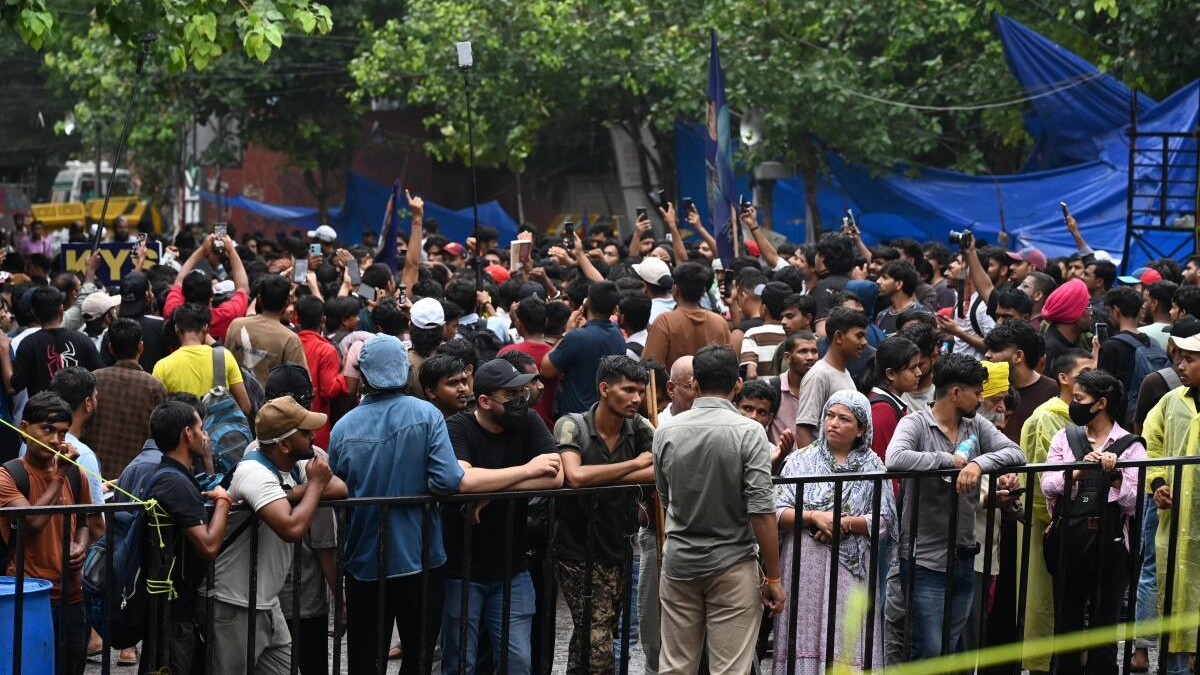
“A Powder Keg Ready to Explode”: Communal Slogans, Armed Displays, and Unannounced Marches Leave CJP’s Jantar Mantar Agitation Vulnerable to External Hijacking
Following the intense field clashes of the July 20 ‘Chalo Sansad’ march, the Cockroach Janta Party’s NEET-UG paper leak protest at Jantar Mantar faces growing chaos, security risks, and fading organizational control.
The structural security networks, public order divisions, and social movement monitors overseeing central New Delhi are raising severe alarms regarding the evolving dynamics at Jantar Mantar. Ground reports from Thursday, July 23, 2026, confirm a sharp shift in the character of the Cockroach Janta Party’s (CJP) long-running agitation. What began as a focused, student-led movement demanding NEET-UG examination reforms and the resignation of Union Education Minister Dharmendra Pradhan has increasingly fractured into an unorganized, multi-interest platform marked by late-night communal slogan exchanges, armed displays by visiting groups, and violent unannounced marches into neighboring commercial districts like Connaught Place.
The rapid escalation highlights significant organizational vulnerabilities within the movement.
Former military strategists, including retired Lieutenant General Satish Dua, have publicly warned that a communication vacuum at the protest site allows outside elements to exploit student frustration.
With core organizers like Abhijeet Dipke, Saurav Das, and Ashutosh Ranka struggling to maintain coordination across the swelling, unvetted crowds, the central academic issue risks being overshadowed by unrelated political and ideological agendas.
Also Read | Imran Khan and Bushra Bibi Sentenced to 17 Years in Jail
The Anatomy of Fragmentation: How the Core Academic Message Was Diluted
The breakdown in organizational structure accelerated rapidly following key operational shifts on the ground over the past week:
1. The Removal of a Unifying Anchor
During the early weeks of the sit-in, educationist and activist Sonam Wangchuk served as the primary unifying figure for incoming student delegations. His indefinite hunger strike kept speeches firmly focused on examination integrity, systemic transparency, and government accountability.
However, following Wangchuk’s medical removal from the site on July 18, the central stage lost its main anchoring presence, allowing fragmented subgroups to establish independent, uncoordinated pockets across the venue.
2. Post-Crackdown Crowd Inflow and Connectivity Blackouts
The police action during the July 20 ‘Chalo Sansad’ march brought thousands of new visitors to Jantar Mantar who were motivated more by anger over the police crackdown than the original examination policy demands.
Compounding the confusion, local mobile data restrictions around the venue have prevented CJP organizers from broadcasting real-time updates or safety instructions through digital channels, leaving floating clusters to organize spontaneous—and occasionally violent—marches through central Delhi roads.
Slicing Through the Key Friction Points at the Protest Site
Field reports identify several critical security, political, and social challenges currently impacting the Jantar Mantar site:
| Structural Challenge Area | Ground Level Observation / Occurrence | Impact on Original Movement |
| Ideological Sloganeering | Late-night exchanges of conflicting communal chants over loudspeakers. | Distracts from educational policy reforms and alienates student groups. |
| Armed Group Displays | Groups of armed Nihangs displaying traditional weapons along Tolstoy Marg. | Elevates security risks and increases police-protester tension. |
| Unannounced Marches | Spontaneous nighttime rallies into Connaught Place resulting in property damage. | Triggers commercial shutdowns and prompts stricter police barricading. |
| Crowd Safety & Security | Inadequate volunteer management leading to reported personal safety incidents. | Raises serious safety concerns for female students and overnight visitors. |
Also Read | Imran Khan and Bushra Bibi Sentenced to 17 Years in Jail
The Risk of External Exploitation
As the crowd at Jantar Mantar continues to diversify, observers warn that the lack of central oversight creates an ideal environment for external interests to hijack the narrative.
While students, families, and supporters continue to arrive at the site to demand genuine academic accountability, their voices are increasingly competing with unrelated slogans, political posturing, and confrontation.
Whether the CJP leadership can re-establish operational control, enforce clear guidelines, and refocus public attention on examination reform remains the critical question facing the movement.
Five Sequence Steps Event Organizers Apply to Prevent Protest Hijacking
To ensure large-scale public demonstrations maintain their original purpose, safeguard participants, and prevent outside groups from hijacking civic agitations, movement leaders apply this operational sequence:
FAQ Section
What primary factors have increased the risk of the CJP protest being hijacked?
The risk has increased due to the removal of unifying figures like Sonam Wangchuk, local mobile data blackouts that disrupt central coordination, and the influx of unvetted groups raising unrelated communal, political, and ideological slogans.
How did the July 20 ‘Chalo Sansad’ police crackdown impact the crowd dynamics?
The crackdown drew thousands of new visitors to Jantar Mantar who were primarily motivated by anger over police action rather than the core NEET-UG examination reforms, making crowd management significantly harder for CJP organizers.
What security concerns have emerged at the Jantar Mantar protest site recently?
Key security concerns include public displays of weapons along Tolstoy Marg, unannounced nighttime marches into Connaught Place that led to property damage, late-night communal slogan battles, and reported personal safety incidents within crowded areas.
Also Read | Imran Khan and Bushra Bibi Sentenced to 17 Years in Jail
End…

