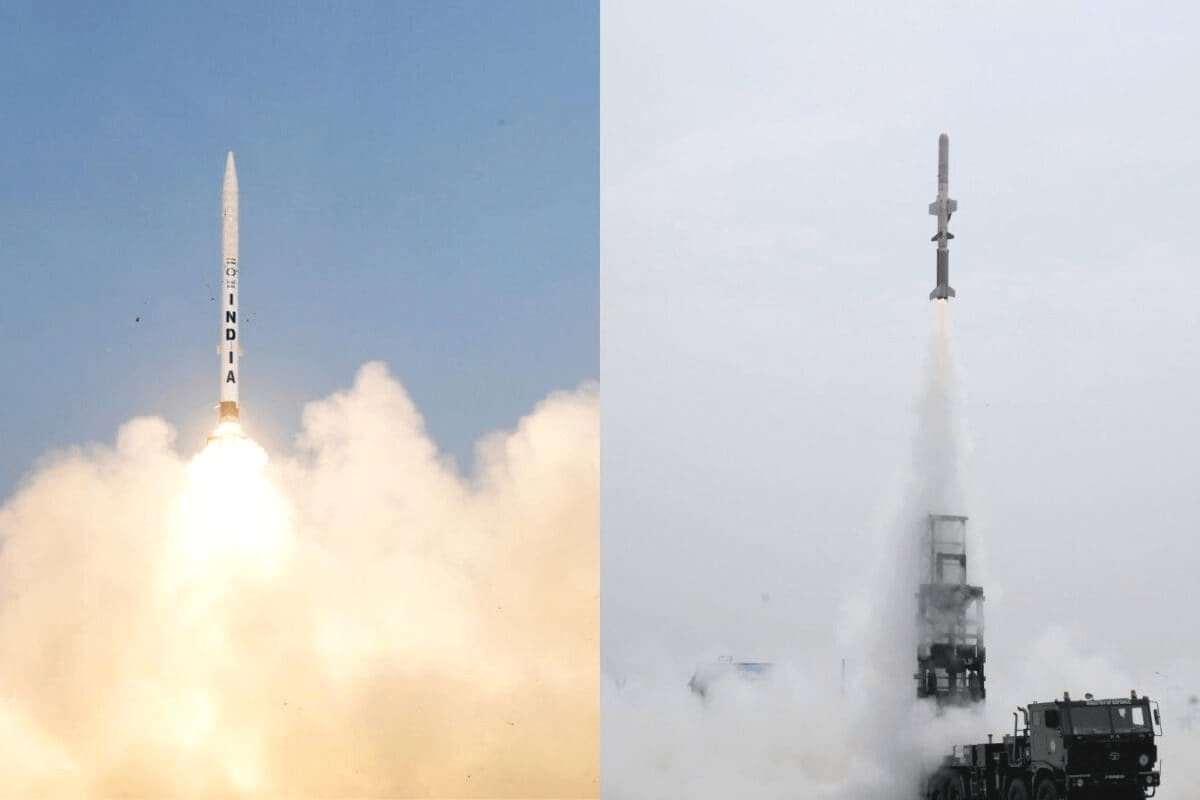
Defense Minister Rajnath Singh confirms the successful validation of high-velocity endo and exo-atmospheric interceptors alongside the historic maiden flight of the Naval Anti-Ship Missile.
The strategic deterrence architecture protecting the airspace of the sub-continent has reached full structural maturity. In a highly coordinated series of live-fire engagements finalized on Wednesday and Thursday, the Defence Research and Development Organisation (DRDO) successfully demonstrated the advanced operational readiness of the Ballistic Missile Defence system India program. The consecutive successes firmly place the nation within an exclusive global club capable of intercepting incoming nuclear threats up to the Intercontinental Ballistic Missile (ICBM) class.
The high-velocity test window rolled out over two highly active days, June 10 and June 11, 2026.
Moving away from basic simulated models, defense engineers executed three consecutive live flight tests designed to evaluate the system’s ability to track and destroy incoming targets under real-world combat conditions.
According to official briefings from the Ministry of Defence, the high-acceleration interceptor missiles functioned flawlessly, successfully tracking, engaging, and destroying their respective targets across multiple altitude layers.
Also Read | Imran Khan and Bushra Bibi Sentenced to 17 Years in Jail
Slicing Through the Two-Tier Interception Framework
The foundational layout of the country’s defensive shield relies on a strict, multi-layered “hit-to-kill” architecture designed to intercept hostile threats at different stages of their terminal flight paths.
This dual-tier approach divides defensive operations across two distinct environmental boundaries:
The Exo-Atmospheric Layer: This outer shield is engineered to hunt down and destroy incoming long-range missiles deep in space, neutralizing threats well over 100 kilometers above the Earth’s surface before they can re-enter the atmosphere.
The Endo-Atmospheric Layer: Serving as the dense inner shield, these highly agile interceptors operate below the 100-kilometer altitude floor, hunting down medium-range missiles, hostile aircraft, and low-flying systems that bypass outer tracking nets.
Slicing Through the Phase-II Technical Parameters
The successful tests represent a major milestone for Phase-II of the defense program, which focuses on countering advanced regional threats like multiple independently targetable re-entry vehicles (MIRVs).
| Monitored Test Vector | Targeted Threat Profile | Engagement Altitude Realm | Primary Weapon Technology Validated |
| Interceptor Test Alpha | Intermediate Range (2k-5k km) | Exo-Atmospheric (Outer Space) | Direct hit-to-kill kinetic impactor assembly. |
| Interceptor Test Beta | Medium-Range Ballistic Target | Endo-Atmospheric (Atmosphere) | High-agility thrust vector control packages. |
| Interceptor Test Gamma | High-Velocity Salvo Simulation | Multi-Layer Integration Grid | Real-time land and sea radar tracking sync. |
| Maiden Weapon Launch | Maritime Surface Target | Low-Altitude Cruise Phase | Naval Anti-Ship Missile-Medium Range (NASM-MR) |
Note: While the government has kept the exact military designations of the new interceptor missiles under wraps, security insiders confirm that the systems are designed to intercept and destroy intermediate and long-range ballistic missiles traveling at hypersonic speeds.
The testing window also delivered a major milestone for maritime defense.
Alongside the ballistic interceptors, the Navy successfully executed the maiden flight test of the Naval Anti-Ship Missile-Medium Range (NASM-MR).
The successful launch marks a major leap forward for indigenous sea-skimming missile technology, equipping frontline naval fleets with a powerful tool to lock down maritime strike corridors and defend against hostile surface vessels.
Also Read | Imran Khan and Bushra Bibi Sentenced to 17 Years in Jail
Five Core Developments Transforming National Air Defense
As DRDO teams and military commanders analyze the massive telemetry logs from the testing range, defense analysts highlight five core advancements redefining the country’s security posture:
Defense Minister Rajnath Singh extended his warmest congratulations to the DRDO engineering teams, noting that achieving operational hit-to-kill accuracy significantly strengthens national security.
By building a reliable shield against high-velocity threats, the country has protected its key population centers and industrial hubs from surprise attacks.
The successful validation of the Ballistic Missile Defence system India shield underscores a historic leap in self-reliance, ensuring that national defense forces retain a highly advanced, independent shield capable of protecting its skies against any emerging threat.
FAQ Section
What is the primary function of the Ballistic Missile Defence system India shield?
The defensive shield is an advanced, two-tier system built to protect key population centers and strategic infrastructure from incoming missile threats. Developed indigenously by the DRDO, it uses high-acceleration interceptor missiles to track down and destroy hostile ballistic threats at different stages of flight.
What is the difference between endo-atmospheric and exo-atmospheric interceptions?
The two terms describe the environmental zones where the missile engagements take place. Endo-atmospheric interceptors operate within the earth’s atmosphere at altitudes below 100 kilometers, using agile steering fin controls. Exo-atmospheric interceptors operate in outer space beyond the 100-kilometer altitude mark, using kinetic hit-to-kill vehicles to smash directly into targets.
What additional weapon system was validated during the recent DRDO trials?
Alongside the ballistic missile interceptors, the DRDO successfully executed the maiden flight test of the Naval Anti-Ship Missile-Medium Range (NASM-MR). The successful validation marks a major milestone for indigenous maritime technology, providing naval forces with a highly precise, sea-skimming weapon to engage hostile surface ships.
Also Read | Imran Khan and Bushra Bibi Sentenced to 17 Years in Jail
End…