

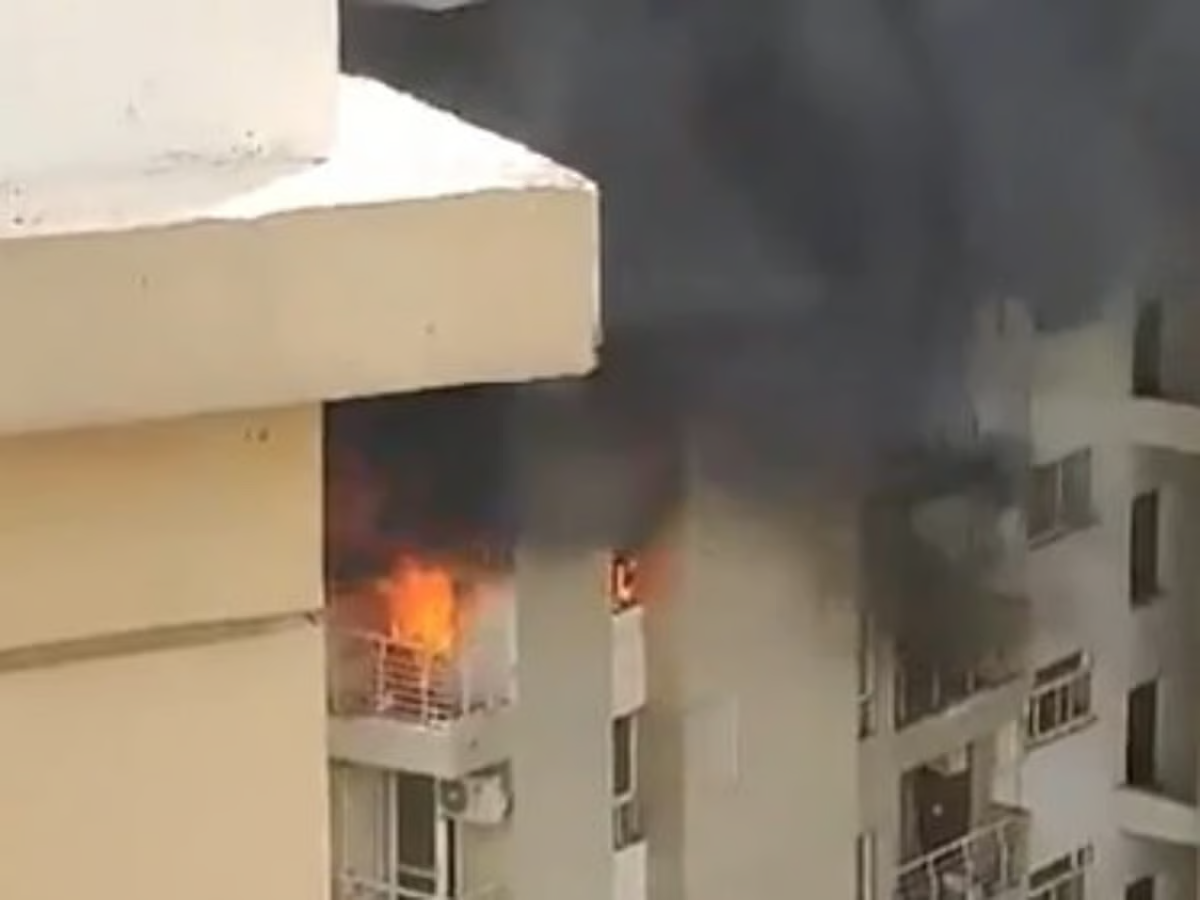
Massive Fire Breaks Out on 21st Floor of Noida High-Rise; Suspected AC Blast Triggers Panic
NOIDA — A major fire broke out on the 21st floor of a residential tower at Aranya Society in Noida’s Sector 119 on Monday, sparking intense panic among residents. Preliminary reports suggest that a sudden blast in an air conditioning (AC) unit triggered the blaze, which quickly spread through the top-floor apartment.
Upon receiving the emergency alert, the fire department dispatched six fire engines to the high-rise complex. Firefighting operations were launched immediately, and teams successfully brought the raging flames under control. Officials confirmed that there were no casualties or injuries, as all residents inside the affected tower were evacuated in time.
Also read | The Legal-Diplomatic Divide: Inside Sonia Gandhi’s Gaza Editorial on the Muralidhar UN Report
CM Intervenes as Emergency Response Intensifies
Taking swift cognisance of the high-rise incident, the Uttar Pradesh Chief Minister issued urgent directives to local administrative and fire department officials to expedite relief operations.
“The administration must remain alert at all levels, ensure seamless coordination on the ground, and continuously monitor ongoing relief operations,” the Chief Minister stated, while also directing authorities to keep medical teams on standby for any exigencies.
While initial assessments point firmly toward an AC unit malfunction, fire officials emphasized that a meticulous, detailed investigation is underway to determine the exact technical cause.
Also read | The Legal-Diplomatic Divide: Inside Sonia Gandhi’s Gaza Editorial on the Muralidhar UN Report
Noida & Delhi NCR Fire Incident Summary (June 2026):
• Location 1: Aranya Society, Sector 119, Noida | 21st Floor | Suspected AC Blast | Status: Controlled, No Injuries
• Location 2: Keshav Puram, Delhi | 4-Storey Building | Source: Under Review | Status: 3 Rescued from Terrace
• Location 3: Ivy County, Sector 74, Noida | 12th Floor | Source: Malfunction | Status: Safe Evacuation (Earlier this month)
• Location 4: Sector 52, Noida | Residential Unit | Source: Structural | Status: Controlled (Earlier this month)
Spurt in High-Rise Blazes Raises Concerns
The incident highlights a worrying spike in residential fires across the Delhi-NCR region during peak summer conditions, where power grids and cooling appliances experience maximum load.
Earlier this month, Noida witnessed two major residential fires in Sector 52 and Sector 74. The Sector 74 incident occurred on the 12th floor of the 28-storey Ivy County Society around 8:00 AM, forcing hundreds of residents to rapidly evacuate through emergency staircases.
As temperatures remain high, local authorities are urging residents to service their electronic cooling appliances regularly and asking high-rise Resident Welfare Associations (RWAs) to conduct thorough audits of internal firefighting systems, including hydrants and specialized smoke alarms.
FAQ
Why do air conditioning units experience blasts during high summer loads?
AC units generally fail or experience blasts due to prolonged operation without adequate rest, poor maintenance, clogged filters, or refrigerant leaks. This leads to compressor overheating. When combined with electrical short circuits or voltage fluctuations common during peak summer demands, the overheated compressor can rupture violently, sparking a rapid electrical fire.
What should high-rise residents do immediately if an AC fire breaks out?
If an apartment AC catches fire, residents should immediately switch off the main power supply line if it is safe to do so, evacuate the flat, close the doors behind them to contain the smoke, and sound the building’s central fire alarm. Elevators must be completely avoided; occupants should use designated fire stairwells to reach ground-level open areas.
How are municipal bodies responding to consecutive fires in Noida societies?
Following multiple fire incidents in high-rises like Ivy County and Aranya Society, local authorities and fire safety departments are intensifying mandatory safety audits across high-density residential sectors. RWAs are being penalized or issued formal warnings if critical infrastructure—such as functional fire lifts, terrace water tanks, and pressurized fire hoses—fails compliance checks.
Also read | The Legal-Diplomatic Divide: Inside Sonia Gandhi’s Gaza Editorial on the Muralidhar UN Report

