

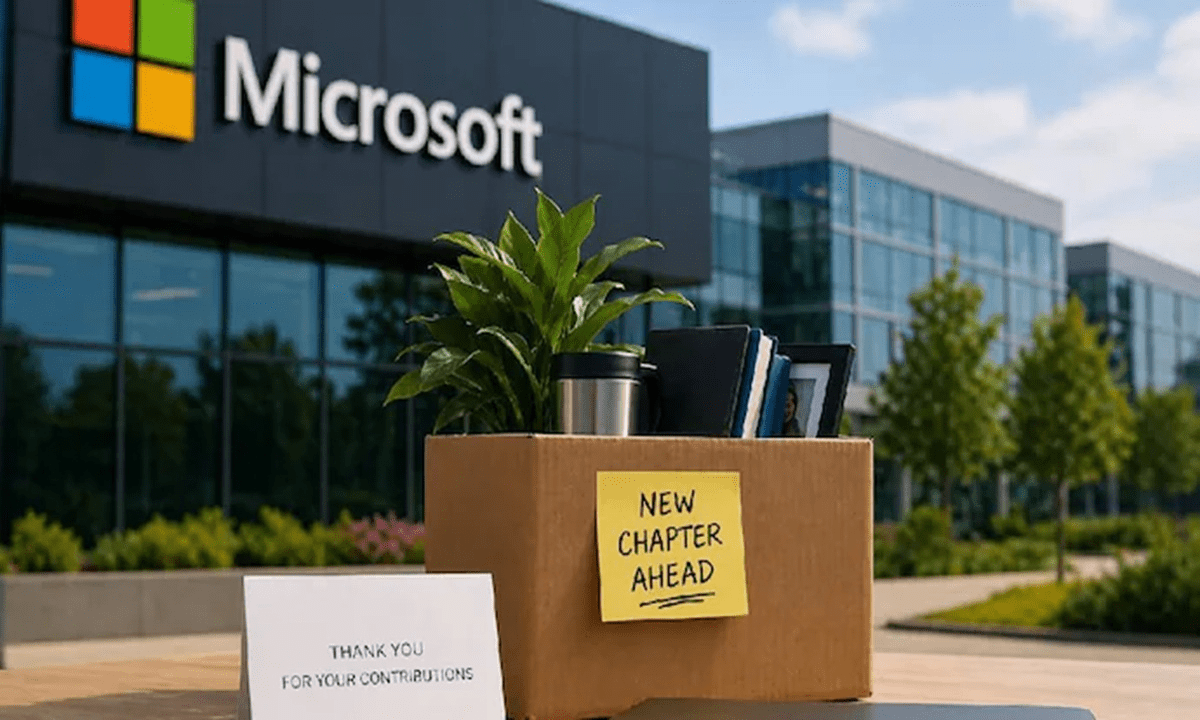
Now the tech giant from Redmond is taking a historic step to recalibrate its workforce for the intelligence age. Earlier this week, Microsoft issued an internal memo to its US-based employees, signaling a shift that is fundamentally different from the mass layoffs seen at Meta or Oracle. Specifically, the company is launching its first-ever large-scale Microsoft voluntary buyout AI investment program. This initiative targets the “old guard” of the company, offering senior employees a choice to exit gracefully as Microsoft redirects billions of dollars toward artificial intelligence infrastructure.
Meanwhile, this move follows a turbulent year where the company already cut 15,000 roles to streamline its cost base.
But for those who built the foundation of Windows and Office, the “Rule of 70” now offers a path to retirement on their own terms.
Also Read | Imran Khan and Bushra Bibi Sentenced to 17 Years in Jail
The Rule of 70: How Microsoft Calculates Eligibility
Now we must analyze the specific math behind this unprecedented offer. Microsoft is using a formula known as the “Rule of 70” to determine who qualifies for the voluntary retirement program. Therefore, the Microsoft voluntary buyout AI investment targets long-tenured employees rather than specific underperforming divisions.
The Math of Retirement
First, an employee must add their current age to their total years of service at the company. Then, if that total is 70 or higher, the individual clears the first hurdle for eligibility. Thus, a 50-year-old who has dedicated 20 years to Redmond qualifies, as does a 55-year-old with 15 years under their belt. Next, the program is strictly limited to those at the Senior Director level (Level 67) and below. Therefore, while senior leaders are eligible, the very top executive tier—including Vice Presidents—is excluded from this specific buyout offer.
Buyout vs. Layoff: Why This Move is a Controlled Reset
Now, it is critical to distinguish this program from the “pink slips” that have rattled the tech sector recently. Unlike a layoff, where the company decides who leaves, a buyout puts the power of choice in the hands of the employee.
A More Measured Approach
First, employees have a 30-day window to decide whether to accept the severance package. Then, those who choose to leave will receive what the company describes as “generous support,” likely including a lump-sum payment and extended healthcare. Thus, Microsoft avoids the negative headlines and morale drops often associated with forced job cuts. Next, this “controlled instrument of structural change” allows the company to reduce its headcount precisely where roles are most susceptible to AI automation. Therefore, the buyout is a tactical reset designed to modernize the workforce without the friction of a traditional layoff.
Funding the AI Race: Redirecting Capital to Mustafa Suleyman’s Team
Now the financial context for this move is staggering. Microsoft is not struggling; in fact, its revenue recently topped $81.3 billion in a single quarter. However, the capital-intensive nature of AI requires a massive reallocation of resources.
The $80 Billion Infrastructure Push
First, Microsoft has committed more than $80 billion to building AI data centers and compute capacity. Then, under the leadership of Mustafa Suleyman, the company is shifting away from relying solely on external partners like OpenAI and Anthropic. Thus, Redmond is now focused on building its own custom AI models to power over 70 different Copilot tools. Next, Satya Nadella has reportedly described the company’s massive pre-AI headcount as a “disadvantage” in this rapid race. Therefore, reducing the “denominator” of the workforce is essential to fund the GPUs and energy required for the next decade of growth.
Also Read | Imran Khan and Bushra Bibi Sentenced to 17 Years in Jail
The Cost of Experience: Why Senior Staff are the Primary Focus
Now there is a straightforward economic logic behind targeting senior workers. A person who has been at Microsoft for 20 years is almost certainly on a higher pay scale than a new hire.
Saving on Salaries and Benefits
First, senior-level staff command significantly higher salaries, stock options, and comprehensive benefits packages. Then, by encouraging a voluntary exit of this “old guard,” Microsoft can save more money per person than by letting go of entry-level employees. Thus, the company can hire three or four AI-specialist engineers for the cost of one senior director who may be less integrated into the new AI-first strategy. Next, this cost-cutting is not about individual performance but about the economic model of the modern tech giant. Therefore, the Microsoft voluntary buyout AI investment is a mathematical necessity to maintain competitive margins in an expensive AI era.
The Generational Shift: AI Adoption and the Newer Workforce
Now we must address the “tea-drinking” elephant in the room: the generational comfort with new technology. The workforce that built Windows XP and the early versions of Office 365 grew up in a fundamentally different era of software engineering.
Passing the Baton
First, the newer generation of developers is often more “open” to using AI to write code, manage projects, and automate tasks. Then, for senior staff who have honed their skills over decades, integrating AI “Copilots” into every facet of their work may feel forced or unnecessary. Thus, there is a natural friction between legacy workflows and AI-automated systems. Next, Microsoft likely realizes that younger, “AI-native” talent is better suited for the rapid iterations required today. Therefore, the buyout offer gives senior workers a chance to leave with dignity at their peak, rather than feeling pressured by a shifting corporate culture.
Amy Coleman’s Memo: Choice and “Generous Company Support”
Now the tone of the internal communication is intended to be supportive. Chief People Officer Amy Coleman’s memo emphasized that the program is about providing options to those who have built the company.
Exit on Your Own Terms
First, Coleman wrote, “Our hope is that this program gives those eligible the choice to take that next step on their own terms.” Then, she promised that those who participate will do so with “generous company support,” signaling that the severance packages will be attractive. Thus, the messaging is designed to frame the buyout as a reward for long service rather than a push out the door. Next, this approach helps maintain a positive employer brand even during a significant downsizing. Therefore, the Microsoft voluntary buyout AI investment is being marketed as a win-win for both the veteran employee and the evolving company.
Also Read | Imran Khan and Bushra Bibi Sentenced to 17 Years in Jail
Institutional Knowledge Loss: The Risks of a Mass Senior Exit
Now, while the buyouts save money, they carry a hidden risk: the erosion of institutional knowledge. When 8,750 experienced employees leave, they take with them more than just their skills.
Context is Hard to Document
First, senior directors often handle the “unwritten rules” and exception handling that govern how complex processes actually work in the real world. Then, this context is rarely documented in a way that can be easily automated or transferred to a junior replacement. Thus, there is a risk that execution might slow down as teams struggle to bridge these knowledge gaps. Next, the loss of mentorship for younger employees could also impact the long-term culture of the Redmond campus. Therefore, the success of the Microsoft voluntary buyout AI investment depends on how well the remaining teams can absorb the responsibilities of the exiting “old guard.”
Industry Patterns: Comparing Microsoft to Meta and Amazon
Now Microsoft is not acting in a vacuum. The entire technology sector is currently undergoing a structural recalibration as companies double down on AI spending.
The Big Tech Restructure:
-
Oracle: Eliminated up to 30,000 roles in March 2026 to fund its AI data centers.
-
Meta: Set to cut 8,000 jobs by May 20, 2026, as part of an AI restructuring plan.
-
Amazon: Signaled roughly 30,000 cuts in early 2026 across AWS and Prime Video.
First, Microsoft’s approach is the most “unusual” because it is genuinely voluntary and targeted by tenure rather than performance. Then, while other firms are using blunt layoffs, Redmond is opting for a softer transition. Thus, the industry is seeing a massive shift where nearly 44% of all tech job reductions in 2026 are linked to AI automation. Next, the goal for all these giants is the same: free up cash flow to support the capital-intensive buildout of AI infrastructure. Therefore, Microsoft’s buyout program is a sophisticated variation of a broader industry trend.
Common Questions Answered
What is the “Rule of 70” in the Microsoft buyout? Now it is a simple calculation: an employee’s age plus their years of service at Microsoft must equal 70 or higher to be eligible for the voluntary exit.
Is this a layoff? First, no. A layoff is forced, whereas this is a voluntary buyout. Thus, employees have the choice to accept the offer or continue their employment.
Why is Microsoft doing this now? Next, the company is redirecting resources and billions of dollars into AI infrastructure. Therefore, reducing senior staff headcount helps fund these capital-intensive investments.
Who is excluded from the offer? So employees in sales incentive plans are excluded. Additionally, those above the Senior Director level (Vice Presidents and up) are not part of this specific program.
When will employees get the details of the severance package? Finally, eligible US staff and their managers will receive full terms and financial details on May 7, 2026. Therefore, the 30-day decision window will likely begin shortly after.
Also Read | Imran Khan and Bushra Bibi Sentenced to 17 Years in Jail
End…

