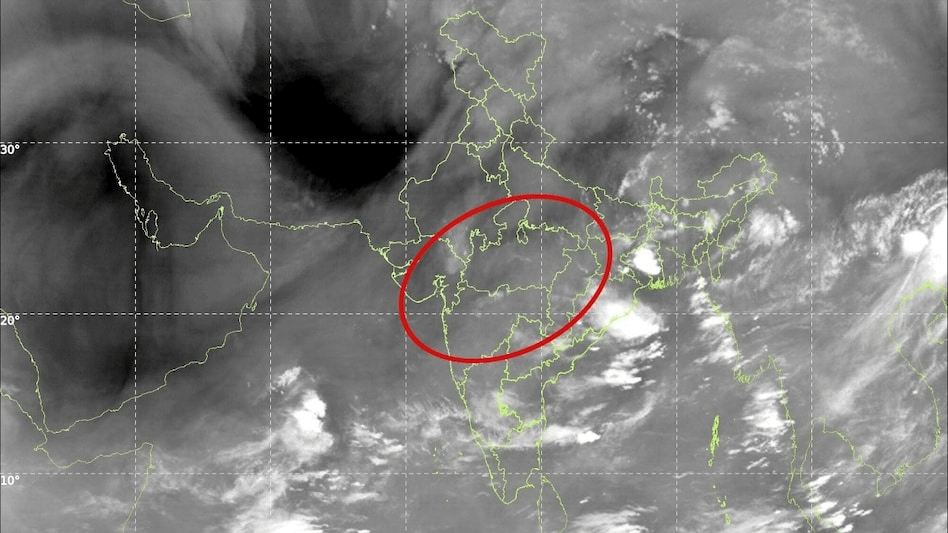
Typhoon Jagmi draws vital moisture eastward into the Pacific while unseasonal winter-style Western Disturbances push dry air deep into central cultivation zones.
The massive atmospheric networks that supply subcontinental agriculture, fill critical reservoir systems, and dictate the broader economic health of the nation have run into a historic multi-system block. Following its timely arrival over Kerala on June 4, 2026, a significant southwest monsoon stall India 2026 event has officially taken hold of the country. The India Meteorological Department (IMD) confirmed Friday morning that instead of steadily advancing northward to cover primary crop areas, the moisture-laden winds have been frozen completely along the Konkan coast and southern Maharashtra, triggering a sharp 41% countrywide rainfall deficit.
The mid-June stall has caused widespread concern among local water managers and farming communities alike.
Rather than pointing to a single structural culprit, meteorologists warn that the slowdown is the result of five separate weather systems locking together to actively drain energy away from the subcontinental weather pattern.
As the high-pressure block remains fixed, state officials have moved quickly to implement emergency backup plans to protect vulnerable farming communities.
Also Read | Imran Khan and Bushra Bibi Sentenced to 17 Years in Jail
The Anatomy of the Blockade: Slicing Through the Five Weather Interferences
The current pause in seasonal rains highlights how closely linked global weather systems are. An unusual layout of conditions thousands of kilometers away has directly affected local cloud production lines.
1. The Western Pacific Pull (Typhoon Jagmi)
In early June, an initial monsoon surge built up over the Indian Ocean. However, a massive portion of its atmospheric energy was drawn eastward to feed growing tropical systems in the western Pacific.
This circulation intensified to become Typhoon Jagmi. The pull robbed the Bay of Bengal of the energy needed to form a low-pressure system—the standard engine that pulls monsoon winds across India.
2. Deep Intrusions of Dry Northern Air
Compounding the Pacific energy drain, a string of Western Disturbances dipped unusually far south over northern India.
These high-altitude storms, which typically affect the country during the winter months, continuously funneled dry, northwesterly winds deep into the heart of the subcontinent.
This created a dry atmosphere that prevented the widespread cloud cover that summer crops depend on.
3. Straightened Low-Level Wind Tracks
As Typhoon Jagmi gathered strength, low-level winds across the Indian peninsula grew straight, flowing directly from west to east.
To form rain-bearing clouds, low-pressure systems require curved, converging winds that concentrate moisture and force it upward.
Because the winds ran parallel to the main monsoon trough, this essential lifting action dropped sharply.
4. The Super El Niño Influence
Layered over these local winds, an evolving Super El Niño event began building up across the equatorial Pacific Ocean.
Formally declared by international oceans desks on June 11, this large-scale sea-surface warming makes the upper atmosphere far less hospitable to sustained thunderstorm activity.
5. An Unfavorable Madden-Julian Oscillation (MJO) Phase
The final piece of the weather block was a total lack of support from the Madden-Julian Oscillation (MJO)—the slow-moving pulse of tropical rainfall that circles the planet.
Through the first three weeks of June, the MJO sat in an unfavorable phase over the Indian Ocean, refusing to provide the convective lift needed to kickstart heavy cloud growth.
Slicing Through the Regional Rainfall and Agricultural Impact Matrix
The multi-system block has distributed moisture unevenly across the country, forcing regional farm managers to pivot quickly:
| Monitored Agrarian Zone | Target Operational Rainfall Status | Current June Deficit Metrics | Immediate Real-World Impact |
| Central Indian Core | Peak preparation for summer sowing. | Severe 63% Moisture Deficit | Sowing of summer crops faces delays; triggers high reliance on groundwater. |
| Eastern & Northeastern Belt | Continuous pre-monsoon rice irrigation. | Acute 43% Moisture Deficit | Slows down initial rice nursery planting lines. |
| Southern Peninsular Strip | Widespread coverage over major states. | 14% Measured Deficit | Keeps early plantations active but reservoirs remain low. |
| Northwestern Plains | Awaits standard early July arrival. | 3% Slight Local Excess | Fueled by Western Disturbances; sparks intense localized heatwaves. |
Note: In response to the persistent dry spell, Union Agriculture Minister Shivraj Singh Chouhan has directed state departments to identify highly affected districts, ordering the immediate distribution of drought-resistant alternative seed kits.
The underlying text of the farm review shows that adapting to these shifting weather patterns requires a major overhaul of local cultivation habits.
To prevent widespread crop failures, agricultural universities are urging farmers to switch from water-heavy crops like traditional rice varieties to hardier options like pearl millet (bajra), sorghum (jowar), and fast-maturing pulses.
These alternative crops can thrive on minimal water, protecting farming incomes even if the seasonal rains arrive late.
Also Read | Imran Khan and Bushra Bibi Sentenced to 17 Years in Jail
Five Sequence Steps India Is Executing to Secure the Summer Crop Cycle
To protect rural supply chains and insulate national food security from this extended dry spell, agricultural task forces are deploying this five-step response plan:
Ultimately, navigating the climate challenges detailed in the southwest monsoon stall India 2026 brief requires a patient, highly scientific approach. While sovereign tech firms like Bengaluru’s Sarvam build advanced platforms to secure data assets, weather teams are focused on tracking international air currents to preserve our food supply.
Thankfully, long-range forecasting models are beginning to show signs of a turnaround.
Meteorologists expect the Madden-Julian Oscillation to drift into a highly favorable phase over the Indian Ocean by the fourth week of June.
As this global pulse combines with a strengthening Low Level Somali Jet and a return of moist cross-equatorial winds, the dry air block is expected to break, triggering a genuine, widespread monsoon revival across the country.
FAQ Section
What caused the dramatic southwest monsoon stall India 2026 event this June?
The stall was triggered by an unusual alignment of five distinct weather systems working against the monsoon. Key factors include Typhoon Jagmi drawing moisture away into the Pacific, Western Disturbances pushing dry air into central India, straight west-to-east wind tracks blocking low-pressure formation, a developing El Niño, and an unfavorable phase of the Madden-Julian Oscillation (MJO).
Which regions of the country are facing the highest rainfall deficits?
The central agricultural core has been hit hardest, suffering a severe 63% rainfall deficit. Concurrently, eastern and northeastern states are facing an acute 43% drop in moisture, while the southern peninsula is holding relatively steady with a minor 14% deficit.
When do weather forecasters expect the monsoon block to break?
Meteorological models show signs of a genuine turnaround during the fourth week of June. The change will be driven by the Madden-Julian Oscillation moving into a more favorable phase, paired with a stronger Low Level Jet and moist cross-equatorial winds that will break the grip of the dry northern air.
Also Read | Imran Khan and Bushra Bibi Sentenced to 17 Years in Jail
End….