

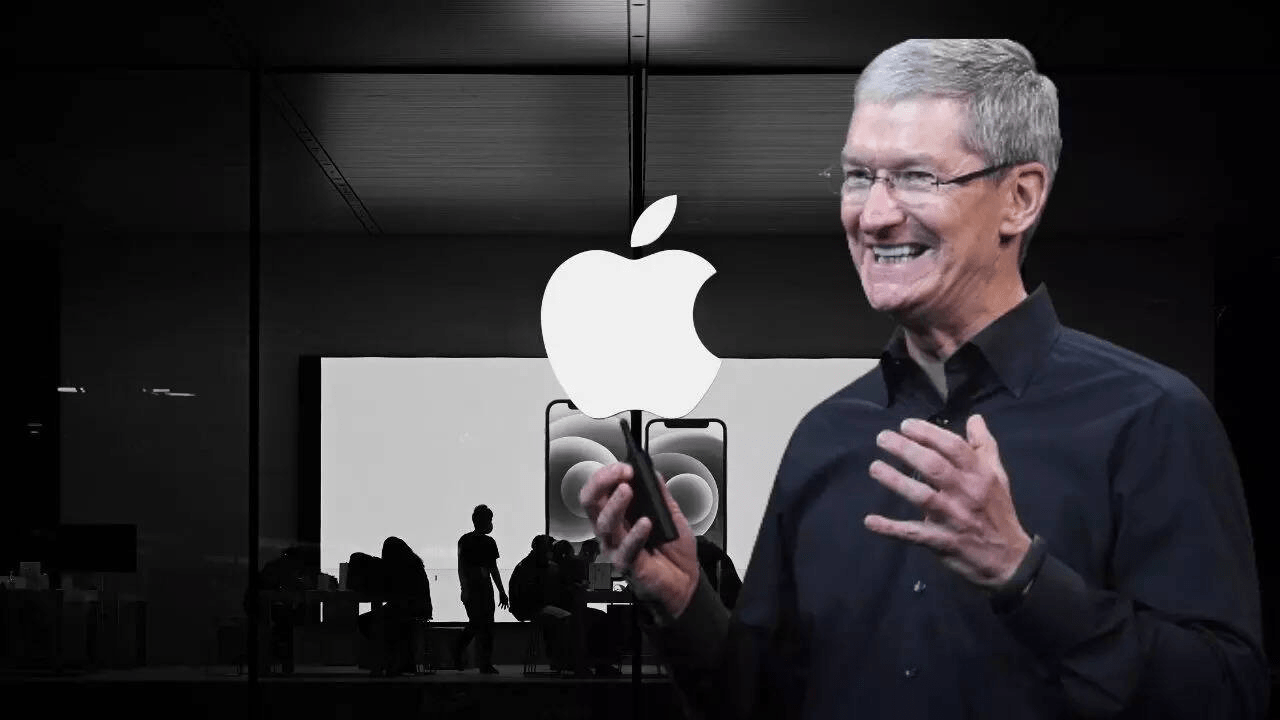
Now the tech world is preparing for the final chapter of one of the most successful leadership tenures in corporate history. As Tim Cook prepares to step down as Apple CEO in the coming months, he has taken a moment to look back at the defining pivots of his career. Therefore, the Tim Cook Apple CEO exit reflection has centered on a rare admission of fallibility. Specifically, speaking at a town hall meeting alongside his successor, John Ternus, Cook labeled the 2012 launch of Apple Maps as his “first really big mistake” as chief executive.
Meanwhile, the transition marks a shift from the steady, operationally excellent era of Cook to the “next-generation” vision of Ternus.
But for Cook, the journey from the shadow of Steve Jobs to a $4 trillion market capitalization was paved with lessons in humility and persistence.
Also Read | Imran Khan and Bushra Bibi Sentenced to 17 Years in Jail
The Apple Maps Debacle: A Lesson in Humility
Now we must revisit the 2012 incident that nearly derailed Cook’s early days as CEO. When Apple Maps first launched, it was riddled with errors—misplaced cities, distorted bridges, and missing landmarks. Therefore, the Tim Cook Apple CEO exit reflection acknowledges that the product simply “wasn’t ready.”
Prioritizing the User
First, Cook admitted that the company believed they had tested the software sufficiently at a local level. Then, the public backlash forced a rare moment of corporate vulnerability. Thus, Apple issued a public apology and even suggested that users download rival apps like Google Maps. Next, Cook described this as the “right thing for the users,” emphasizing that honesty was more important than pride. Therefore, this failure became the catalyst for a total cultural shift in how Apple validates software before release.
Leadership Fallout: The Departure of Scott Forstall
Now the Maps failure had a permanent impact on Apple’s executive structure. The fallout led to the removal of Scott Forstall, who was then the software chief and a key disciple of Steve Jobs. Therefore, the Maps misstep allowed Cook to reshape the “Jobs-era” team into a more collaborative unit.
A Unified Design Vision
First, Forstall’s departure paved the way for Jony Ive and Craig Federighi to integrate hardware and software design more closely. Then, the “skeuomorphic” design language of the Jobs era was replaced by the “flat” design we see today. Thus, the Maps disaster ironically helped Cook establish his own distinct leadership style. Next, the company spent a decade rebuilding Maps into what Cook now calls “the best map app on the planet.” Therefore, a failure that seemed terminal in 2012 eventually became a core strength of the iOS ecosystem.
The Apple Watch: Transforming from Gadget to Life-Saver
Now, while Maps was a low point, Cook cites the Apple Watch as a defining achievement. Launched in 2014, the device initially struggled to find its identity before pivoting to health and fitness. Therefore, the watch is the most personal part of Cook’s legacy.
The First Life-Saved Note
First, Cook recalled receiving the very first message from a user whose life was saved by the watch’s heart-rate monitor. Then, he shared that such messages now arrive at his desk with regular frequency. Thus, the product evolved from a basic tracker to a device capable of detecting hypertension and AFib. Next, Cook noted that these personal stories “caused me to just stop in my steps.” Therefore, the Apple Watch stands as proof that Cook’s tenure was about more than just incremental iPhone updates; it was about health-tech transformation.
Also Read | Imran Khan and Bushra Bibi Sentenced to 17 Years in Jail
Market Cap Mastery: Growing from $350B to $4 Trillion
Now the most staggering part of the Cook era is the financial growth. When he took over in 2011, Apple was a $350 billion company. Therefore, as he prepares for his exit, the $4 trillion valuation is a testament to his operational genius.
Value Creation at Scale
First, Cook oversaw the massive expansion of the iPhone lineup to include “Pro” and “Max” variants. Then, he pivoted the company toward recurring revenue through services like Apple Music, iCloud, and the App Store. Thus, Apple became less dependent on seasonal hardware cycles. Next, the launch of AirPods created a multi-billion dollar category out of thin air. Therefore, Cook successfully scaled the company to a level that few thought possible after the death of its founder.
Failures and “Extraordinary” Mistakes: AirPower and Project Titan
Now Cook is candid about the fact that not everything he touched turned to gold. He admitted that the list of mistakes during his tenure would be “extraordinary in length.” Therefore, his reflection isn’t just a highlight reel.
Unsuccessful Ventures
First, he pointed to the failed AirPower wireless charging mat, which was canceled due to overheating issues. Then, he acknowledged the decade-long, multi-billion dollar effort to develop a self-driving car—internally known as Project Titan—which was ultimately scrapped. Thus, even with $4 trillion in value, Apple faced the same R&D hurdles as any other firm. Next, Cook noted that many of these mistakes did not escalate into major public crises because the company knew when to “cut bait.” Therefore, his legacy is defined as much by what he stopped as what he started.
John Ternus: The Man Stepping into the CEO Role
Now the focus shifts to John Ternus, the hardware engineering chief who has been tapped as the successor. During the town hall, Ternus hinted that the company’s biggest innovations are yet to come. Therefore, the leadership transition is being framed as a move toward a “world-changing” future.
The Hardware Veteran
First, Ternus has been responsible for the transition to Apple Silicon (M-series chips). Then, he has overseen the design of every major Mac, iPad, and iPhone in recent years. Thus, he brings a deep technical understanding that mirrors Jobs but with the operational discipline of Cook. Next, Ternus is known for his calm, measured presenting style during Apple Keynotes. Therefore, the board believes he is the most “stable” choice to maintain Apple’s momentum while exploring new frontiers like spatial computing.
Also Read | Imran Khan and Bushra Bibi Sentenced to 17 Years in Jail
Transforming the Product Lineup: AirPods, Services, and More
Now we must look at how the “Apple Ecosystem” matured under Cook. He didn’t just sell phones; he built an inescapable web of hardware and software. Therefore, the Tim Cook Apple CEO exit reflection highlights the sheer breadth of the modern lineup.
Beyond the Handset
First, the introduction of AirPods revolutionized the audio industry and “hearables” market. Then, the expansion of the iPad into the “Pro” category allowed it to replace laptops for millions. Thus, Cook diversified the hardware portfolio to ensure there was an Apple device for every room and use case. Next, the Services division now generates more profit than most Fortune 500 companies do in total revenue. Therefore, Cook’s true genius was in turning Apple from a hardware maker into a “lifestyle platform.”
What’s Next for Apple After September 1?
Now the September 1st transition date is fast approaching. As Cook prepares to step down, the company is looking at a future dominated by AI and the Vision Pro. Therefore, the “Ternus Era” will likely be defined by how Apple integrates intelligence into every pixel.
Ambitious Plans Ahead
First, Apple is set to launch its most advanced AI integration yet in late 2026. Then, the second generation of Vision Pro is expected to bring spatial computing to the masses. Thus, while Cook is leaving, the foundation for the next decade is already laid. Next, Ternus has promised that Apple will “change the world again,” signaling that the company isn’t slowing down. Therefore, the transition from Cook to Ternus will likely be as seamless as the hardware they produce.
Common Questions Answered
Why is Tim Cook stepping down as Apple CEO? Now he is stepping down after a 15-year tenure (since 2011) to allow for a new generation of leadership. He will remain in the role until September 1, 2026.
Who is the new Apple CEO? First, John Ternus, the current Senior Vice President of Hardware Engineering, has been named as the successor.
What was Tim Cook’s “first big mistake”? Next, Cook explicitly identified the 2012 launch of Apple Maps as his first major misstep, citing it as “not ready” for the public.
How much did Apple’s value grow under Tim Cook? So under his leadership, Apple’s market capitalization surged from approximately $350 billion to $4 trillion.
What was Project Titan? Finally, it was Apple’s decade-long secret effort to build a self-driving car, which Cook admitted was unsuccessful and ultimately canceled.
Also Read | Imran Khan and Bushra Bibi Sentenced to 17 Years in Jail
End…

