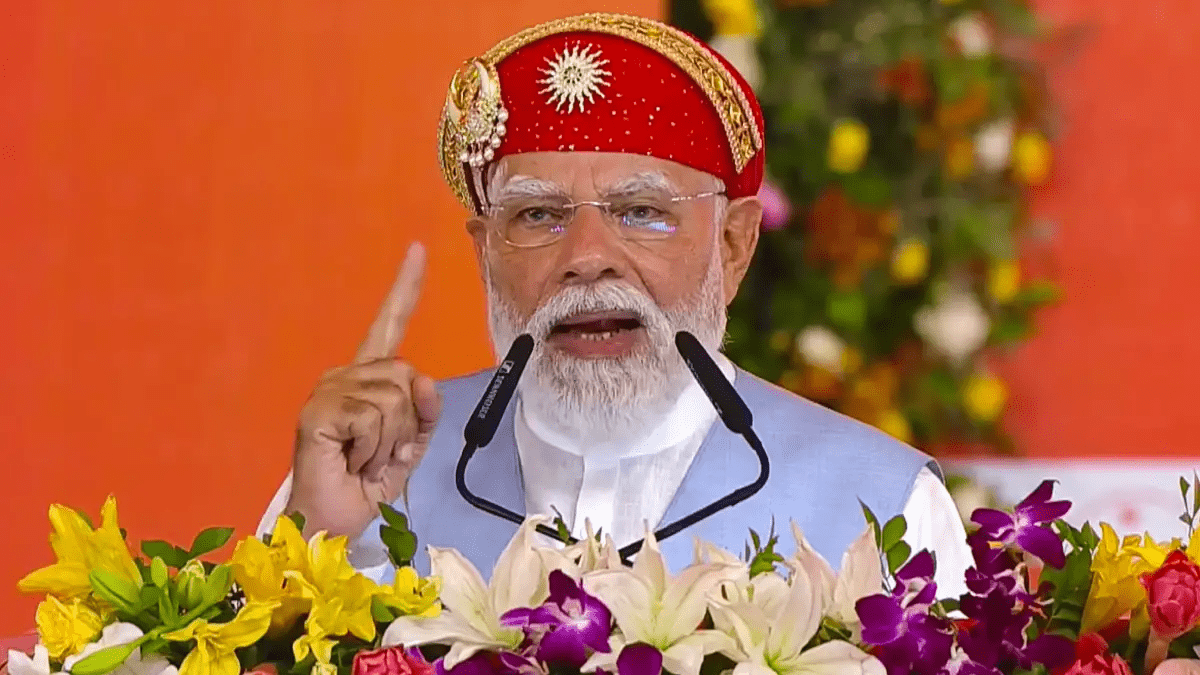
The National Democratic Alliance gathers at Bharat Mandapam to mark 12 consecutive years in power, passing a sovereign resolution to honor a historic 4,399-day milestone.
The institutional timelines of Indian democracy have reached a historic turning point. Gathering for a high-level summit at the landmark Bharat Mandapam convention center on Wednesday, top leaders of the ruling National Democratic Alliance (NDA) met to celebrate 12 consecutive years of governance at the Centre. The celebration arrives at a moment of immense political significance, coming directly on the day Prime Minister Narendra Modi officially broke the national record to claim the title of India’s longest-serving continuously elected Prime Minister.
The high-profile political gathering brings together senior Union Cabinet ministers, including Amit Shah, Rajnath Singh, J.P. Nadda, and Shivraj Singh Chouhan, alongside Chief Ministers and Deputy Chief Ministers representing all 22 NDA-ruled states and Union Territories. The primary order of business for the alliance is the formal passage of a joint sovereign resolution honoring Modi for his uninterrupted tenure at the helm of the world’s largest democracy, recognizing a journey that began with his first swearing-in ceremony on May 26, 2014.
Also Read | Imran Khan and Bushra Bibi Sentenced to 17 Years in Jail
The Constitutional Mathematics: Surpassing the 4,398-Day Ceiling
To understand the historical precision behind the Modi longest serving elected PM record, look at the underlying constitutional timeline compared to India’s first Prime Minister, Pandit Jawaharlal Nehru.
While Pandit Nehru led the nation for a cumulative total of 17 years starting from Independence Day in 1947, his first five years in office (1947–1952) were served as the head of an unelected, transitional interim government. For the purpose of evaluating elected democratic mandates, historians and legal analysts track tenures starting from the conclusion of India’s first general election in 1952.
Nehru’s elected timeline stopped at exactly 4,398 days due to his passing in office in 1964. By crossing into his 4,399th consecutive day on June 10, 2026, Modi has established the longest uninterrupted elected streak in the country’s history. While former Prime Minister Indira Gandhi recorded more than 14 years in power, her time in office was broken into separate, non-continuous terms, leaving Modi’s decade-plus run uniquely unmatched.
A Transformed Political Architecture
The landmark summit at Bharat Mandapam is heavily supported by a series of recent, historic electoral expansions that have shifted the balance of power across the subcontinent.
| Core Regional Political Frontier | Historical Legislative Landscape | Modern 2026 Electoral Outcome | Ideological & Strategic Value |
| West Bengal State Assembly | Dominated for decades by Left Front blocks and Trinamool cartels. | BJP secures its first-ever outright majority government. | Returns the party to the home state of Jana Sangh founder S.P. Mookerjee. |
| Assam & Northeast Corridors | Long considered vulnerable, volatile border security territories. | Consolidates high-margin repeat NDA mandates. | Unlocks long-term logistics routes linking directly to Southeast Asia. |
| Central Lok Sabha Trough | Historic coalitional reliance and unpredictable floor shifts. | Robust, institutional 12-year alliance continuity. | Eradicates policy gridlock; provides an open highway for industrial capex. |
The massive legislative breakthrough in West Bengal carries deep symbolic weight for the ruling party, marking their first successful push into the home state of Dr. Syama Prasad Mookerjee since Independence. This triumph, paired with structural wins across the Northeast, has effectively insulated the NDA’s national policy agenda from the regional vulnerabilities that frequently derailed coalition governments in past decades.
Also Read | Imran Khan and Bushra Bibi Sentenced to 17 Years in Jail
Charting the Path to a Developed Nation
Beyond celebrating historical milestones, the executive teams at Bharat Mandapam are using the session to finalize an aggressive policy roadmap for the second half of the decade.
The alliance partners are reviewing progress on major development initiatives, including the massive Semicon India chip fabrication grid, the ongoing rollout of the Namo Bharat Regional Rapid Transit Systems, and the expansion of advanced digital public infrastructure deep into tier-3 towns.
The Ministerial Perspective: “The work accomplished for our country during this tenure will be etched in golden letters, marking the time when India took its first steps towards becoming a Viksit Bharat,” noted Union Parliamentary Affairs Minister Kiren Rijiju during an event briefing.
With assembly elections scheduled across multiple critical states over the next twelve months, the Bharat Mandapam declaration sends a powerful signal of stability to international markets. By pairing structural political gains with long-term infrastructure planning, the alliance enters the post-June 2026 cycle with clear strategic momentum, determined to turn its historic political endurance into permanent economic status on the world stage.
FAQ Section
How did PM Narendra Modi break the longest-serving elected PM record?
On June 10, 2026, Prime Minister Narendra Modi completed his 4,399th consecutive day in office as an elected leader since taking his first oath on May 26, 2014. This milestone officially broke the previous record of 4,398 days held by India’s first Prime Minister, Jawaharlal Nehru, post-1952.
Why is Jawaharlal Nehru’s tenure between 1947 and 1952 excluded from this calculation?
Jawaharlal Nehru’s first five years in office were served as the head of an un-elected interim government before India formally institutionalized its first democratic general elections in 1952. To maintain a fair comparison of elected mandates, only tenures following democratic elections are counted.
What is the primary purpose of the mid-2026 NDA summit at Bharat Mandapam?
The summit functions as a dual platform: it marks the completion of 12 continuous years of the NDA government at the Centre and serves to coordinate future legislative strategy. The leaders are reviewing infrastructure progress, addressing upcoming state elections, and aligning policies to support the Viksit Bharat economic agenda.
Also Read | Imran Khan and Bushra Bibi Sentenced to 17 Years in Jail
End….