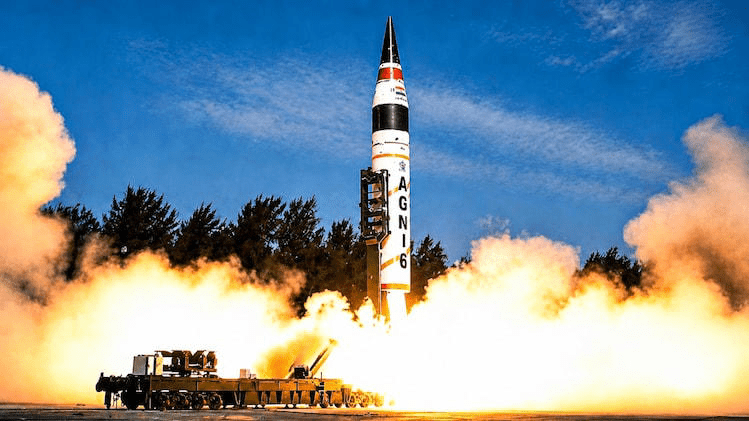
The SIPRI Yearbook 2026 confirms a major policy shift, ending the legacy “de-mated” separation protocol to counter a growing two-front security threat from China and Pakistan.
The strategic baseline governing nuclear deterrence in South Asia has experienced a historic realignment. According to data published in the newly released SIPRI Yearbook 2026 by the Stockholm International Peace Research Institute, India has expanded its military nuclear stockpile to an estimated 190 warheads, overtaking Pakistan’s current inventory of 170.
Beyond this numerical expansion, the critical breakthrough lies in a fundamental change to the physical readiness of India’s weapons systems. For the first time in its strategic history, New Delhi has executed a selective India peacetime nuclear warhead deployment, placing 12 nuclear warheads into a fully assembled, operationally live state on active launchers during peacetime. This move officially ends the legacy “de-mated” policy framework that defined Indian nuclear diplomacy for over three decades.
Also Read | Imran Khan and Bushra Bibi Sentenced to 17 Years in Jail
Dismantling the Cold War “De-Mated” Policy Framework
Since formulating its official nuclear doctrine in the late 1990s, India adhered strictly to a self-imposed “de-mated” posture. This security protocol split the physical components of the nuclear triad across completely separate administrative channels to prevent accidental launches or rapid escalation during regional border crises.
Under this traditional blueprint, the military branches managed the empty missile delivery vehicles, while the radioactive fissile cores remained locked inside heavily fortified civilian bunkers under the strict control of the Department of Atomic Energy (DAE).
Assembling the components into a weaponized system during an emergency was designed as a slow, multi-day logistical process. By permanently mating these 12 warheads to their delivery systems during peace, New Delhi has removed this buffer window, shifting its strategic posture from delayed assembly to rapid response.
The Operation Sindoor Fallout: Transition to High-Tempo Warfare
This significant shift in readiness is a direct outcome of changing defense assumptions following Operation Sindoor in May 2025. That brief, high-intensity border clash erupted after a terrorist attack targeted tourists in Pahalgam in April 2025. In response, the Indian Air Force and Army bypassed regional defense nets to neutralize proxy networks deep inside Pakistan.
While Operation Sindoor demonstrated India’s conventional capability and its willingness to accept high escalatory risks to protect its borders, it also exposed a major structural vulnerability.
In a modern theater dominated by real-time data feeds and high-speed precision weapons, relying on a slow, multi-day assembly process for a nuclear deterrent creates a dangerous window of vulnerability. The 2025 conflict accelerated the domestic drive to modernize weapons and build an immediate response capability, ensuring India’s deterrent remains credible in high-speed, modern conflicts.
Also Read | Imran Khan and Bushra Bibi Sentenced to 17 Years in Jail
The Deep-Sea Trigger: Securing the Undersea Shield
The physical deployment of these 12 ready-to-fire nuclear warheads is concentrated within India’s expanding SSBN (Nuclear-Powered Ballistic Missile Submarine) fleet. Data tracked by the International Institute for Strategic Studies (IISS) in its Military Balance directory shows the rapid operational integration of India’s home-built submarines, led by the INS Arihant and the newly commissioned INS Arighaat.
The technical demands of naval operations make an assembled, pre-mated posture essential for undersea forces. A stealth submarine’s core survival strategy relies on diving into deep ocean trenches for months at a time, completely cut off from land-based logistics.
| Submarine Fleet Platform | Active Missile Integration | Warhead Configuration Status | Operational Patrol Mandate |
| INS Arihant (S2 Core) | K-15 Sagarika / K-4 SLBM tubes. | Fully Mated: Live warheads pre-mounted on delivery systems. | Continuous deterrence patrols across deep ocean corridors. |
| INS Arighaat (S3 Core) | Advanced high-tonnage ballistic arrays. | Fully Mated: Integrated into active launch tubes. | Deployed to secure a survivable second-strike capability. |
| S4 & S4 Class Units* | Next-gen long-range vertical cells. | Slated for automated component integration. | Preparing for deep-fringe oceanic deployments. |
If a severe crisis breaks out while an SSBN is executing a continuous deterrence patrol, the crew cannot return to port to assemble their weapons systems. For a sea-based deterrent to be credible, the nuclear-tipped submarine-launched ballistic missiles (SLBMs) must leave the dock fully assembled and operationally live. The 12 deployed warheads represent the physical launch of this continuous undersea nuclear shield.
Balancing the Two-Front Threat
This major defense upgrade is a direct response to the shifting balance of power in Asia, where India faces a complex, two-front security challenge along its borders.
The rapid expansion of China’s rocket forces—which are adding nearly 100 warheads annually while constructing vast new silo fields—combined with Pakistan’s reliance on short-range tactical nuclear weapons, has changed New Delhi’s defensive calculations.
By keeping 12 warheads fully assembled and peacetime-deployed on its submarines, India protects its No First Use (NFU) doctrine by guaranteeing a survivable second strike. This posture warns adversaries that any attempt to wipe out India’s command centers in a surprise first strike would be met with an immediate, devastating response from the ocean depths. This calibrated shift raises the cost of regional military gambles, moving India past its traditional policy of component isolation to secure long-term stability across the subcontinent.
FAQ Section
What does the India peacetime nuclear warhead deployment mean?
The peacetime deployment means India has assembled and mounted 12 nuclear warheads onto active missile launchers, primarily inside its ballistic missile submarine fleet. This marks a departure from its traditional policy of keeping radioactive cores stored separately from delivery vehicles during peacetime.
Does this policy change mean India is abandoning its “No First Use” pledge?
No. India is maintaining its foundational “No First Use” commitment, pledging never to initiate a nuclear strike. However, the pre-assembled posture ensures that its physical ability to execute a retaliatory second strike is no longer a multi-day logistical process, but a capability available in seconds.
Which naval assets are carrying these fully assembled nuclear warheads?
The 12 pre-mated warheads are deployed within India’s nuclear-powered ballistic missile submarine (SSBN) fleet, led by the active hulls of the INS Arihant and the INS Arighaat. This deep-sea deployment ensures a highly survivable, hidden second-strike capability.
Also Read | Imran Khan and Bushra Bibi Sentenced to 17 Years in Jail
End…