

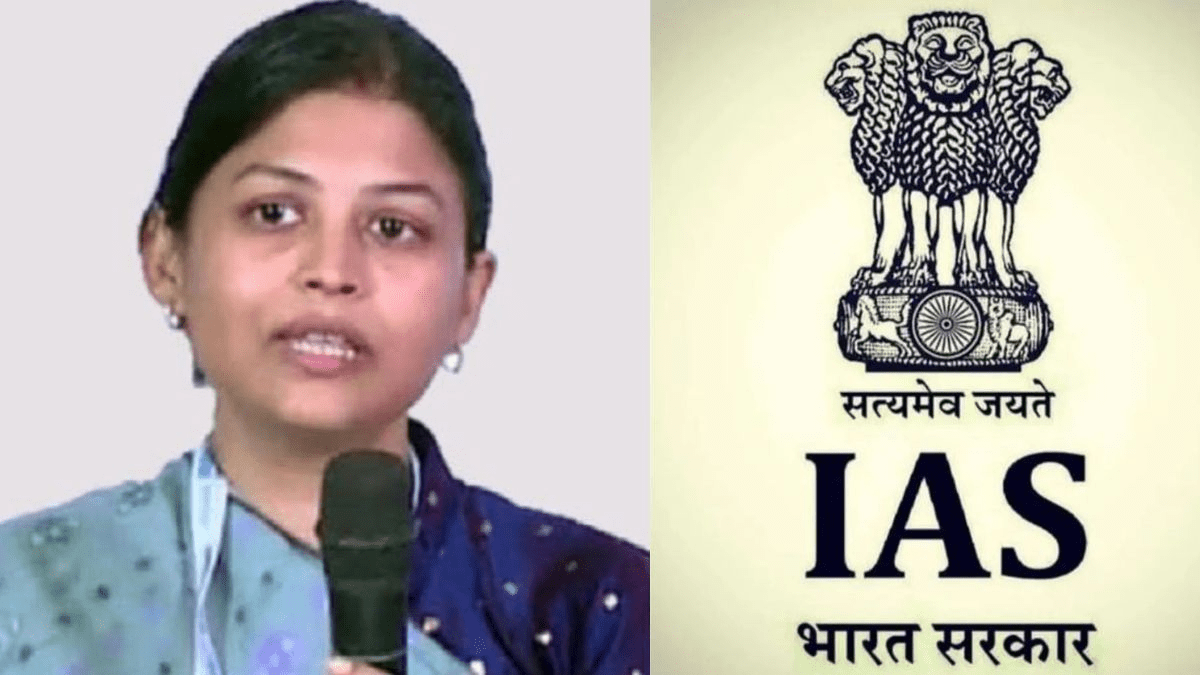
Now a landmark disciplinary case in the Indian civil services has reached its final conclusion. The Central Government has officially removed senior IAS officer Padma Jaiswal from service following allegations of severe financial irregularities during her tenure in Arunachal Pradesh nearly two decades ago. Therefore, the 2003-batch AGMUT cadre officer becomes a rare example of a serving official facing the ultimate administrative penalty. Meanwhile, the investigation, which began with a complaint in 2008, uncovered a criminal conspiracy involving the siphoning of treasury funds to purchase private properties. Following the Union Public Service Commission’s (UPSC) recommendation and the President’s final assent, Jaiswal’s civil services career has officially ended in May 2026.
Also Read | Imran Khan and Bushra Bibi Sentenced to 17 Years in Jail
Early Career: Padma Jaiswal’s Rise in the AGMUT Cadre
Now Padma Jaiswal was once considered a promising officer within the 2003 batch of the Arunachal Pradesh-Goa-Mizoram and Union Territories (AGMUT) cadre. Her career path included significant postings across the union territories and North-Eastern states. Therefore, her appointment as the Deputy Commissioner of West Kameng in 2007 was seen as a standard progression for a senior administrator.
First, Jaiswal was stationed in Bomdila, the headquarters of the West Kameng district. Next, her role involved managing the fiscal health and infrastructure projects of a critical border region. Thus, the authority she wielded was substantial, making the subsequent allegations of misconduct all the more impactful on the local population.
So while she moved through various departments over the years, the shadow of her time in Arunachal Pradesh never fully dissipated. Meanwhile, her career continued through suspensions and revocations until the final inquiry report was filed. Therefore, her story is now a cautionary tale for the All India Services.
The West Kameng Complaint: Residents Flag Misuse of Funds
Now the seeds of the current removal were sown in February 2008. Residents of West Kameng filed a formal complaint accusing Jaiswal of misusing her official position and diverting public funds. Therefore, the local community was the first to sound the alarm on the suspicious movement of government money.
First, the allegations suggested that the district’s treasury was being treated as a personal source of capital. Next, the complaints led to her initial suspension in April 2009 as the Ministry of Home Affairs (MHA) began a preliminary look into the records. Thus, a departmental chargesheet was issued almost immediately, marking the start of a nearly two-decade-long legal battle.
So while her suspension was revoked in October 2010, the investigation continued behind the scenes. Meanwhile, the case was eventually handed over to the Central Bureau of Investigation (CBI) for a more technical audit. Therefore, the original 2008 complaint proved to be the mechanical necessity that triggered a national-level probe.
CBI Investigation: Uncovering the ‘Returnable Basis’ Conspiracy
Now the CBI’s entry into the case transformed the departmental inquiry into a criminal investigation. Investigators uncovered what they described as a “deep criminal conspiracy” involving Jaiswal and her subordinates. Therefore, it was not just an individual act but a coordinated effort involving the Financial Advisor and the office cashier.
First, the investigation revealed that treasury funds were systematically withdrawn in cash under Jaiswal’s direct instruction. Next, these funds were reportedly taken on a “returnable basis,” a practice that has no legal standing in government accounting. Thus, the public coffers were being used as an interest-free loan system for the accused.
So the CBI meticulously mapped the instructions given to the office cashier during the 2007–2008 period. Meanwhile, the subordinates were also charged for failing to flag these illegal withdrawals. Therefore, the conspiracy findings formed the bedrock of the MHA’s decision to pursue a major penalty.
Also Read | Imran Khan and Bushra Bibi Sentenced to 17 Years in Jail
Money Trail: DCR Liquidation and Property Purchases
Now the most damning evidence against Jaiswal involved the liquidation of government assets. The inquiry revealed that three Government Deposit at Call Receipts (DCRs) were allegedly liquidated to generate multiple Demand Drafts. Therefore, the total amount of ₹28 lakh was siphoned out of the official system in a calculated manner.
The Scam Breakdown:
-
Amount: ₹28 Lakh liquidated via three DCRs.
-
Method: Conversion of government receipts into private Demand Drafts.
-
Purpose: Purchase of immovable properties.
-
Beneficiaries: Properties were allegedly registered in the names of close relatives.
First, the CBI tracked the Demand Drafts to real estate transactions involving Jaiswal’s family members. Next, the misuse of public funds for personal enrichment was highlighted as a grave violation of the All India Services Conduct Rules. Thus, the physical evidence of property registration became a “point of no return” for the officer.
Administrative Action: Invoking Rule 8 of the AIS Rules
Now based on the CBI’s findings, the Ministry of Home Affairs initiated “major penalty proceedings.” These were conducted under Rule 8 of the All India Services (Discipline and Appeal) Rules. Therefore, the MHA signaled from the outset that this was not a case that could be settled with a minor reprimand or a salary cut.
First, Rule 8 is invoked only in instances involving grave violations of official integrity and extreme misconduct. Next, Jaiswal was given multiple opportunities to respond to the departmental chargesheet. Thus, the administrative process followed a mechanical necessity for due process, ensuring the final verdict would be legally sound.
So the inquiry report finally concluded that she had failed to uphold the integrity standards expected of an IAS officer. Meanwhile, the “abuse of official position” was cited as a primary factor in the recommendation for her ouster. Therefore, the invocation of Rule 8 was the final administrative hurdle before her official removal.
Final Verdict: The Roles of UPSC and the President of India
Now the final steps of the removal process involved the highest levels of the Indian government. Following the departmental inquiry, the Union Public Service Commission (UPSC) was consulted to review the findings. Therefore, an independent body provided the necessary validation for the severe penalty.
First, the UPSC recommended Jaiswal’s “removal from service” after finding the evidence of misuse of funds to be irrefutable. Next, the file was sent to the President of India, who granted the final assent to the order. Thus, the civil services career of Padma Jaiswal officially ended in May 2026.
So the “removal from service” is one of the most severe punishments in the All India Services, as it ends all future career prospects within the government. Meanwhile, the decision has been sent to the Chief Secretary of Delhi for immediate execution. Therefore, the case stands as a rare example of a senior officer being held accountable for past corruption.
Also Read | Imran Khan and Bushra Bibi Sentenced to 17 Years in Jail
The 16-Year Wait: Why the Disciplinary Process Took So Long
Now the prolonged timeline of the case has drawn significant attention from legal and administrative observers. Stretching from a 2008 complaint to a 2026 removal, the process took 18 years to conclude. Therefore, many are questioning the efficiency of the disciplinary framework for All India Services officers.
First, the gaps between the chargesheet (2009) and the conclusion of the inquiry (2026) are being criticized as excessive. Next, observers argue that such delays often allow tainted officers to continue in service or retire with full benefits. Thus, the Padma Jaiswal case is being cited as proof of a mechanical necessity for faster disciplinary courts.
So while the final result was a victory for accountability, the delay has sparked a debate on judicial reform within the civil services. Meanwhile, the MHA is reportedly looking into ways to streamline major penalty proceedings. Therefore, the 16-year wait remains the most controversial aspect of this high-profile removal.
FAQ: Understanding the IAS Removal Process 2026
1. Who is Padma Jaiswal? Now, Padma Jaiswal was a senior 2003-batch IAS officer of the AGMUT cadre who has been removed from service for financial corruption.
2. What were the specific charges against her? First, she was accused of diverting ₹28 lakh of government funds and liquidating DCRs to purchase private properties in her relatives’ names.
3. Which agency investigated the case? So, the Central Bureau of Investigation (CBI) conducted the probe, uncovering a criminal conspiracy involving treasury funds.
4. What is the difference between “dismissal” and “removal from service”? Next, while both end the officer’s career, “dismissal” typically disqualifies the person from future government employment, whereas “removal” does not always carry that specific permanent disqualification.
5. Why did it take 16 years to remove her? Now, the lengthy process is attributed to the complex disciplinary framework of the All India Services, multiple rounds of inquiry, and legal hurdles between 2008 and 2026.
6. Who gives the final order for an IAS officer’s removal? Finally, the President of India provides the final assent for the removal of an IAS officer after recommendations from the MHA and UPSC.
Also Read | Imran Khan and Bushra Bibi Sentenced to 17 Years in Jail
End….

