

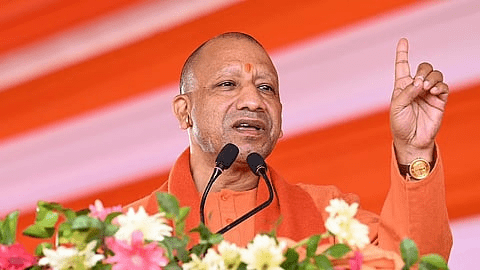
Now the socio-political fabric of Uttar Pradesh is experiencing a historic reconfiguration. For multiple decades, the state’s administrative apparatus moved exclusively around identity arithmetic and voter appeasement. Therefore, the nature of daily public governance usually depended on the specific identity of the chief minister. This entrenched system often left marginalized communities completely cut off from real power centers.
Meanwhile, recent administrative initiatives are dismantling these traditional patronage networks entirely. Under the current leadership, a fresh administrative discourse focuses heavily on institutional transparency and safety. This systematic transition defines the core of Yogi Adityanath good governance model today. Still, analyzing this massive shift requires looking past standard political slogans.
True public equity demands structural institutional reforms.
Also Read | Imran Khan and Bushra Bibi Sentenced to 17 Years in Jail
The Ascetic Foundation of State Renewal
Now observers must study the cultural roots of this administrative overhaul. The leader’s primary strength originates from his foundational identity as an ascetic renunciate. Therefore, a traditional monk maintains no personal family obligations or lineage boundaries. So the entire regional population becomes his functional family unit.
Meanwhile, this perspective draws deeply from the ancient, inclusive values of the Gorakhnath Peeth. The historic Nath movement has rejected untouchability and birth-based social discrimination for centuries. Thus, these historical spiritual foundations now serve as the structural baseline for administrative renewal.
“An ascetic ruler acts without personal bias,” a local political analyst observed in Lucknow. Therefore, policy makers can design programs without trying to satisfy separate localized voting groups.
Targeting the Lowest Tier
First, development schemes focus entirely on individuals standing at the absolute bottom of the economic ladder. These families waited for basic civil amenities for generations. Therefore, shifting the state’s attention toward them corrects long-standing historical imbalances.
Next, state departments are executing plans based on actual geographical requirements rather than demographic concentrations. This logic prevents the unfair diversion of public funds to favored political zones. Thus, every district receives equitable infrastructure funding.
Finally, the administration monitors project completion dates using automated digital tracking tools. Delayed files face strict scrutiny from senior oversight boards. Therefore, the executive branch maintains excellent operational speed throughout the year. Period.
Breaking Old Habits
So local bureaucracies must abandon their old habits of favoring specific influential families. The new system demands absolute neutrality from top officers down to village workers. Still, enforcing this standard completely requires relentless monitoring from the top.
Now let’s examine how this philosophy changes legal representations.
Substantive Justice Beyond Empty Symbols
Now let’s analyze how the state defines modern social equity. True inclusion happens when minority representation moves past shallow tokenism into actual structural empowerment. Therefore, the administration tests every policy against strict constitutional criteria.
So the government established a specialized Other Backward Classes commission for local body polls. This move satisfies the complex “Triple Test” formula defined by the Supreme Court. Meanwhile, this careful legal preparation ensures that sub-district elections remain secure against court interventions.
Thus, the rights of the deprived stay protected on the touchstone of the judiciary.
Securing Legal Compliance
First, the state compiled massive databases to verify accurate local demographic ratios. This empirical approach avoids arbitrary reservation quotas. Therefore, the final distributions survive intense legal challenges easily.
Next, this data-driven strategy ensures that backward communities receive genuine political space at the village council level. Local leadership blocks are no longer controlled by a few dominant land-owning families. Thus, grass-roots democracy becomes far more representative.
Finally, the state is training rural local body representatives to manage development funds directly. This training empowers village leaders to handle budgets independently. Therefore, local administrative capacity improves across all districts.
The Shift in Tone
So the political narrative is moving away from divisive identity debates toward collective community development. Leaders cannot rely on simple emotional appeals to win over audiences anymore. Still, deep-seated traditional voting preferences take time to alter.
Are these legal changes showing results? Yes. Is the transformation complete? Probably not.
Eradicating Patronage from Public Recruitment
Now we must examine the complete overhauling of the state employment ecosystem. For years, securing a government position required dark combinations of recommendation notes and illegal cash bribes. Therefore, capable candidates from poorer backgrounds faced systemic exclusion from the state workforce.
The Death of Recommendation Culture
First, the current administration completely dismantled the corrupt recommendation systems inside recruitment agencies. The state civil service body and police selection boards underwent thorough digital modernizations. Therefore, tests happen under strict electronic monitoring now.
So if we look at the recruitment outcomes:
-
Over nine lakh government positions allocated through pure merit
-
Automated digital grading blocks any manual marking changes
-
Background verification happens via clean online channels
Thousands of rural youths are entering executive positions without spending a single rupee in bribes. A major cultural victory.
Boosting Social Confidence
Next, when a youth from a marginalized household becomes a public official purely on personal ability, it inspires his whole village. The community realizes that hard work actually yields real rewards within the current system. Thus, trust in public institutions climbs to new heights.
So this transparency eliminates the old elite monopolies over administrative desks. Young officers from diverse backgrounds are taking charge of sub-divisional boards today. Therefore, field management looks far more empathetic toward ordinary petitioners.
Finally, rogue elements attempting to leak test materials face immediate asset confiscations under strict anti-copying laws. No leniency exists for exam syndicates. Period.
The Economic Multiplier
Now families are investing more resources into their children’s higher education. They know that competitive exams are no longer rigged by influential brokers. Therefore, private coaching houses and rural libraries are seeing record student turnouts.
This focus on capability changes the youth mindset permanently.
Also Read | Imran Khan and Bushra Bibi Sentenced to 17 Years in Jail
Establishing a Fear-Free Rural Environment
Now safety forms the primary foundation for any successful social harmony model. Before the current policy shifts, vulnerable rural sections were the easiest targets for local extortion syndicates. Therefore, establishing a strict rule of law was essential to protect marginalized citizens.
Dismantling Armed Extortion Networks
First, the government introduced the advanced Police Commissionerate system across major urban areas. This structural update speeds up command decisions during local law emergencies. Therefore, responsive security reaches distressed neighborhoods much faster.
Next, tech-driven programs like “Operation Trinetra” integrated thousands of public surveillance feeds into central monitoring rooms. Criminals can no longer operate openly without leaving clear digital footprints. Thus, street crime indicators are dropping consistently.
Then, citizens can submit local grievances directly through the online portal system. This dashboard forces regional officers to resolve public complaints within fixed windows. Therefore, local musclemen cannot block ordinary citizens from getting help anymore.
The Prayagraj Precedent
So the state took unprecedented steps by seizing massive illegal estates from notorious gang leaders. In cities like Prayagraj, contractors used this cleared land to build affordable residential apartments for poor families. This symbolic action proves that constitutional law dominates over raw physical intimidation now.
Now women can commute safely during late evening hours across commercial districts. That safety encourages greater female participation in the local labor force. Meanwhile, business investments are reaching rural zones that were previously labeled dangerous.
We’ll see if other states copy these strict anti-mafia policies.
How Local Artisan Schemes Create Parity
Now financial discrepancies often trigger deep social instability within developing economies. Therefore, the flagship “One District One Product” initiative serves as both an economic program and a social tool. It protects traditional family crafts from disappearing.
Empowering Traditional Craft Communities
First, the program selects one unique traditional craft from each of the 75 districts for dedicated financial support. Most of these heritage skills belong to specific backward or minority artisan groups. Therefore, assistance flows directly to vulnerable creative communities.
So if we analyze the global trade reach:
-
Bhadohi carpet weavers access high-tier European design houses
-
Moradabad brass workers secure long-term shipping deals in America
-
Prajapati terracotta artisans export fine clay creations worldwide
Local talent connects with international capital without relying on exploitative middlemen. This model boosts rural income levels significantly.
Upgrading Local Technology
Next, state centers provide advanced digital machinery and design training to rural workshops. These updates reduce physical strain while increasing daily production numbers. Thus, traditional crafts stay competitive against mass-produced factory goods.
So young artisans are choosing to stay in their ancestral villages instead of migrating to crowded urban slums. They can earn excellent profits right from their home base. Therefore, local craft economies are remaining highly sustainable.
Finally, trade exhibitions showcase these regional products across national capitals regularly. Thus, local artisans receive immense public respect alongside financial wealth.
Direct Benefit Channels Limit Intermediaries
Now uniform welfare delivery remains a core element of Yogi Adityanath good governance strategy. Past administrations often filtered aid distribution through local political operatives. Therefore, families outside the ruling party’s circle faced systematic denial of basic rights.
The Direct Transfer Revolution
First, all major state welfare systems utilize automated banking networks now. Funds flow straight from the state treasury into the verified bank accounts of beneficiaries. Therefore, corrupt local brokers cannot extract arbitrary commission cuts anymore.
Next, look at the staggering housing delivery numbers. Under joint state and central housing schemes, more than 62 lakh under-privileged families received solid brick homes. Thus, Uttar Pradesh leads the country in housing delivery for the poor.
Then, millions of sanitary units reached rural homes without any social background tracking. The system checks basic economic distress criteria exclusively. Therefore, every community stands in the exact same delivery queue.
Restoring Public Trust
So when an ordinary citizen receives public benefits without paying bribes, their faith in the constitution increases. They realize the state apparatus treats them as equal stakeholders. Still, checking backend system bugs requires constant data monitoring.
Now digital ration distribution monitors are preventing grain theft at village shops. The system requires biometric authentication before releasing food packets. Therefore, poor families receive their full nutritional quotas every month.
The digital tracking wall stops leaks permanently.
Also Read | Imran Khan and Bushra Bibi Sentenced to 17 Years in Jail
Uniting Diverse Segments via Growth Goals
Now the state is steering its populace toward an ambitious macro economic objective. The administration intends to expand the regional output into a robust trillion-dollar economy. Therefore, massive industrial investments form the core of current development plans.
Connecting Infrastructure with Inclusion
First, mega expressways are connecting remote eastern districts with capital trade hubs. These modern highways allow rapid movement for agricultural goods and manufacturing freights. Therefore, land values and job opportunities are climbing in backward regions.
Next, industrial corridors are attracting global electronic and defense manufacturing units. These factories demand thousands of skilled technical workers every month. Thus, local youth find high-paying jobs without leaving their home state.
Then, cultural restoration projects in Ayodhya, Kashi, and Prayagraj are driving a massive tourism boom. Millions of travelers visit these sacred spaces every year. Therefore, small service providers like taxi drivers and hoteliers enjoy steady daily incomes.
The Lasting Legacy
So this comprehensive financial philosophy links all sections of society through job creation. A growing economy offers advancement opportunities to every community equally. Therefore, old social rivalries disappear when everyone focuses on shared financial growth.
This “New Uttar Pradesh” stands firmly on the foundations of merit, safety, and mutual harmony. Wrong to assume the state cannot break its old boundaries? Think again.
The model offers an interesting path for the nation’s future.
The Administrative Challenges Ahead
Now preserving these institutional reforms requires constant vigilance from state monitors. Old patron networks will always try to exploit fresh loopholes silently. Therefore, maintaining momentum remains the main goal for the executive team.
Sustaining the Merit Baseline
First, oversight boards must protect the integrity of ongoing recruitment drives. Any single instance of examination misconduct can ruin years of public trust instantly. Therefore, testing safety must remain exceptionally high.
Next, rural industrial units need continuous access to reliable electricity and clean water infrastructure. The state must upgrade local utility grids to support growing manufacturing hubs. Thus, infrastructure investment cannot slow down.
Then, primary education centers inside remote villages demand deep qualitative upgrades. Developing an industrial workforce requires solid basic schooling models. Therefore, state boards are revamping primary school setups this term.
Finally, checking lower-tier bureaucratic corruption requires constant public feedback loops. The state must ensure that field officers treat ordinary citizens with absolute dignity daily. Thus, transparency remains a continuous process. End of story.
Frequently Asked Questions
Now let’s address common reader questions regarding the current political model of Uttar Pradesh. These answers break down economic, security, and administrative facts clearly. Therefore, read them carefully.
What forms the baseline of Yogi Adityanath good governance model? The model focuses heavily on establishing the strict rule of law, ensuring transparent merit-based employment, and utilizing direct digital welfare transfers. Therefore, it replaces classic identity politics with development tracking.
How did the administration eliminate corruption in state recruitment? The state completely removed manual recommendation systems and interview options for lower-tier positions. Testing happens under electronic surveillance, and over nine lakh jobs have been awarded on pure merit. Thus, favoritism is blocked.
What is the “One District One Product” scheme’s social impact? The initiative selects and supports a unique traditional craft from each district. Since most artisans belong to backward, Dalit, or minority groups, the global trade links boost their incomes directly. Therefore, it creates economic parity.
How does the state use confiscated mafia property to help the poor? The administration seizes illegal lands from criminal syndicates under strict anti-mafia rules. In places like Prayagraj, this land is used to build affordable residential housing blocks for low-income families. Thus, it enforces the constitution.
What is the current macro-economic goal of Uttar Pradesh? The state is working toward transforming its local economy into a trillion-dollar engine. This goal involves building expressways, launching industrial manufacturing zones, and expanding spiritual tourism. Therefore, it creates jobs across all sectors.
How are welfare benefits distributed to ensure fair access? All subsidies and housing allowances move through direct bank transfer protocols linked to biometric IDs. This system cuts out traditional local middlemen entirely. Therefore, all candidates stand in the exact same delivery line.
What is “Operation Trinetra” within the state safety framework? It is a comprehensive security program that networks thousands of public and private surveillance cameras into localized police monitoring centers. This setup allows fast tracking of regional violations. Therefore, rural safety stays high. End of story.
Also Read | Imran Khan and Bushra Bibi Sentenced to 17 Years in Jail
End…

