

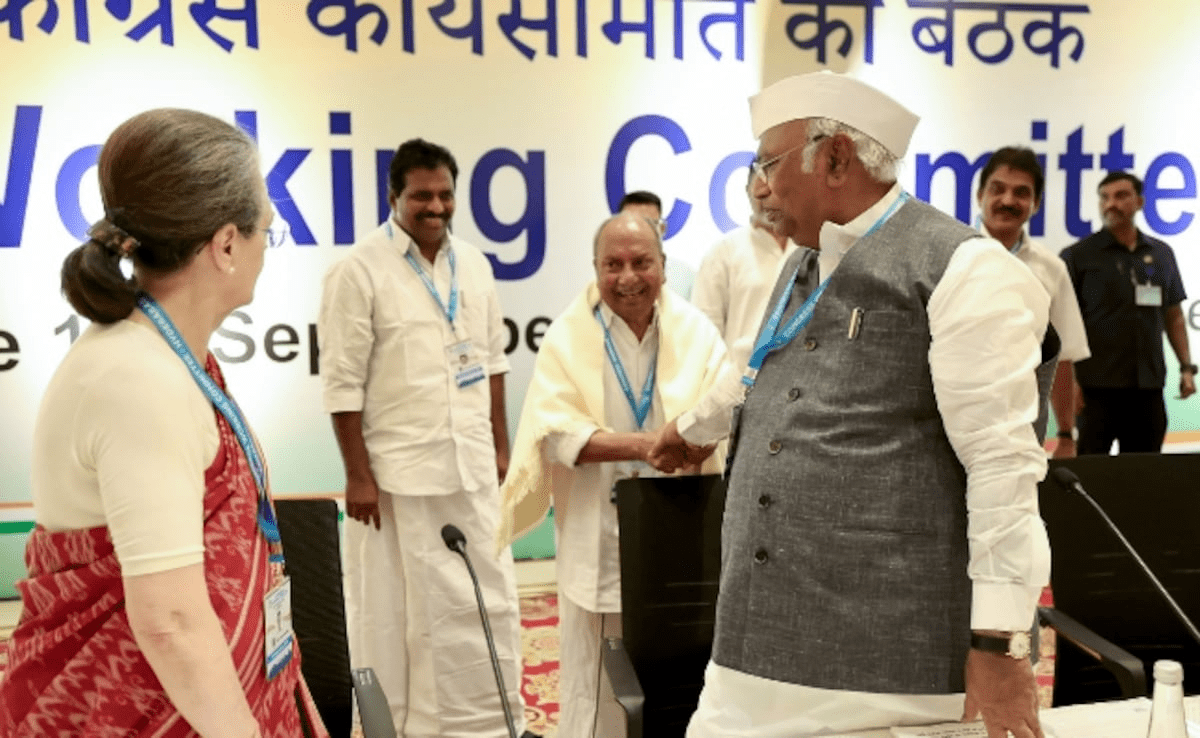
Now the political uncertainty that gripped the “God’s Own Country” has finally reached its conclusion. After a grueling nine-day standoff following the Kerala assembly election results, the Congress party has officially named VD Satheesan as the new Chief Minister of Kerala. Therefore, this marks the end of a deep internal impasse that marathon sessions in New Delhi had failed to resolve. Meanwhile, the breakthrough did not emerge from a boardroom but from a pivotal intervention by former party chief Sonia Gandhi and her trusted advisor, AK Antony. Following a strategic “Antony Formula,” the high command opted for a solution that prioritizes local sentiment and fiscal prudence over the imposition of a Delhi-based candidate.
Also Read | Imran Khan and Bushra Bibi Sentenced to 17 Years in Jail
Three Candidates, No Solution: The Roots of the Impasse
Now the problem began almost immediately after the election results favored the UDF. With three major frontrunners vying for the top post, neither side was willing to yield. Therefore, the state’s political machinery came to a grinding halt as internal factions lobbied for their respective leaders.
First, one-on-one meetings with Congress MLAs in Thiruvananthapuram failed to produce a consensus. Next, high-level consultations in Delhi involving Rahul Gandhi and Congress President Mallikarjun Kharge also remained “stuck.” Thus, the impasse became a mechanical necessity for a higher intervention that could bypass local ego clashes.
So while the public waited for a functioning government, the party leadership was caught in a cycle of circular negotiations. Meanwhile, the lack of a clear leader was beginning to affect the morale of the party workers. Therefore, the situation required a voice that commanded absolute respect across all factions.
The Sonia Gandhi Intervention: Why 10 Janpath Stepped In
Now with the leadership in a difficult situation, the Congress high command sought the help of Sonia Gandhi. As the chairperson of the INDIA alliance, her authority transcends standard party hierarchies. Therefore, her entry into the conversation changed the gravity of the negotiations instantly.
First, Sonia Gandhi recognized that the Kerala situation was becoming a PR liability on the national stage. Next, she understood that the solution needed to be one that satisfied both the local MLAs and the national strategy. Thus, she turned to a veteran who understood the “soil” of Kerala better than anyone else in Delhi.
So her intervention was not about imposing a will but about finding a sustainable logic. Meanwhile, the party was already under scrutiny for the nine-day delay. Therefore, Sonia Gandhi’s move to consult AK Antony was the first step toward the final resolution.
Why AK Antony? The Choice of a Political Moral Compass
Now the choice of AK Antony as the chief arbitrator was a strategic masterstroke. Antony is a three-time CM of Kerala and is renowned for his “impeccable honesty” and lack of personal ambition. Therefore, his counsel carried a weight that younger leaders could not ignore.
First, Antony is famously remembered for stepping down voluntarily in 2004 out of moral obligation. Next, his deep roots in Kerala politics allowed him to view the deadlock without the bias of Delhi’s high-power circles. Thus, he was the mechanical necessity for a solution that felt organic rather than manufactured.
So Sonia Gandhi reached out to her old colleague to present a formula that would be free of personal gain. Meanwhile, Antony’s retired status in Kerala made him an impartial observer of the current MLA dynamics. Therefore, he was the only leader who could bridge the gap between 10 Janpath and Thiruvananthapuram.
Also Read | Imran Khan and Bushra Bibi Sentenced to 17 Years in Jail
The ‘Antony Formula’: Breaking Down the Strategic Plan
Now the crucial moment came during a synchronized conversation between Gandhi and Antony. According to sources, Antony presented a two-point plan that addressed the immediate risks and the long-term optics. Therefore, this “Antony Formula” became the blueprint for Satheesan’s appointment.
The Two Pillars of the Formula:
-
Risk Mitigation: Avoiding the “by-election dilemma.”
-
Democratic Legitimacy: Respecting the allied agreement with the UDF.
First, Antony argued that the party could not afford a purely political appointment that ignored electoral realities. Next, he emphasized that the mandate was for a leader who was already on the ground. Thus, the formula was designed to provide a smooth transition without triggering further electoral battles.
Avoiding By-elections: The Pragmatic Shift in Strategy
Now one of the strongest arguments against choosing KC Venugopal was the logistical nightmare of by-elections. Antony was of the firm opinion that bringing a national leader back to the state would create an unnecessary mechanical necessity for multiple polls.
First, such a move would have triggered a by-election for a Kerala assembly seat. Next, it would have vacated a seat in the parliament, requiring another high-stakes battle. Thus, Antony felt that the results of these two by-elections would be too unpredictable to risk in the current climate.
So the party decided to prioritize stability over a “high-profile” central appointee. Meanwhile, the recent general elections had already exhausted the party’s ground resources. Therefore, avoiding the by-election trap became a cornerstone of the final decision.
Respecting the Mandate: Why Satheesan Won the Alliances
Now beyond internal Congress dynamics, the sentiment of the UDF (United Democratic Front) allies was a major factor. Antony pointed out that the general public and the allied parties were heavily in favor of VD Satheesan. Therefore, imposing a “Delhi candidate” would have sent a wrong message to the coalition partners.
First, Satheesan had already built significant rapport with the UDF partners during his time as the Opposition Leader. Next, his popularity on the ground was a mechanical necessity for a stable coalition government. Thus, ignoring this popular favorite would have weakened the UDF from within.
So the leadership realized that a CM must be acceptable to the entire front, not just the Congress party. Meanwhile, Satheesan’s track record in the assembly made him the most logical choice for the executive role. Therefore, the “popular favorite” tag ultimately secured his path to the CM’s office.
Also Read | Imran Khan and Bushra Bibi Sentenced to 17 Years in Jail
Final Decision: Venugopal Stays in Delhi, Satheesan Takes Kerala
Now once the Antony Formula was accepted, the execution was handled with strategic precision. Sonia Gandhi made the final decision to appoint VD Satheesan as the Chief Minister. Therefore, the focus then shifted to ensuring a graceful exit for the other contenders.
First, in a synchronized effort, Rahul and Priyanka Gandhi approached KC Venugopal. Next, they requested him to continue his national duties in Delhi, where his expertise is critically needed. Thus, Venugopal agreed to stay in the central leadership, paving the way for Satheesan’s elevation.
So the nine-day deadlock ended not with a victory for one faction, but with a strategic consensus. Meanwhile, Satheesan is expected to take his oath shortly, beginning a new chapter for Kerala. Therefore, the “Inside Story” of the phone call remains a masterclass in modern Indian political diplomacy.
FAQ: Understanding the 2026 Kerala CM Resolution
1. Who is the new Chief Minister of Kerala? Now, the Congress party has named VD Satheesan as the new Chief Minister of Kerala following a 9-day deadlock.
2. What was the “Antony Formula”? First, it was a strategic plan by veteran leader AK Antony to avoid by-elections and respect the local UDF mandate by choosing a popular local leader over a Delhi appointee.
3. Why was KC Venugopal not chosen as the CM? So, his appointment would have triggered two by-elections (assembly and parliament), which the party considered too risky and unpredictable at this time.
4. How did Sonia Gandhi break the deadlock? Next, she consulted with AK Antony and, based on his pragmatic advice, made the final call to appoint Satheesan while asking Venugopal to continue his national role.
5. What role did Rahul and Priyanka Gandhi play? Now, they facilitated the final consensus by communicating the high command’s decision to KC Venugopal and securing his agreement to stay in Delhi.
6. Was the UDF alliance in favor of VD Satheesan? Finally, yes. AK Antony noted that both the public and the UDF allies strongly preferred Satheesan to lead the state.
Also Read | Imran Khan and Bushra Bibi Sentenced to 17 Years in Jail
End…

