

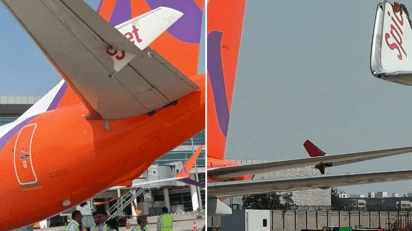
Now a serious ground collision occurred at Delhi airport Thursday afternoon. An Akasa Air aircraft and a SpiceJet plane sustained damage during taxiing. Therefore, the Directorate General of Civil Aviation (DGCA) launched an immediate probe. The incident took place around 2:15 PM at Terminal 1. Specifically, both Boeing 737 aircraft are now grounded for detailed inspections.
Meanwhile, the regulator took swift action against the personnel involved. They derostered the SpiceJet pilots and an air traffic controller.
But all passengers and crew members safely disembarked.
Also Read | Imran Khan and Bushra Bibi Sentenced to 17 Years in Jail
How the Akasa Air SpiceJet Collision Happened
Now the details of the ground mishap are emerging. The Akasa Air aircraft was stationary on the taxiway. Therefore, it was preparing for its flight to Hyderabad. Specifically, it was positioned on the apron after a successful pushback.
The Moving Aircraft
First, the SpiceJet plane was taxiing toward its parking stand. It had just arrived from Leh as flight SG 124. Then, the two aircraft came into contact near the bay. Thus, the close proximity led to a structural strike.
Next, ground crews immediately signaled for both planes to stop. The impact occurred at a slow speed during the turn. Therefore, the jolt was felt by everyone on board.
“The planes suffered visible damage,” an official noted.
The Timing
So the clock showed exactly 2:15 PM on Thursday.
First, the visibility at the airport was perfectly clear. Then, the ground traffic was described as moderate. Therefore, investigators are focusing on human error and coordination.
Damage Report: Winglets and Tail Stabilizers
Now the structural damage to both Boeing 737s is significant. The DGCA provided a technical breakdown of the impact. Therefore, we know exactly where the planes hit.
Technical Breakdown
First, the right-hand (RH) winglet of the SpiceJet aircraft was hit. This part of the wing is crucial for fuel efficiency. Then, it struck the horizontal tail surface (HTS) of the Akasa plane. Thus, the tail section suffered a deep gash.
Next, the left-hand horizontal stabilizer of the Akasa jet was damaged. Therefore, the aircraft lost its ability to maintain pitch balance. Meanwhile, SpiceJet’s winglet was bent out of shape.
Repair Estimates
So how long will they be grounded?
First, both airlines must wait for a formal inspection. Then, they need specialized parts from Boeing. Thus, the jets will likely stay in the hangar for weeks.
DGCA Action: Pilots and ATC Derostered
Now the aviation watchdog is taking no chances. The DGCA began a probe into the Akasa Air SpiceJet collision immediately. Therefore, they have removed key personnel from active duty.
The Derostering Orders
First, the SpiceJet pilots are off the roster. They cannot fly any aircraft until the probe ends. Then, the regulator derostered the air traffic controller on duty. Thus, the entire sequence of commands is under review.
Next, the DGCA is scanning the ground radar data. They want to see if the ATC gave clear paths. Therefore, they will determine if the pilot followed the lines.
“Further investigation is being carried out,” the regulator said.
Safety Audits
Meanwhile, the airport ground management is under fire. Thus, we might see new taxiing rules at Terminal 1.
Also Read | Imran Khan and Bushra Bibi Sentenced to 17 Years in Jail
Passenger Safety and Evacuation Protocol
Now the priority remains the safety of the travelers. Fortunately, there were no reported injuries in this mishap. Therefore, the airlines followed standard safety protocols.
Calm Disembarkation
First, the Akasa Air flight QP 1406 was fully loaded. The passengers felt a bump but saw no smoke. Then, the crew asked everyone to remain seated. Thus, they prevented any panic on the apron.
Next, buses arrived to ferry people to the terminal. All passengers and crew members safely disembarked. Therefore, the medical teams at the airport were not needed.
“Our ground teams made alternate arrangements,” Akasa stated.
SpiceJet Arrival
Meanwhile, the SpiceJet passengers were finishing their journey. They were heading to the terminal for baggage. Thus, their trip ended with a minor delay.
SpiceJet’s Account of the Ground Occurrence
Now SpiceJet issued a formal statement on the incident. They called it a “ground occurrence” during a routine taxi. Therefore, they are cooperating with all relevant authorities.
The Airline’s View
First, they confirmed the damage to the right winglet. They also noted the hit on the other airline’s stabilizer. Then, they stressed that the plane was moving slowly. Thus, the impact was minimized as much as possible.
Next, SpiceJet grounded the aircraft (VT-SLB) for repairs. Therefore, it will not operate its scheduled evening flights.
“The matter remains under investigation,” the spokesperson added.
Operational Impact
Meanwhile, SpiceJet is shifting its Leh-bound fleet. Thus, other flights might see minor schedule changes.
Akasa Air Flight QP 1406 Status
Now Akasa Air was hit while stationary. This makes the incident particularly frustrating for the new carrier. Therefore, they were quick to clarify their position.
Preliminary Information
First, the airline stated that their jet was not moving. It was simply waiting for takeoff clearance. Then, the other airline’s aircraft made contact with it. Thus, the blame appears to rest on the moving jet.
Next, the aircraft had to return to the bay. It could not fly to Hyderabad with a damaged tail. Therefore, a replacement aircraft was brought in.
“The safety of our crew remains our priority,” Akasa said.
Passenger Compensation
So what happens to the travelers?
First, Akasa provided food and water at the gate. Then, they offered full refunds to those who canceled. Thus, they managed the customer experience well.
Also Read | Imran Khan and Bushra Bibi Sentenced to 17 Years in Jail
Current Flight Operations at Terminal 1
Now Terminal 1 is currently handling heavy traffic. The airport expansion projects are still ongoing. Therefore, the apron space is often very tight.
Congestion Concerns
First, more flights are using Terminal 1 than ever before. This increases the risk of ground clips. Then, taxiways are often shared by arriving and departing jets. Thus, pilot vigilance is extremely high.
Next, the airport operator is reviewing the ground layout. They might add more “Follow-Me” vehicles for taxiing. Therefore, such incidents can be avoided in the future.
Terminal 1 Update
Meanwhile, other flights are operating on time. The collision did not block the main runways. Thus, the rest of the airport schedule remains stable.
Aviation Safety Trends in 2026
Now this collision follows a string of minor ground mishaps. 2026 has seen a rise in “wingtip clips” across India. Therefore, the DGCA is planning a major safety summit.
Addressing the Root Cause
First, pilot fatigue is being studied as a factor. Then, ground communication delays are being analyzed. Thus, a multi-pronged approach is needed.
Next, airlines are being asked to install better sensors. Some modern jets have wingtip cameras for taxiing. Therefore, the industry might make these mandatory.
“Ground safety is as vital as air safety,” experts say.
Common Questions Answered
What happened in the Akasa Air SpiceJet collision? Now the two Boeing 737s collided at Delhi Airport’s Terminal 1. The SpiceJet wing hit the Akasa tail section.
Was anyone injured in the crash? First, no. All passengers and crew members are safe. Therefore, there were zero injuries reported.
Which flights were involved? Next, Akasa flight QP 1406 (to Hyderabad) and SpiceJet SG 124 (from Leh).
What action did the DGCA take? So they derostered the SpiceJet pilots and the ATC. They also grounded both planes for a probe.
Why did the collision happen? Finally, the Akasa jet was stationary while the SpiceJet plane was taxiing. The exact cause is under investigation.
Also Read | Imran Khan and Bushra Bibi Sentenced to 17 Years in Jail
End…

