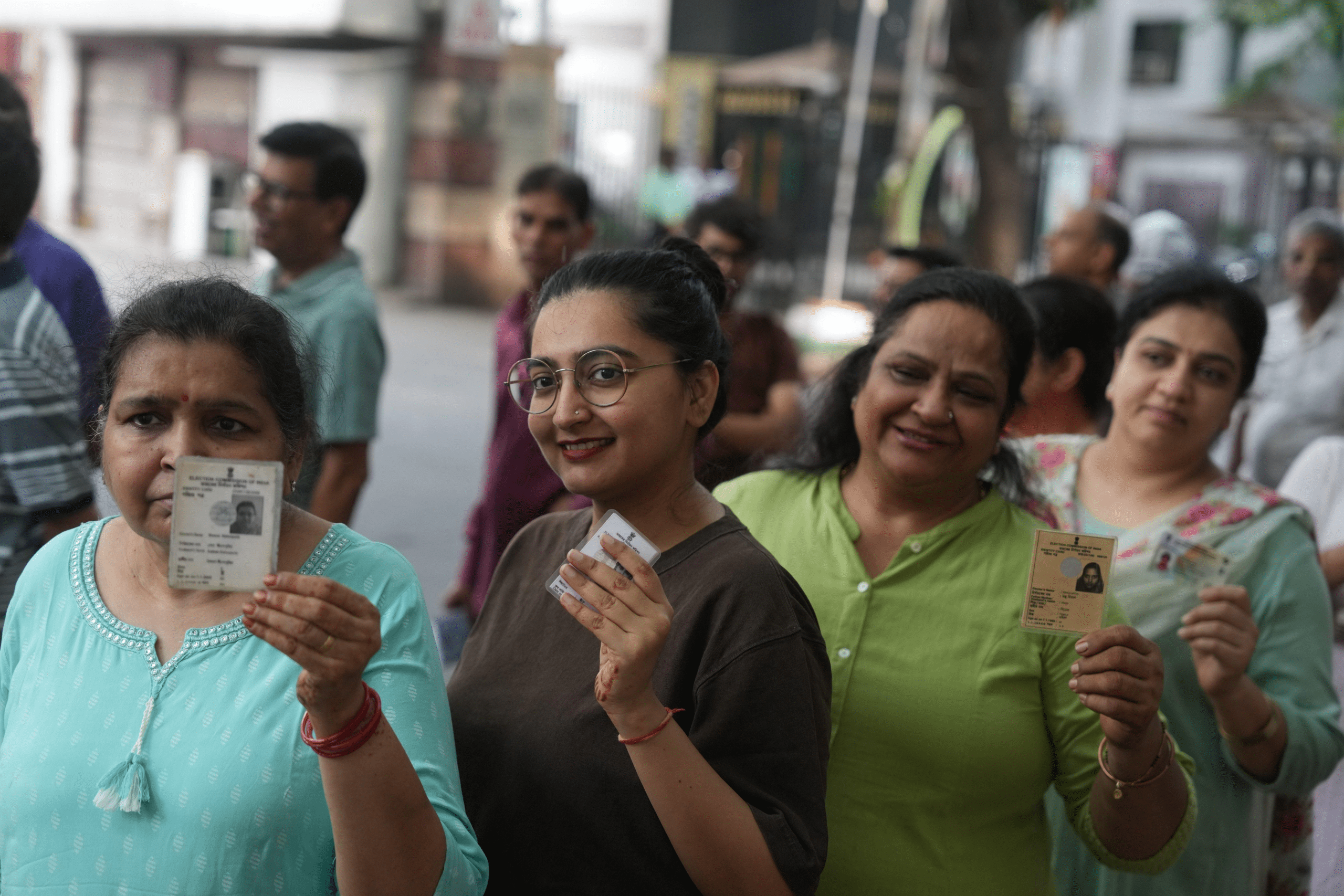
Now the political map of India has been redrawn by its youngest hands. The 2026 Assembly elections across West Bengal, Tamil Nadu, Assam, and Kerala have revealed a “Gen Z verdict” that is both restless and pragmatic. Therefore, first-time voters have moved beyond rigid ideologies, prioritizing jobs, infrastructure, and safety instead. From disrupting the Dravidian duopoly in Tamil Nadu to ending a 15-year rule in Bengal, this digital-native generation has asserted itself at the polling booths with historic force.
Also Read | Imran Khan and Bushra Bibi Sentenced to 17 Years in Jail
Record Turnout: The Massive Youth Demographics of 2026
Now we are seeing participation numbers that were previously unthinkable. West Bengal recorded a historic turnout nearing 92 percent. Therefore, the mobilization of 1.37 crore voters aged 18-29 has fundamentally altered the state’s electoral math.
First, Tamil Nadu saw nearly 1.22 crore voters in the same youth bracket. Next, Assam’s 18-39 demographic formed the largest single voting bloc at over 1.28 crore. Thus, Gen Z and young Millennials have effectively taken the steering wheel of the democratic process.
So this isn’t just a trend; it’s a demographic takeover. Meanwhile, over 14.59 lakh first-time voters in Tamil Nadu provided the “swing” needed for a third-front victory. Therefore, the polling booth has become the primary arena for youth assertion.
Tamil Nadu’s TVK Wave: The Power of the ‘2G Factor’
Now Tamil Nadu has delivered the most disruptive story of the cycle. Actor Vijay’s Tamilaga Vettri Kazhagam (TVK) emerged as the largest party in its very first attempt. Therefore, the decades-old duopoly of DMK and AIADMK has finally been breached.
First, analysts are calling this the “2G factor”—the combination of Gen Z and women voters. Next, young supporters cited Vijay’s direct social media presence and fresh leadership as their primary motivators. Thus, TVK’s 108 seats reflect a deep impatience with legacy politics and perceived corruption.
So the “Gen Z wave” was even acknowledged by outgoing DMK spokespersons. Meanwhile, urban and semi-urban youth were the most vocal about their desire for “change.” Therefore, aspirational leadership has officially replaced Dravidian tradition for the younger generation.
Also Read | Imran Khan and Bushra Bibi Sentenced to 17 Years in Jail
West Bengal: How ‘Chakri Chai’ and Safety Concerns Flipped the State
Now the BJP’s 207-seat landslide in Bengal is being seen as a youth-led “Poriborton.” This victory ended 15 years of TMC rule. Therefore, the first-time voters who were infants in 2011 showed no emotional ties to the previous administration.
First, the BJP ran extensive outreach campaigns like Chakri Chai Bangla (Bengal Needs Jobs). Next, issues like women’s safety in the RG Kar and Sandeshkhali cases resonated deeply with young women. Thus, the demand for accountability outweighed any traditional loyalties.
So the 10,000 yuva addas proved to be a masterstroke in grassroots mobilization. Meanwhile, the high turnout among youth helped the BJP cross the majority mark decisively. Therefore, economic opportunity has become the new currency of Bengal politics.
Kerala and Assam: Pragmatic Signals from the Youngest Bloc
Now the youth signals from Kerala and Assam show a different kind of pragmatism. In Kerala, the Congress-led UDF returned to power, swinging the state away from the LDF. Therefore, over 96,000 first-time voters chose a path of anti-incumbency to seek better local opportunities.
First, in Assam, the BJP consolidated its power for a third term under Himanta Biswa Sarma. Next, the large 18-39 demographic favored performance and stability over experimental independent candidates. Thus, the youth in Assam appreciated the focus on targeted governance and development schemes.
So while one state chose change, the other chose consistency. Meanwhile, in both cases, the decisions were based on performance metrics. Therefore, the 2026 results prove that Gen Z is not a monolith but a discerning, data-driven electorate.
Also Read | Imran Khan and Bushra Bibi Sentenced to 17 Years in Jail
Manifesto over Mythology: The New Gen Z Voting Pattern
Now we must examine the shift in voter psychology. In all four states, Gen Z displayed a unique pragmatism by actually reading manifestos. Therefore, they are prioritizing jobs, education, and infrastructure over the rigid ideologies of the past.
First, this generation is less bound by the religious or caste-based alignments of their parents. Next, they view politics through the lens of “utility”—what can a leader do for my career and safety? Thus, the old-school political “mythology” is losing its grip.
So the parties that offered concrete development pitches were the ones that resonated. Meanwhile, safety remained a non-negotiable factor for young female voters. Therefore, the 2026 mandate is a call for a more professional and results-oriented political class.
Social Media and Charisma: Tools of Modern Mobilization
Now the medium of the message has changed as much as the message itself. Social media amplified youth demands in real-time. Therefore, film-star charisma—like that of Vijay in Tamil Nadu—worked because it was paired with a digital-first strategy.
First, traditional rallies were replaced or supplemented by viral videos and interactive apps. Next, the ability to bypass legacy media allowed new parties to speak directly to the “restless force” of Gen Z. Thus, the digital-native nature of these voters has made them harder to manipulate and easier to engage.
So the political narrative is now being shaped in the palm of the voter’s hand. Meanwhile, the instant feedback loop of social media has made leaders more accountable. Therefore, the charisma of the 2026 winner was always backed by digital accessibility.
Also Read | Imran Khan and Bushra Bibi Sentenced to 17 Years in Jail
Future Impact: Why Parties Must Adapt or Perish
Now the 2026 results are a loud warning for every political entity in India. As the youth bulge matures, future contests will hinge on addressing these aspirations effectively. Therefore, parties must adapt their narratives to a cohort that is no longer passive.
First, political messaging must be data-backed and opportunity-focused. Next, the “Gen Z factor” will only grow as more 18-year-olds join the electorate each year. Thus, the parties that fail to provide a fresh alternative will be swept aside by this demographic tide.
So we are witnessing the beginning of a more transactional relationship between the voter and the state. Meanwhile, legacy parties are scrambling to recruit younger faces. Therefore, the 2026 elections were not just an event; they were the start of a new era.
FAQ: Gen Z and the 2026 Election Mandate
1. How did Gen Z impact the Tamil Nadu election? Now, they formed the core of the ‘2G factor’ that propelled Vijay’s TVK to 108 seats, ending the Dravidian duopoly.
2. What was the turnout in West Bengal? First, it was a historic 92 percent. Next, this was significantly driven by the 1.37 crore voters in the 18-29 age bracket.
3. Why did the BJP win in West Bengal? So youth mobilization around employment (Chakri Chai campaign) and women’s safety issues proved decisive.
4. Who won the Kerala Assembly elections? Next, the Congress-led UDF returned to power, benefiting from youth anti-incumbency and aspirations for better opportunities.
5. What is the ‘2G factor’? Now, it refers to the powerful voting bloc of Gen Z and women that defined the 2026 mandate in Tamil Nadu.
6. Is Gen Z a passive demographic? Finally, no. Analysts describe them as a restless force reshaping outcomes through pragmatism and digital engagement.
Also Read | Imran Khan and Bushra Bibi Sentenced to 17 Years in Jail
End…