

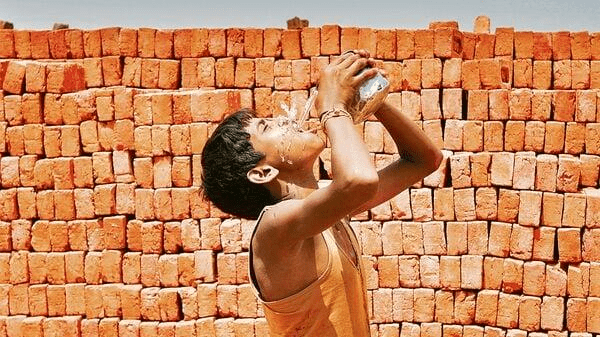
Now the Indian subcontinent is bracing for a punishing thermal surge. The India Meteorological Department (IMD) has issued a comprehensive IMD heatwave alert India April 2026 for major parts of the Northwest, Central, and East Indian plains. Following a record-breaking Wednesday where Jharsuguda hit 44.6°C, the weather office predicts a further 5°C spike in temperatures through April 26. Therefore, states like Haryana, Uttar Pradesh, and Rajasthan are preparing for extreme conditions that could last for the next four days.
Meanwhile, an Orange Alert remains in place for West Bengal, signaling a severe risk to public health.
But for residents of the national capital, the challenge is two-fold: blistering day temperatures combined with the rare “warm night” phenomenon.
Also Read | Imran Khan and Bushra Bibi Sentenced to 17 Years in Jail
Maximum Temperature Forecast: The 5°C Surge
Now the mercury is on a relentless upward trajectory across the plains. The IMD heatwave alert India April 2026 indicates that Northwest India will experience a gradual rise in maximum temperatures of 3 to 5°C over the next 72 hours. Therefore, current seasonal averages are being shattered in real-time.
Gradual Rise and Fall
First, the temperatures will likely peak around April 26. Then, a marginal fall of about 2 to 3°C is expected on April 27 and 28 as a minor western disturbance approaches. Thus, the current window represents the most dangerous phase of the April summer. Next, Central India and Maharashtra are also expected to see a rise of 2 to 4°C during this period. Therefore, the heat is not localized but a broad regional phenomenon affecting nearly 400 million people.
West Bengal’s Orange Alert: A Severe Weather Crisis
Now we must look at the eastern front, where the situation is even more critical. The IMD has elevated West Bengal to an “Orange Alert” for the heatwave. Therefore, the state administration has been urged to activate emergency cooling protocols.
The Eastern Inferno
First, the Gangetic West Bengal region is suffering from a combination of high heat and stagnant air. Then, temperatures in districts like Bankura and Purulia are expected to stay 5-6°C above normal. Thus, the heatwave is classified as “severe” in these pockets. Next, the alert comes as the state participates in a crucial phase of assembly polling. Therefore, the Election Commission has had to implement special measures to protect voters standing in long queues.
Warm Night Alert: Why Delhi and Haryana Can’t Cool Down
Now a disturbing trend is emerging in the National Capital Region (NCR). The IMD has warned of “warm night” conditions in isolated pockets of Haryana, Chandigarh, and Delhi from April 23 to 25. Therefore, the body gets no respite from the heat even after sunset.
Nocturnal Thermal Stress
First, a warm night occurs when the minimum temperature remains significantly higher than the seasonal average. Then, the lack of nocturnal cooling prevents the dissipation of heat from urban concrete and asphalt. Thus, the “Urban Heat Island” effect is amplified, making air conditioning essential but straining the power grid. Next, similar conditions are expected in Odisha and parts of Konkan. Therefore, public health experts are warning of a rise in sleep-deprivation-linked heat exhaustion.
Also Read | Imran Khan and Bushra Bibi Sentenced to 17 Years in Jail
Coastal Humidity: The “Real Feel” in Kerala and Andhra
Now for coastal India, the heat is compounded by excessive moisture. Residents of Coastal Andhra Pradesh, Yanam, and Odisha are facing “hot and humid” weather until April 26. Therefore, the IMD heatwave alert India April 2026 is as much about the heat index as it is about temperature.
The Humidity Trap
First, high humidity prevents sweat from evaporating effectively. Then, this causes the human body to perceive the temperature as much higher—often 5-7°C above the actual thermometer reading. Thus, a 38°C day in Kerala can feel like 45°C. Next, Tamil Nadu, Puducherry, and Coastal Karnataka are also under this “humid” alert. Therefore, those living in these regions should monitor for signs of dehydration even if the absolute temperature seems lower than in the North.
Northeast India: Heavy Rain Amidst the Heatwave
Now, in a striking meteorological paradox, parts of India are bracing for floods. While the plains burn, the Northeast is under a heavy rainfall alert. Therefore, the national weather picture is one of extreme polarization.
Regional Rainfall Alerts:
-
Arunachal Pradesh: Isolated heavy rainfall tomorrow.
-
Assam & Meghalaya: Heavy showers expected on April 25.
-
Nagaland, Manipur, & Mizoram: Significant rain on April 25 and 26.
-
Sikkim & SHWB: Thunderstorms and rain to persist through the weekend.
First, these rains are driven by a strong moisture incursion from the Bay of Bengal. Then, while they provide local cooling, they do little to alleviate the heat in the neighboring plains of Bihar and Bengal. Thus, India is a country of two different climates this week. Next, the IMD has warned of lightning and thunderstorms in these hilly terrains. Therefore, travelers should exercise caution in the mountainous regions.
IMD Safety Protocol: Protecting Against Heatstroke
Now public health is the primary concern for the Meteorological Department. They have issued a set of mandatory precautions for those living in the Yellow and Orange alert zones. Therefore, compliance is key to preventing fatalities.
Essential Precautions:
First, stay hydrated by drinking water frequently, even if you do not feel thirsty. Then, avoid direct exposure to sunlight between 11 AM and 4 PM. Thus, you minimize the risk of thermal shock. Next, use oral rehydration solutions (ORS) and consume homemade drinks like lassi, lemon water, and buttermilk. Therefore, maintaining your electrolyte balance is the best defense against a heat stroke.
Also Read | Imran Khan and Bushra Bibi Sentenced to 17 Years in Jail
Regional Breakdown: State-by-State Heat Timeline
Now we must track when the peak will hit different regions. The IMD heatwave alert India April 2026 provides a clear timeline for the upcoming surge. Therefore, local planning can be adjusted accordingly.
-
Punjab, Haryana, & Delhi: Peak heatwave on April 24 and 25.
-
West Uttar Pradesh: April 23 to 25.
-
East Uttar Pradesh: Prolonged spell from April 22 to 26.
-
Rajasthan: Intense heat between April 24 and 26.
-
Vidarbha & Chhattisgarh: April 24 to 27.
First, the eastern plains (Bihar, Jharkhand, Gangetic WB) will see the heat intensify today. Then, the central and northwest regions will follow in a cascading effect. Thus, the weekend of April 25-26 will be the hottest for the majority of the Indian population. Next, Maharashtra will see a rise of 2-3°C until April 25. Therefore, the entire western-to-eastern corridor is under significant thermal pressure.
Historical Comparison: 2026 vs. Past Heat Extremes
Now climatologists are looking at the Jharsuguda reading of 44.6°C as a warning sign. While April heatwaves are common, the “appreciably above normal” readings (5°C+) in J&K and Himachal suggest a wider shifts. Therefore, the IMD heatwave alert India April 2026 is part of an intensifying trend.
Abnormal Peaks
First, Jammu and Kashmir’s maximum temperature was 5.1°C above normal on Wednesday. Then, even hill states like Meghalaya and Tripura recorded “above normal” highs. Thus, the heat is penetrating higher altitudes earlier than in previous decades. Next, the persistent “warm nights” are becoming more frequent, reducing the diurnal cooling cycle. Therefore, the resilience of both the power grid and the people is being tested like never before.
Common Questions Answered
What is a “Warm Night” alert? Now it means the night temperature will not fall enough to provide relief, staying significantly above the normal minimum.
Which state is under an Orange Alert? First, West Bengal is currently under an Orange Alert, which signifies a high risk of heat-related illness.
When will the heatwave end in Delhi? Next, the IMD predicts the heat will persist until April 26, after which a gradual fall of 2-3°C is likely.
Is it safe to exercise outdoors? So no. The IMD advises avoiding peak hours (11 AM – 4 PM) and staying in shaded or cooled environments.
Why is it raining in the Northeast during a heatwave? Finally, local moisture incursion and topographical factors lead to isolated heavy rain in the hills, even while the plains are dry.
Also Read | Imran Khan and Bushra Bibi Sentenced to 17 Years in Jail
End…

