

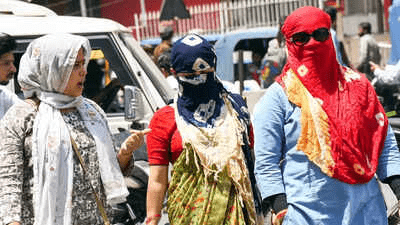
Now the summer of 2026 is intensifying with a significant meteorological shift. The India Meteorological Department (IMD) on Wednesday issued a stern IMD heatwave warning India April 2026 edition, predicting scorching conditions for most parts of northwest, central, and eastern India over the next four to five days. Therefore, residents in major urban centers—including Delhi, Lucknow, and Jaipur—must prepare for a period of extreme thermal stress. Specifically, the weather office indicates that the mercury will likely remain significantly above normal between April 22 and April 27.
Meanwhile, a contrasting weather pattern is emerging in the northeastern states.
But for the core of the country, the primary concern is the rising heat index and the potential for “warm night” conditions.
Also Read | Imran Khan and Bushra Bibi Sentenced to 17 Years in Jail
Detailed Timeline: When the Heatwave Hits Your State
Now the heat is not arriving all at once across the subcontinent. The IMD heatwave warning India April 2026 outlines a staggered progression of rising temperatures. Therefore, local administrations are issuing alerts based on specific dates.
State-wise Forecast Dates:
-
Eastern UP: April 22–26
-
Western UP & Madhya Pradesh: April 23–26
-
Delhi, Punjab, & Haryana: April 24–25
-
Rajasthan, Vidarbha, & Chhattisgarh: April 24–27
-
West Bengal & Bihar: April 22–23
First, the eastern parts of the country will feel the initial brunt. Then, the heat will consolidate over the central plains before sweeping across the northwest. Thus, the peak intensity for the national capital region is expected over the coming weekend. Next, Rajasthan and Vidarbha will likely experience the longest duration of this spell. Therefore, long-term planning for outdoor activities should be avoided during these windows.
The “Warm Night” Phenomenon: Why Rest is Getting Harder
Now the weather office has highlighted a secondary concern: the lack of nocturnal cooling. In isolated pockets of Haryana, Chandigarh, Delhi, and Odisha, nights are expected to remain uncomfortably warm. Therefore, the body has less time to recover from daytime heat stress.
Nocturnal Thermal Stress
First, “warm nights” occur when the minimum temperature remains significantly above the seasonal average. Then, the lack of cooling increases the risk of heat-related exhaustion. Thus, urban heat island effects in cities like Delhi exacerbate the situation. Next, the IMD noted that Konkan and Goa are also susceptible to this phenomenon. Therefore, proper ventilation and hydration are essential even after the sun goes down.
Coastal Humidity: The Real Feel in Odisha and Kerala
Now for coastal regions, the danger isn’t just the temperature but the humidity. The IMD says hot and humid conditions are likely to prevail in isolated pockets of Odisha, Tamil Nadu, and Kerala between April 22 and April 25. Therefore, the “perceived” temperature may be much higher than the actual reading.
The High Heat Index
First, coastal Karnataka and Andhra Pradesh will face high moisture levels from the Bay of Bengal and the Arabian Sea. Then, this humidity prevents sweat from evaporating, making it harder for the body to cool itself. Thus, even at 35°C, the “real feel” could exceed 42°C. Next, the coastal areas of Gujarat are also expected to witness similar trends. Therefore, residents in these zones should watch for signs of heat cramps and dizziness.
Also Read | Imran Khan and Bushra Bibi Sentenced to 17 Years in Jail
Northeast India: Torrential Rain Amidst the Heat
Now, in a stark contrast to the parched plains, the Northeast is preparing for a wet week. Scattered to widespread rainfall along with thunderstorms is likely throughout the week. Therefore, the regional climate remains highly polarized.
Heavy Rainfall Alerts
First, the IMD has predicted isolated heavy to very heavy rainfall over the many days of the week. Then, lightning and thunderstorms are expected to accompany these showers. Thus, while the rest of India prays for rain, the Northeast may face localized flooding and travel disruptions. Next, parts of eastern India may also see some of these scattered showers. Therefore, the weather remains a tale of two extremes for the subcontinent.
IMD Criteria: Defining a Heatwave in 2026
Now we must understand the technical triggers for an IMD heatwave warning India April 2026. A heatwave is declared based on the departure from the normal temperature. Therefore, a reading that is “hot” in one region might not be a heatwave in another.
Thresholds for Declaration:
-
Plains: Maximum temperature reaches at least 40°C.
-
Coastal: Maximum temperature reaches at least 37°C.
-
Hills: Maximum temperature reaches at least 30°C.
First, a heatwave is officially declared when the departure from normal is 4.5°C to 6.4°C. Then, a “severe” heatwave is called if the departure exceeds 6.4°C. Thus, the current alert suggests that many stations will hit these thresholds simultaneously. Next, the absolute temperature reaching 45°C also triggers an automatic heatwave status for the plains. Therefore, the upcoming five days are technically significant.
Health Precautions: Staying Safe During the April Surge
Now public safety is the primary goal of the weather office’s warnings. With temperatures set to soar, the risk of heatstroke is high. Therefore, following standard health protocols is a necessity.
Key Safety Steps:
First, avoid going out between 12 PM and 4 PM when the sun is at its peak. Then, wear light-colored, loose cotton clothes to allow for better air circulation. Thus, you can minimize the direct impact of solar radiation. Next, drink plenty of water even if you are not thirsty, and use oral rehydration solutions (ORS) or homemade drinks like lassi and aam panna. Therefore, consistent hydration is your best defense against heat exhaustion.
Also Read | Imran Khan and Bushra Bibi Sentenced to 17 Years in Jail
Impact on Agriculture and Power Demand
Now the prolonged heat also has economic implications. The sudden spike in temperature can affect late-sown Rabi crops in some pockets. Therefore, farmers are being advised to provide light irrigation to maintain soil moisture.
The Power Grid Challenge
First, the use of air conditioners and coolers will surge, putting immense pressure on the national power grid. Then, water levels in reservoirs may deplete faster due to high evaporation rates. Thus, the “heatwave effect” trickles down into urban infrastructure management. Next, industries may face peak-hour load shedding if the demand exceeds the supply capacity. Therefore, state governments are preparing contingency plans for the “high-demand” weekend ahead.
Future Outlook: Will May Bring Any Relief?
Now, as we conclude the IMD heatwave warning India April 2026, the question of long-term relief remains. Historically, May is the hottest month for India. Therefore, this April spell may just be a precursor to a harsher summer.
Wait for the Monsoon
First, the weather office will keep a close eye on any developing “western disturbances” that could bring dust storms or rain. Then, the focus will shift toward the early onset signs of the Southwest Monsoon. Thus, for now, the heat is the “new normal” for the next week. Next, climate change continues to increase the frequency and intensity of such heatwaves. Therefore, building heat-resilient cities is no longer a choice but a survival strategy for India.
Common Questions Answered
Which states are under the IMD heatwave warning? Now major parts of Punjab, Haryana, Delhi, Uttar Pradesh, Rajasthan, Madhya Pradesh, Chhattisgarh, Bihar, and West Bengal are under alert.
What dates will Delhi face the heatwave? First, the IMD predicts the worst of the heatwave for Delhi on April 24 and 25. Then, warm night conditions may persist through the weekend.
Is there any rain predicted for India? Next, yes. Northeast India and parts of eastern India are expected to see scattered to widespread rainfall and thunderstorms during the week.
What should I do if I have to go out in the heat? So wear a hat or use an umbrella, carry a water bottle, and try to finish your outdoor work before 11 AM. Therefore, you minimize exposure during peak UV hours.
What are the symptoms of heat exhaustion? Finally, watch out for heavy sweating, rapid pulse, dizziness, and fatigue. Thus, if symptoms persist, seek medical attention immediately.
Also Read | Imran Khan and Bushra Bibi Sentenced to 17 Years in Jail
End….

