

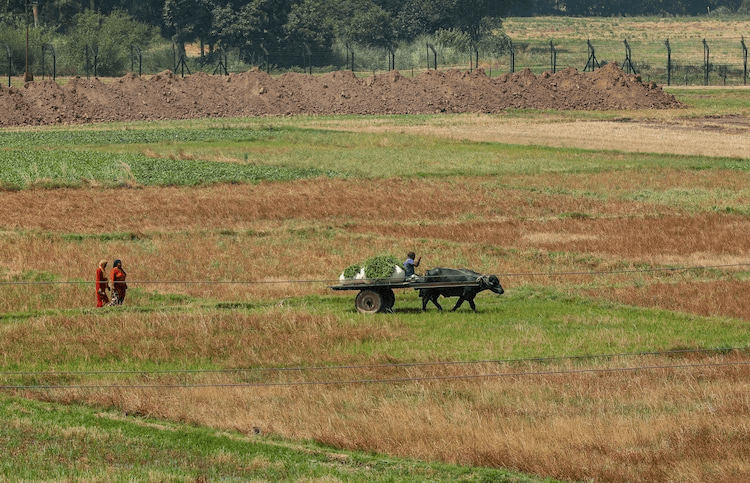
Now the macroeconomic and rural planning sectors of India are facing a serious environmental challenge. The foundational weather tracking agency released a highly concerning update regarding the upcoming seasonal rain patterns. Therefore, the revised data inside the official IMD monsoon forecast 2026 confirms that precipitation levels will fall short significantly.
Meanwhile, this fresh assessment has triggered immediate anxiety across the country’s primary agricultural belts. Forecasters dropped the long-period average expectation down to an alarming 90 percent threshold. Still, state irrigation departments are scrambling to build contingency charts for major farming districts.
A weak summer rain sequence threatens rural spending patterns nationwide.
Also Read | Imran Khan and Bushra Bibi Sentenced to 17 Years in Jail
The Sudden Downward Shift in Weather Data
Now senior meteorologists are analyzing the worrying trends within the tropical climate models. The state department had issued a mild warning back in April by predicting a 92 percent rainfall baseline. Therefore, the latest drop down to 90 percent shows that atmospheric conditions have worsened significantly.
So the margin of error remains locked at plus or minus 5 percent. Meanwhile, the actual probability of a severe drought season has more than doubled compared to historical baselines. Thus, system indicators are flashing deep orange alerts for rural administrators.
“The parameters point toward an exceptionally dry cycle,” a research director stated in Delhi on Friday morning. Therefore, the country must prepare for structural water shortages over the next four months.
Breaking Down the Odds
First, the historical likelihood of experiencing such a weak season sits around a modest 16 percent. Now the updated mathematical projections push those exact odds up to a dangerous 35 percent. Therefore, depending on lucky weather reversals is no longer a viable strategy for farm managers.
Next, the atmospheric pressure lines over the Indian Ocean are behaving erratically. Safe moisture accumulation requires low-pressure pockets to draw rain winds inward smoothly. Thus, the current high-pressure ridges are scattering clouds before they hit land.
Finally, the tracking models show zero signs of a late-season recovery phase. The dry spell will likely persist across consecutive seasonal blocks. Therefore, the country faces a prolonged battle to preserve its food security. Period.
The Economic Shaker
So retail market stocks fell slightly following the morning weather announcement. Corporate planners realize that low rural incomes directly suppress vehicle purchases and consumer goods sales. Still, deploying modern storage techniques can help mitigate initial crop losses.
Now let’s examine the main global driver behind this dry patch.
How El Nino Subdues Seasonal Air Currents
Now we must track the massive oceanic changes happening thousands of miles away in the Pacific. The thermal state of equatorial waters dictates how global wind corridors move every year. Therefore, analyzing the IMD monsoon forecast 2026 requires understanding this massive marine anomaly.
So ocean temperatures are rising at an incredibly rapid pace along South American coastlines. Meanwhile, this rapid warming confirms the intense activation of an aggressive El Nino weather pattern. Thus, global air pressure systems are experiencing complete reversals.
This marine disruption destroys the standard monsoon framework entirely.
Drying Up the Moisture Highway
First, the rising Pacific heat blocks the natural path of the trade winds. These vital air currents usually carry billions of tonnes of ocean moisture toward the Indian subcontinent. Therefore, weaker winds deliver significantly less rain to local farmlands.
Next, this pattern drives up regional land temperatures prematurely during the summer months. Excessive heat hardens the topsoil layer before planting can begin. Thus, small seeds fail to take root inside the parched soil.
Finally, the thermal imbalance keeps cloud formations trapped over open ocean spaces instead of moving inland. The moisture drops away harmlessly over the sea. Therefore, continental land masses face extended dry spells during peak growth weeks. Period.
A Multi-Month Suppressor
So this atmospheric blocking mechanism will likely peak during the crucial months of July and August. These specific weeks serve as the wet lifeline for primary food crops. Still, scientists are hoping that localized ocean changes in the west might ease the damage.
Are current models certain? Yes. Will the block break early? Probably not.
A Detailed Mapping of Regional Rain Discrepancies
Now the seasonal rainfall distribution is shaping up to be dangerously uneven across states. A blanket countrywide average cannot capture the localized crises preparing to hit specific crop belts. Therefore, commodity traders are mapping out separate regional yield expectations.
The Northwest and Central Deficit
First, the grain bowls of northwest India face the most critical shortages this term. Total rainfall across these agricultural zones might plunge down to a sparse 92 percent of normal. Therefore, states like Punjab and Haryana must manage their tubewell grids with absolute care.
So if we review the regional projections:
-
Northwest farmlands: Bracing for severe moisture deficits near 92 percent
-
Central manufacturing zones: Expecting a similar dry run below typical levels
-
Southern plantation hills: Projecting weak moisture arrivals through August
The data signals a tough season for commercial cash crops.
The Solitary Green Exception
Next, the distant northeastern states are escaping this dry trajectory completely. The local geography will likely pull in standard moisture volumes between 94 and 104 percent of normal. Thus, eastern tea estates and rice fields face excellent growth prospects.
So this uneven allocation creates a major domestic logistics challenge for food moving services. The state must arrange to shift massive grain volumes from surplus eastern zones over to parched western markets. Therefore, transport expenses will rise across railway networks.
Also Read | Imran Khan and Bushra Bibi Sentenced to 17 Years in Jail
The Critical Sowing Squeeze Facing Kharif Farmers
Now the upcoming four weeks will decide the ultimate fate of the national food supply. Sowing operations for vital Kharif crops must line up perfectly with early summer showers. Therefore, any delay during the initial June window creates a dangerous chain reaction.
The Vulnerable June Window
First, June precipitation is currently forecast to reach only 94 percent of the long-period average. This initial shortfall means fields will lack the soft mud texture required for rice transplantation. Therefore, farmers must delay planting schedules indefinitely.
Next, late sowing shortens the total vegetative growth cycle of the plant significantly. The crop enters its flowering stage before absorbing sufficient soil nutrients. Thus, the final harvest yield drops by up to 20 percent.
Then, roughly 60 percent of local cultivators operate without any form of artificial irrigation machinery. These micro-farming households rely exclusively on rain to sustain their fields. Therefore, a poor season hits vulnerable families first and hardest.
The Shift in Seed Selection
So agricultural extension offices are advising communities to switch to alternative seed varieties immediately. They want families to plant drought-resistant millets instead of thirsty paddy crops. Still, convincing traditional communities to abandon familiar crops remains hard.
First, farmers check local pond levels. Then, they purchase specialized short-duration seeds. Now, they postpone fertilizer applications to save capital. Finally, they wait for the sky to change.
The entire rural economy is stuck in a waiting loop.
Why Food Pricing Patterns Drive National Inflation
Now we must examine the severe macroeconomic fallout of a deficient summer rain cycle. Food items represent a massive 37 percent share of the typical consumer pricing basket in India. Therefore, lower crop yields translate directly into painful grocery store bills for ordinary families.
The Vegetable Squeeze
First, trickling rains cause shallow vegetable production numbers across regional hubs. Staples like tomatoes and onions experience immediate supply shortages when heatwaves damage rural vines. Therefore, wholesale yard prices spike within a matter of days.
Next, pulse and cereal varieties face identical structural bottlenecks. When local pulse production shrinks, the government must secure expensive import shipments from African suppliers. Thus, international trade balances weaken significantly.
Then, high grocery costs drain the liquid savings of low-income urban households completely. Families spend their extra cash on basic food requirements rather than discretionary consumer items. Therefore, broad retail demand drops across urban malls.
The Central Bank’s Predicament
So monetary planners at the central bank will monitor these food indicators with absolute intensity. Runaway inflation blocks the regulator from lowering national borrowing rates. Still, keeping interest rates high limits fresh industrial expansion programs.
The weather patterns are dictating state financial policy now.
The Drying Out of Essential Ground Water Reservoirs
Now the water scarcity issue moves far past basic crop production metrics. The extended absence of heavy downpours blocks the natural recharge paths of deep underground aquifers. Therefore, major cities face severe drinking water challenges by early winter.
Falling Reservoir Percentages
First, central storage dams are entering the summer block with historic low water balances. The winter rains failed to replenish the concrete storage channels properly last year. Therefore, towns are relying on emergency utility distributions already.
Next, excessive tubewell usage is pulling water tables down to dangerous depths across rural villages. Pumping machinery must dig deeper every month to find clean water. Thus, rural energy costs climb due to extended pump operations.
Then, industrial manufacturing units face strict water consumption limits from state environment boards. Factories require massive water volumes to cool heavy manufacturing equipment daily. Therefore, production speeds might drop across steel and chemical sectors.
The Urban Squeeze
So metropolitan authorities are drawing up strict consumption rules for residential neighborhoods. Washing luxury vehicles or filling private pools will trigger immediate financial fines. Therefore, urban citizens are learning to conserve resources daily. End of story.
Frequently Asked Questions
Now let’s resolve immediate questions from the public regarding the updated IMD monsoon forecast 2026. These answers break down regional data, inflation impacts, and El Nino risks clearly. Therefore, read them carefully.
What does the updated IMD monsoon forecast 2026 predict for rain levels? The India Meteorological Department expects total seasonal rainfall to reach only 90 percent of the long-period average. This prediction falls well into the “below-normal” category, signaling a potential drought threat. Therefore, water conservation is critical.
Why are rainfall expectations dropping so fast this term? The primary driver is the rapid development of an intense El Nino warming trend across the equatorial Pacific Ocean. This oceanic heat anomaly alters global air currents and suppresses regular moisture movement toward India. Thus, rain clouds dissipate.
Which specific states or regions face the highest water risks? Northwest, central, and southern India will experience severe rainfall deficits. The crucial grain bowls of the northwest might see rain volumes drop to 92 percent of normal. Therefore, crop yields are under threat there.
Is there any region in India expecting normal rainfall this year? Yes. The northeastern states are completely detached from this dry trend line. The region expects stable, normal rainfall measuring between 94 and 104 percent of its long-term average. Thus, local tea estates remain safe.
How does a weak monsoon affect urban food inflation rates? Agricultural products make up 37 percent of the national inflation tracking basket. Weak rains reduce the supply of daily vegetables, pulses, and cereals, causing prices to jump at city markets. Therefore, household expenses climb.
What percentage of Indian cultivators depend entirely on these rains? Roughly 60 percent of Indian farmers operate farmlands without any form of mechanical tube-well or canal backup system. They depend entirely on timely seasonal showers to grow food. Therefore, a deficit season causes immediate distress.
What are weather experts predicting for the crucial month of June? June rainfall is currently pegged at a below-normal 94 percent of historical averages. This initial delay means that early seed sowing and rice transplantation schedules will face significant timeline adjustments across states. End of story.
Also Read | Imran Khan and Bushra Bibi Sentenced to 17 Years in Jail
End…

