

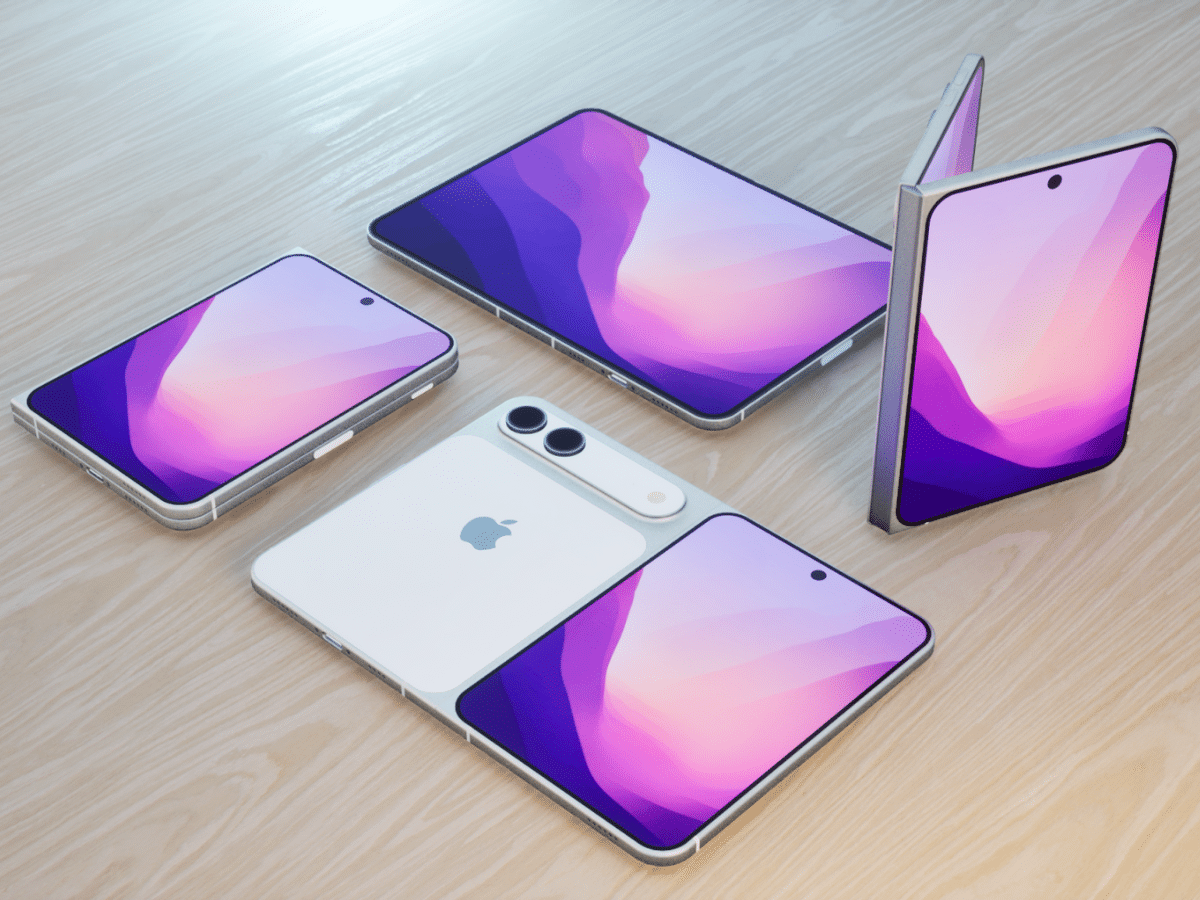
Now the tech world is buzzing with anticipation for Apple’s most radical hardware shift in a decade. The upcoming iPhone Fold is expected to redefine iPhone Fold design standards by abandoning the traditional tall-and-narrow silhouette. Therefore, the device—which could launch alongside the iPhone 18 series in September 2026—is being described as a “passport-sized” powerhouse. Specifically, Apple is expected to adopt a wider 4:3 aspect ratio that prioritizes media consumption and professional utility over pocket-thin aesthetics.
Meanwhile, production is reportedly set to begin within the next two months.
But the real question is whether Apple’s “master of reinvention” status can convince users to embrace a $2,000 price tag.
Also Read | Imran Khan and Bushra Bibi Sentenced to 17 Years in Jail
Breaking the Tall-and-Narrow Trend
Now most existing foldables follow a design language that feels like a standard phone when closed but remains awkwardly narrow when opened. Therefore, Apple’s decision to pursue a wider iPhone Fold design standards path is a direct response to user pain points.
Standardizing the Widescreen
First, earlier attempts by Google and Microsoft showed promise but failed to gain mass-market traction. Then, Apple’s entry is expected to “standardize” the widescreen foldable form factor. Thus, the device will likely feel more like a small book than a remote control.
Next, this wider footprint allows for a more natural typing experience on the inner screen. Therefore, the ergonomic benefits could be the primary “selling point” for business users.
The Passport Shape: Lessons from the BlackBerry Era
Now the unique square-ish shape of the iPhone Fold is drawing comparisons to the BlackBerry Passport. While that device was polarizing, its 12 cm x 9 cm screen was objectively better for reading documents. Therefore, Apple is looking back to move forward.
Utility Over Tradition
First, a square display provides more horizontal room for text. Then, it allows for larger fonts without losing the context of the paragraph. Thus, it mimics the feeling of reading a physical passport or a small notebook.
Next, Apple isn’t just copying an old design; they are refining it with edge-to-edge OLED technology. Therefore, the “odd-looking” nature of the shape is offset by the sheer beauty of the modern display.
Why a 4:3 Aspect Ratio Wins for Video and Reading
Now let’s talk about content. Most videos are produced in 16:9 or wider formats. Therefore, on narrow foldables, half the screen is often wasted on “black bars.”
Maximizing Screen Real Estate
First, the 4:3 aspect ratio of the iPhone Fold fills more of the inner panel during playback. Then, it offers a significantly larger canvas for reading e-books or viewing spreadsheets. Thus, the iPhone Fold design standards prioritize the “inner” experience over the “outer” pocketability.
Next, this ratio is the same as traditional iPads. Therefore, Apple can leverage its existing app ecosystem to ensure content looks “at home” the moment the device is unfolded.
Also Read | Imran Khan and Bushra Bibi Sentenced to 17 Years in Jail
Software Evolution: Bringing iPad Layouts to iPhone Fold
Now a widescreen display requires a smarter interface. Apple is reportedly developing a hybrid version of iOS specifically for this device. Therefore, the software will feel like a bridge between a phone and a tablet.
Sidebars and Multitasking
First, core apps will feature sidebars on the left, similar to the iPadOS experience. Then, while it won’t run “floating windows,” it will support robust side-by-side app layouts. Thus, you can check your email on the left while browsing Safari on the right.
Next, these iPhone Fold design standards ensure that the extra screen space isn’t just “bigger phone” space. Therefore, the utility factor is significantly increased for power users.
Mainstream Adoption: Can Apple Save the Foldable Category?
Now despite the excitement, foldables represent a tiny fraction of total smartphone sales. Therefore, the timing of the iPhone Fold launch is critical for the industry.
The Apple Catalyst
First, global shipments grew 14% in late 2025, but the category still lacks “mainstream” status. Then, Apple’s entry into a market usually serves as a catalyst for mass adoption. Thus, the iPhone Fold could be the device that finally puts a folding screen into the hands of the average consumer.
Next, rivals are already adjusting their roadmaps to compete with Apple’s wider design. Therefore, we are seeing a shift across the entire mobile landscape before the phone is even released.
Competition Heat: Samsung Z Fold 7 vs. Huawei Pura X Max
Now Apple isn’t operating in a vacuum. Samsung is preparing the Galaxy Z Fold 7 with an “Armor FlexHinge.” Therefore, the battle for the top spot in 2026 will be fierce.
The Widescreen War
First, Huawei partially announced the Pura X Max with a similar square design. Then, Samsung is rumored to launch its own “widescreen” variant to preempt Apple’s September event. Thus, the “tall” foldable may soon be a relic of the past.
Next, the Google Pixel 11 Pro is also expected to follow suit. Therefore, the iPhone Fold design standards are already influencing the competition’s design labs.
Also Read | Imran Khan and Bushra Bibi Sentenced to 17 Years in Jail
The $2,000 Price Barrier: Loyalty vs. Innovation
Now we come to the biggest hurdle: the cost. Reports suggest a starting price of roughly $2,000. Therefore, Apple is testing the limits of its brand loyalty.
Value vs. Premium
First, consumers haven’t been as “blindly loyal” to Apple in recent years. Then, the product has to offer “clear differentiation” to justify doubling the price of a standard Pro Max. Thus, the widescreen design and iPad-like software must work flawlessly.
Next, Apple’s track record with “first-generation” products is mixed. Therefore, early adopters should be prepared for a premium experience that may still have a few “version 1.0” quirks.
Technical Hurdles: Battery Life and the Display Crease
Now no foldable is perfect. Even with Apple’s engineering, the iPhone Fold will face physical limitations. Therefore, manage your expectations for the 2026 debut.
Physics vs. Features
First, folding screens require more power, which often leads to shorter battery life. Then, the “crease” in the middle is still a reality of current OLED technology. Thus, Apple is adopting new reduction tech, but it won’t be entirely invisible.
Next, the hinge mechanism adds thickness and weight. Therefore, the passport-sized iPhone will likely be significantly “chunkier” than the iPhone 18 Pro.
Common Questions Answered
When is the iPhone Fold release date? Now it is expected to launch in September 2026 alongside the iPhone 18 series.
What is the aspect ratio of the iPhone Fold? First, it is rumored to be a 4:3 widescreen ratio. Therefore, it will be wider and shorter than the Samsung Galaxy Z Fold series.
Will the iPhone Fold run iPadOS? Next, no. It will run a specialized version of iOS with iPad-like interface elements such as sidebars and split-screen apps.
How much will the iPhone Fold cost? So industry estimates place the starting price at approximately $2,000.
Does the iPhone Fold have a visible crease? Finally, while Apple is using technology to minimize it, a slight crease is likely to remain in this first-generation foldable.
Also Read | Imran Khan and Bushra Bibi Sentenced to 17 Years in Jail
End…

