

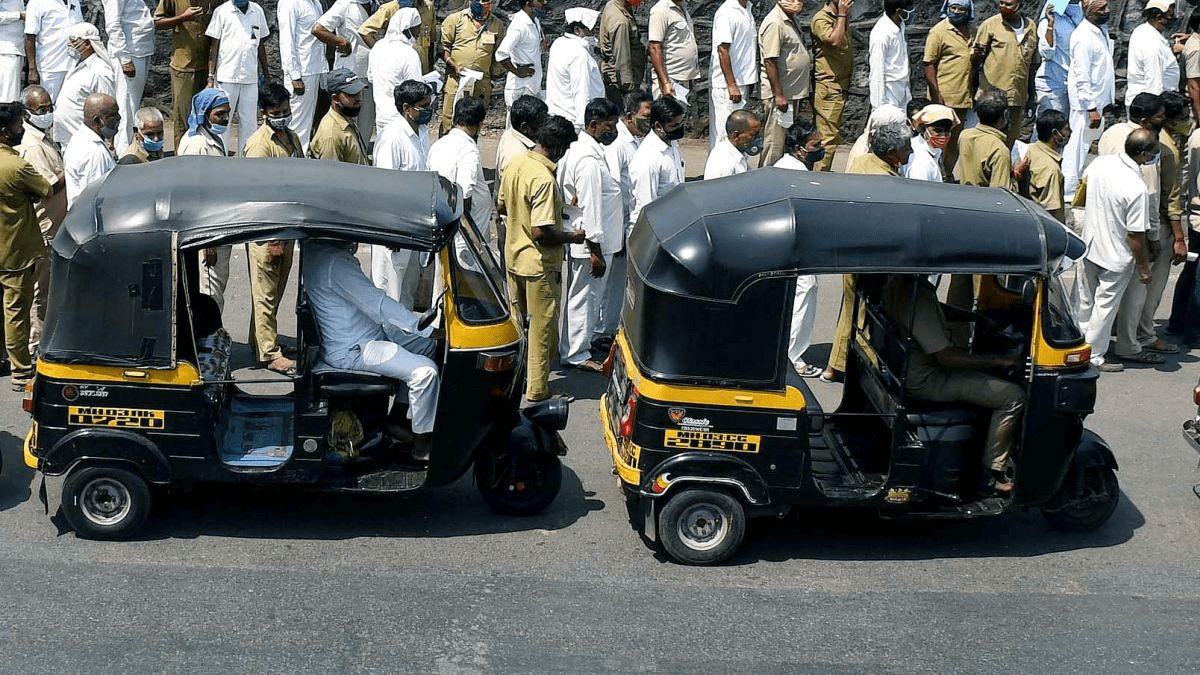
Now the streets of Maharashtra are bracing for a massive administrative overhaul that ties linguistic ability to the right to earn a livelihood. In a significant policy enforcement move this week, Transport Minister Pratap Sarnaik announced that the Marathi test auto taxi drivers 2026 mandate will be implemented state-wide from May 1. First, the directive requires every licensed auto-rickshaw and taxi driver to demonstrate proficiency in reading, writing, and speaking Marathi. Therefore, a massive verification campaign will be launched across all 59 regional and sub-regional transport offices (RTOs). Meanwhile, the government has warned that any driver found lacking these skills will face the immediate cancellation of their license and public service badge.
Also Read | Imran Khan and Bushra Bibi Sentenced to 17 Years in Jail
The Mira Bhayandar Blueprint: How the Pilot Project Set the Stage
Now we must examine the starting point of this state-wide mandate. First, the Marathi test auto taxi drivers 2026 initiative began as a localized pilot project in the Mira Bhayandar area earlier this April. Therefore, the scrutiny of over 12,000 registered drivers in Mira Road and Bhayandar served as a testing ground for the broader rollout.
Next, the drive was reportedly prompted by complaints from local legislators regarding irregularities in permit issuance. Thus, the government used the pilot to refine the “staged check” process that is now going state-wide.
Meanwhile, the pilot revealed that many drivers were relying on outdated “certificates from language experts” rather than actual proficiency. Therefore, the May 1 mandate has officially removed the “shortcut” of language certificates, making direct RTO testing non-negotiable.
Rule 24 Explained: The 2019 Amendment that Powered the Crackdown
So what is the legal engine behind this rule? First, the authority for the Marathi test auto taxi drivers 2026 stems from Rule 24 of the Maharashtra Motor Vehicles Rules, 1989. Therefore, while the government calls it “enforcement of existing norms,” the rule was significantly strengthened via an amendment in November 2019.
Next, the 2019 change specifically removed the provision that allowed drivers to submit a third-party certificate of language knowledge. Thus, the RTO is now legally obligated to personally verify the linguistic skills of the applicant.
Legal Pillars of the Rule:
-
Amended Rule 24: Requires active proficiency (Read/Write/Speak) in the state language.
-
Public Service Badge: Badge issuance is contingent upon local communication skills.
-
State Responsibility: The Minister maintains that working in a region requires respecting its official language.
Meanwhile, previous legal challenges to similar rules in 2016 were struck down by the Bombay High Court. Therefore, the 2026 drive is anchored specifically in the 2019 legislative update to avoid further judicial blocks.
Reading, Writing, Speaking: What the RTO Marathi Test Entails
Now let’s look at what the drivers will actually face at the 59 RTO offices. First, the Marathi test auto taxi drivers 2026 is not just an oral interview. Therefore, drivers are being asked to write brief paragraphs in Marathi to prove their literacy in the Devanagari script.
Next, the test includes an oral component where officials check if a driver can hold a simple conversation with a passenger. Thus, the “language barrier” disputes frequently reported in cities like Mumbai, Nagpur, and Chhatrapati Sambhajinagar are the primary targets of this exam.
The Test Criteria:
-
Reading: Identifying Marathi signboards and official transport documents.
-
Writing: Composing simple sentences or short passages.
-
Speaking: Demonstrating the ability to understand and respond to passenger directions.
Meanwhile, transport officials found guilty of “incorrectly issuing licenses” by ignoring these checks will also face strict disciplinary action. Therefore, the pressure is as high on the RTO staff as it is on the drivers.
Also Read | Imran Khan and Bushra Bibi Sentenced to 17 Years in Jail
5 Lakh Drivers at Risk: The Massive Scale of the 2026 Verification
So how many people are affected by this move? First, the scale of the Marathi test auto taxi drivers 2026 is gargantuan, with the Mumbai Metropolitan Region (MMR) alone accounting for nearly 3 lakh permits. Therefore, roughly 5 lakh drivers across the state are currently under the scanner.
Next, industry estimates suggest that at least 65-70% of these drivers hail from North India. Thus, the move is being viewed by some as a direct strike against the migrant workforce that powers Mumbai’s transport backbone.
By the Numbers:
-
RTO Offices: 59 regional and sub-regional centers involved.
-
Auto Permits (MMR): ~2.80 lakh.
-
Taxi Permits (MMR): ~20,000.
-
Total Workforce: Approximately 5 lakh individuals.
Meanwhile, many drivers who have taken out loans for their vehicles fear that a failed test could leave them with massive EMI burdens and no income. Therefore, the “May 1 deadline” has created an atmosphere of extreme financial anxiety in the sector.
Union Pushback: Shashank Rao and the Threat of Legal Action
Now we must consider the response from the organized labor front. First, prominent union leader Shashank Rao has described the move as a “direct threat to self-employed drivers.” Therefore, the Marathi test auto taxi drivers 2026 is likely to face a challenge in the Bombay High Court.
Next, unions argue that “working knowledge” should be tested through interaction during routine badge applications, not through a “formal exam” for existing license holders. Thus, the retrospective nature of the verification is the primary point of conflict.
Meanwhile, Thampy Kurien of the Mumbai Rickshawmen’s Union stated that there is “no need to verify the credentials” of those already holding permits. Therefore, the unions are preparing for a massive mobilization if the government begins canceling licenses on a large scale.
The ‘Identity’ Debate: Sarnaik on Responsibility vs. Pride
So what is the government’s philosophical justification? First, Transport Minister Pratap Sarnaik has framed the Marathi test auto taxi drivers 2026 as a matter of “regional responsibility.” Therefore, the Shiv Sena-led transport department is positioning itself as the champion of Marathi pride.
Next, Sarnaik stated that while it is important to be proud of one’s mother tongue, it is “vital to respect the state’s language while working there.” Thus, the government is framing the test as a tool for better “passenger-driver communication.”
Political Dynamics:
-
Mahayuti Govt: Attempting to establish a distinct “pro-Marathi” identity ahead of elections.
-
Sena (UBT) vs. Shinde Sena: Both factions are jockeying for the “Marathi Manus” vote bank.
-
MMR Influence: Complaints from Mumbai, Nagpur, and Nashik regarding language barriers are cited as the primary trigger.
Meanwhile, critics like Harshvardhan Sapkal of the Congress argue that the timing—just before the 2026 electoral cycle—is aimed at social polarization. Therefore, the “Language Test” has become a central piece of Maharashtra’s 2026 political chess game.
Also Read | Imran Khan and Bushra Bibi Sentenced to 17 Years in Jail
Domicile and 15-Year Residency: The Added Layer of Scrutiny
Now we should look at the “hidden” requirements being checked alongside language. First, the Marathi test auto taxi drivers 2026 verification drive is also scrutinizing domicile certificates. Therefore, authorities are strictly monitoring the “15-year residency” rule for Maharashtra permits.
Next, any disparities in residence records could lead to the immediate suspension of permits, regardless of the language test score. Thus, the drive is a “double-edged sword” targeting both linguistic ability and legal residency.
Residency Requirements:
-
Domicile: Minimum 15 years of residence in Maharashtra.
-
Documentation: Scrutiny of aadhar, police verification, and permit records.
-
Lapses: The pilot showed that some migrants were obtaining permits without full residency compliance.
Meanwhile, this “strict monitoring” is intended to ensure that local opportunities are reserved for long-term residents. Therefore, the 2026 transport policy is as much about “migration control” as it is about “language promotion.”
RTO Corruption Fears: Why Unions Worry About Arbitrary Testing
Finally, what are the ground-level risks? First, many drivers fear that the Marathi test auto taxi drivers 2026 verification will become a “corruption tool.” Therefore, unions are concerned that enforcement squads might use “arbitrary standards” to extract bribes from non-Marathi drivers.
Next, union leaders argue that instead of punitive measures, the government should offer “language training support.” Thus, the lack of a “grace period” for learning has been criticized as excessive.
Meanwhile, the government has not announced any official training centers for those who fail the first attempt. Therefore, a “fail” on May 1 could mean an immediate loss of livelihood with no path to redemption. So the “pen and the voice” are currently the most powerful tools—and the biggest threats—for the Maharashtra driver in 2026.
Common Questions Answered
What is the new Marathi test rule for drivers in 2026? Now all licensed auto-rickshaw and taxi drivers must pass a Marathi proficiency test (reading, writing, and speaking). Therefore, failure to pass will result in the cancellation of their license and permit.
When is the deadline for the Marathi test? First, the state-wide verification drive begins on May 1, 2026 (Maharashtra Day). Thus, all 59 RTO offices will start inspections on that date.
What does the Marathi test entail? So drivers must write brief paragraphs to show literacy, read signboards, and hold basic conversations in Marathi. Next, it is a formal assessment, not a simple interaction.
Is this rule new? Actually, a “working knowledge” rule has existed for decades. However, the Marathi test auto taxi drivers 2026 mandate follows a 2019 amendment that removed the option for third-party language certificates.
Who is exempt from the Marathi test? Finally, there are no reported exemptions for licensed public service drivers. Therefore, even existing permit holders are being asked to undergo verification.
What happens if I fail the test? Actually, the Transport Minister has warned that failing the proficiency check or residency verification will lead to the “suspension or cancellation” of permits. Therefore, your ability to work in the sector depends on passing this exam.
Also Read | Imran Khan and Bushra Bibi Sentenced to 17 Years in Jail
End…

