

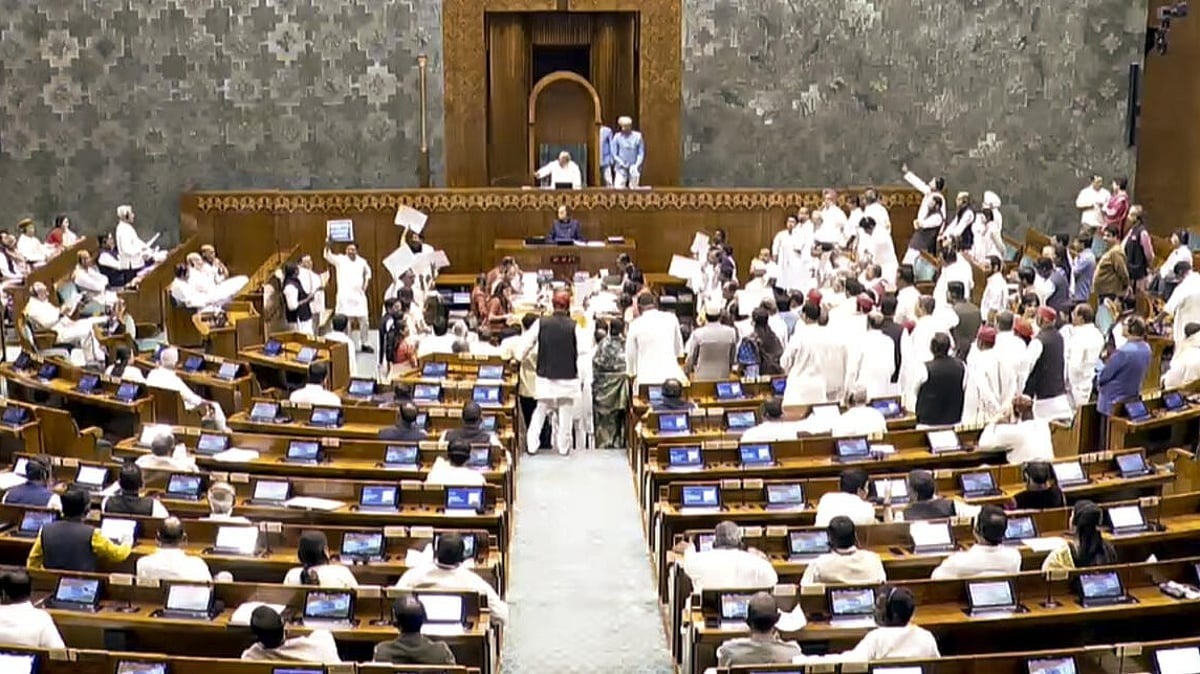
The Indian Parliament is currently witnessing a rare constitutional showdown. On Monday, March 9, 2026, the Lok Sabha was scheduled to discuss a resolution for the removal of Speaker Om Birla. However, the session was consumed by fierce Opposition protests demanding a formal discussion on the US-Israel-Iran war. Consequently, the motion—backed by 118 members from the Congress, Trinamool Congress, and other INDIA bloc parties—has been pushed to Tuesday.
While the government, led by Home Minister Amit Shah, is prepared to defend the Chair, the Speaker himself has taken the unprecedented step of recusing himself from all proceedings until his impartiality is no longer under formal question.
Also Read | Imran Khan and Bushra Bibi Sentenced to 17 Years in Jail
Constitutional Protocol: Article 94 and 96
The removal of a Speaker is governed by specific constitutional mandates rather than standard parliamentary motions.
-
Article 94(c): States that the Speaker may be removed by a resolution of the House passed by a majority of all the then-members.
-
Article 96: Clarifies that while the resolution is under consideration, the Speaker cannot preside, though he has the right to speak, take part in proceedings, and vote (but not a casting vote in case of a tie).
The Voting Process: Slips vs. Automation
Because Om Birla will be sitting in the treasury benches as a member rather than in the Chair, the mechanics of his participation will change.
-
Manual Vote: Since he will not be in his designated Speaker’s seat (which is linked to the automated system), Birla will cast his vote using a physical voting slip.
-
The 50-Member Quorum: Under Rule 201(2), for the motion to even be discussed, at least 50 MPs must rise in their places to grant “leave” to the resolution.
Historical Context: Mavalankar to Birla
This is a rare but not unprecedented event in Indian democracy.
-
First Instance: G.V. Mavalankar faced a similar motion in 1954.
-
Subsequent Challenges: Hukam Singh (1966) and Balram Jakhar (1987) also faced removal notices.
-
The Trend: In every historical instance, the motion has failed, as the ruling party typically maintains the numerical majority required to protect the Chair.
Also Read | Imran Khan and Bushra Bibi Sentenced to 17 Years in Jail
Political Strategy: Record over Removal
The Opposition is aware that they lack the 272+ votes needed to actually remove the Speaker.
-
Symbolism: The goal is to put on the official record their allegations of bias during the Budget Session.
-
Unity: The motion has served as a “unifying factor” for the various parties within the INDIA bloc, allowing them to sharpen their attack on the government’s floor management.
Reality Check
The motion is almost certain to fail. Still, the fact that the Speaker is voluntarily staying away from the House is a significant blow to the “business as usual” image of the 18th Lok Sabha. Therefore, while the NDA has the numbers to win the vote, the moral optics of the Chair being contested for “partisan behavior” remains a stain on the session. In fact, if the debate is curtailed from 10 hours to 4 hours as rumored, the Opposition will likely use that “muzzling” as further evidence of the very bias they are protesting.
The Loopholes
The Opposition is demanding a discussion on West Asia. In fact, this is a “Procedural Loophole”—by disrupting the House over a foreign policy issue, they have effectively delayed their own motion against the Speaker. Therefore, the “washout” on Monday was a self-inflicted delay. Still, the “Moral Grounds Loophole” remains; while Birla isn’t presiding, the Deputy Speaker or a member of the Panel of Chairpersons (all appointed/influenced by the majority) will chair the debate, meaning the “bias” the Opposition is fighting may still manifest during the very discussion meant to address it.
Also Read | Imran Khan and Bushra Bibi Sentenced to 17 Years in Jail
What This Means for You
If you are following Indian governance, Tuesday’s session is “must-watch” television. First, realize that the speech by Amit Shah will likely set the tone for the government’s stance on parliamentary discipline for the rest of 2026. Then, if you are a student of the Constitution, understand that Article 94(c) is being tested in a modern, highly polarized context.
Finally, understand that legislative work is at a standstill. You should expect key bills related to the AI Framework and Energy Subsidies (critical given the current oil crisis) to be delayed as the House focuses on this internal conflict. Before you assume the Speaker is “on his way out,” check the NDA’s final whip; they are expected to show full 292-member strength to kill the motion decisively.
What’s Next
The Business Advisory Committee will meet early Tuesday to finalize the time allotment. Then, look for the Question Hour to potentially be suspended if protests continue. Finally, expect the voting results by late Tuesday evening, which will likely confirm Om Birla’s continuation in office with a renewed, albeit contested, mandate.
Also Read | Imran Khan and Bushra Bibi Sentenced to 17 Years in Jail
End…


