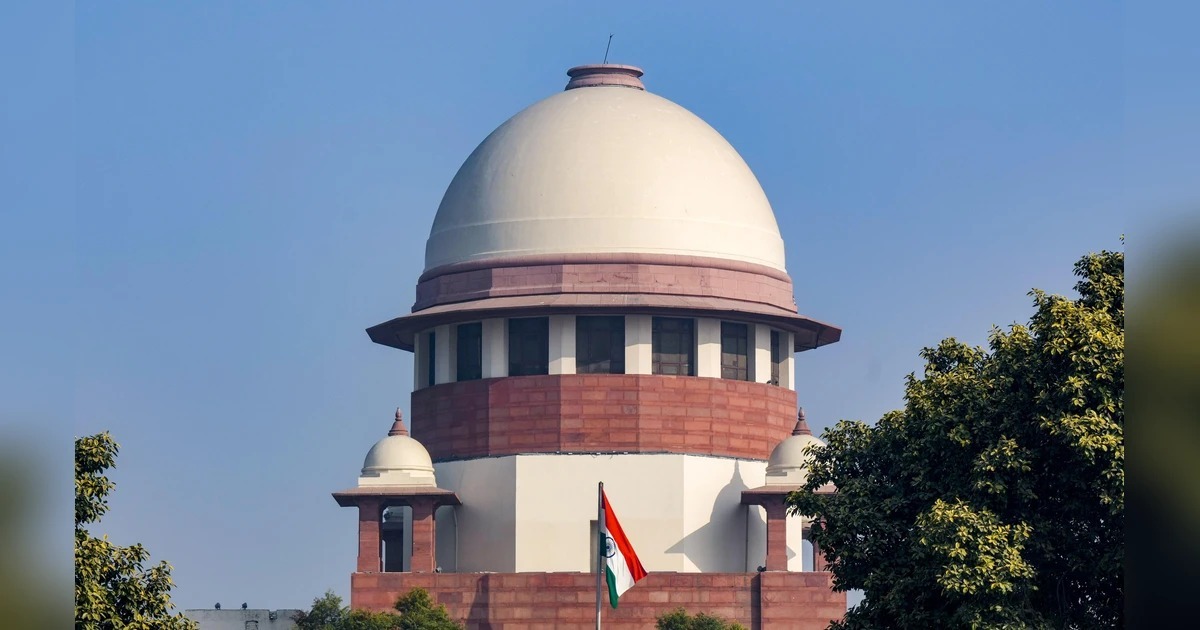
February 17, 2026. The thing is, the Supreme Court is finally opening a time capsule that has been buried for nearly 50 years. On March 17 and 18, a massive nine-judge bench led by Chief Justice Surya Kant will decide what exactly counts as an “industry” in India. This isn’t just lawyer talk—it’s about whether your workplace, be it a university, a hospital, or a charity, has to follow strict labor laws or can call itself a “sovereign function.” Let’s be real—the current definition is so wide it basically includes everything except the army and the police.
Also Read | Imran Khan and Bushra Bibi Sentenced to 17 Years in Jail
Field Notes: The “Industry” Lockdown
-
The Lead Case: State of Uttar Pradesh vs. Jai Bir Singh. It’s a 24-year-old reference that’s finally hitting the courtroom floor.
-
The 1978 Ghost: They are revisiting the Bangalore Water Supply ruling. Back then, Justice V.R. Krishna Iyer laid down a “Triple Test” that made almost every organized activity an industry.
-
The Stakes: If the court narrows the definition, millions of employees in “non-commercial” sectors like education and NGOs could lose protections like the right to strike or collective bargaining.
-
Two-Day Blitz: CJI Surya Kant has made it clear: this is a “first of its kind” hearing that must wrap up in just nine hours over two days. No endless adjournments.
-
The 2020 Code: The bench will also weigh in on how the Industrial Relations Code, 2020, affects this. The code is already trying to modernize these 1947-era laws.
Also Read | Imran Khan and Bushra Bibi Sentenced to 17 Years in Jail
The Triple Test: What Makes an “Industry”? (1978 Standard)
Currently, an organization is an “industry” if it meets these three criteria:
| Criterion | Description |
| Systematic Activity | Habitual or organized work, not a one-off project. |
| Employer-Employee Cooperation | Organised collaboration between those who pay and those who work. |
| Goods/Services Production | Activity that satisfies “human wants and wishes” (excluding spiritual/religious). |
Note: Under this 1978 rule, profit motive is irrelevant. A free charitable hospital is currently as much an “industry” as a steel plant.
And Here’s the Kicker…
The real tension here is between labor rights and state efficiency. The thing is, for decades, state governments like UP, Haryana, and Gujarat have complained that the current definition makes it impossible to run welfare schemes without getting bogged down in labor courts. They want the definition restricted to manufacturing and trade. But here’s the kicker: if the court agrees, it might create a “legal vacuum” for workers in the service and social sectors. The hearing on March 17 will essentially decide if India remains a “labor-first” legal system or shifts toward a more “employer-flexible” model. Or nothing, if the bench decides the 1982 un-notified amendment already fixed it.
Also Read | Imran Khan and Bushra Bibi Sentenced to 17 Years in Jail
End…