President Donald Trump commands immediate removal of naval containment lines over the Strait of Hormuz, while Tehran sets a strict June 19 Geneva signing timeline conditioned on asset releases.
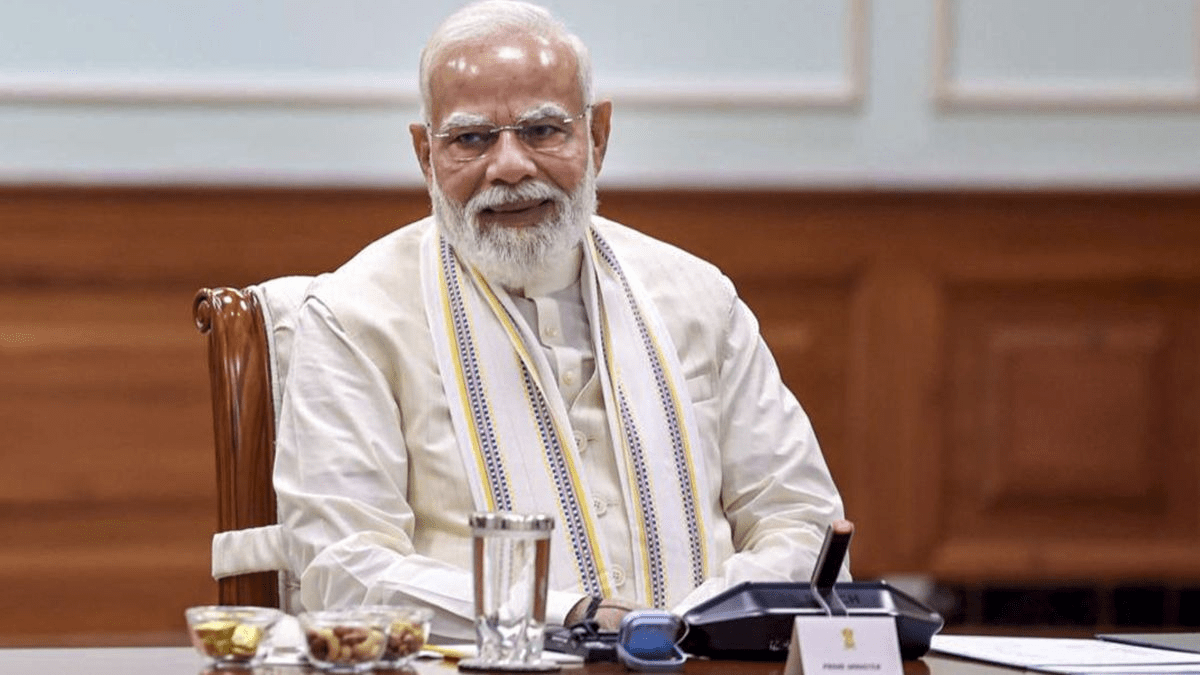
The acute geopolitical crisis that has threatened global energy corridors and cost the lives of merchant mariners over the past quarter has collapsed into a historic diplomatic breakthrough. Issuing an official statement via his verified account on the social media platform X on Monday, June 15, 2026, Prime Minister Narendra Modi warmly welcomed the unexpected US Iran peace deal signed framework. The prime minister emphasized that New Delhi holds high expectations for the agreement to permanently secure the freedom of navigation across West Asia.
The dramatic change in global security lines follows a series of late-night announcements that echoed from Washington to Tehran.
Writing on Truth Social, U.S. President Donald Trump announced the absolute completion of the peace agreement, issuing an immediate executive order to lift the active U.S. Naval blockade.
Trump fully authorized the toll-free reopening of the Strait of Hormuz, declaring to the maritime community: “Ships of the World, start your engines. Let the oil flow!”
Also Read | Imran Khan and Bushra Bibi Sentenced to 17 Years in Jail
The Architecture of the Truce: Tracking the Geneva Roster
The breakthrough understanding provides an immediate operational pause to a conflict that had caused serious economic disruption worldwide.
According to official updates from Iran’s state-affiliated Press TV, Deputy Foreign Minister for Legal and International Affairs Kazem Gharibabadi confirmed the baseline parameters of the agreement.
The formal signing ceremony is officially scheduled to take place on Friday, June 19, 2026, in Geneva, Switzerland.
Following the exchange of signatures, the complete text of the Memorandum of Understanding (MoU) will be made public.
Tehran has clarified that its entry into the proposed 60-day final negotiation window is strictly conditional on verifying Washington’s compliance with lifting trade bans and unlocking frozen Iranian banking assets.
Slicing Through the Global Shipping and Resource Matrix
The lifting of the blockade brings immediate financial relief to international trade networks, altering risk parameters across several vital economic sectors:
| Impacted Maritime Vector | Prior Blockade Operational Status | New Post-Deal Logistics Framework | Core Financial Advantage for India |
| Strait of Hormuz Route | Strictly blocked by carrier strike groups. | 100% Open and Toll-Free. | Restores regular passage for one-sixth of global oil consumption. |
| Merchant Mariner Safety | High-velocity missile strikes on tankers. | Guaranteed non-hostile transit corridors. | Protects the lives of over 18,000 active Indian crew members. |
| International Crude Oil | Threatened to breach the $100 barrier. | Crashing down toward the $82–$85 range. | Lowers domestic import costs; stabilizes local wholesale inflation. |
| War Risk Insurance Caps | Surged by up to 500% across shipping lines. | Immediate return to standard baseline rates. | Lowers logistics overheads for subcontinental container fleets. |
Note: The resolution arrived just days after India lodged strong diplomatic protests over U.S. Navy actions that tragically killed three Indian mariners aboard the MT Settebello, highlighting how intense real-world pressures pushed both sides back to the negotiating table.
The timing of this high-seas truce brings vital support to the domestic economy, which had just recorded an uncomfortable jump in its industrial indicators.
On Monday morning, the Commerce Ministry revealed that factory-gate inflation had climbed to 9.68% in May, driven by high fuel import premiums.
The immediate collapse in crude oil prices sparked by the peace announcement will help reverse this trend, lowering raw material expenses and protecting household budgets from secondary price hikes.
Also Read | Imran Khan and Bushra Bibi Sentenced to 17 Years in Jail
Five Sequence Steps Facing Global Fleets as the Blockade Dissolves
As maritime authorities and commercial fleet operators respond to the sudden removal of naval restrictions, logistics hubs are executing a five-step recovery sequence:
Prime Minister Modi noted that India looks forward to ongoing discussions reaching a sustainable, permanent agreement.
The relief felt across major ports—from Mumbai to Rotterdam—underscores how critical open waterways are to modern civilization.
By utilizing disciplined diplomacy to resolve high-stakes maritime blockades, the international community has protected global commerce, ensuring that brave merchant mariners can navigate international waters safely to keep global trade moving forward.
FAQ Section
When and where will the official US-Iran peace agreement be signed?
The official signing ceremony for the breakthrough understanding is scheduled to take place on Friday, June 19, 2026, in Geneva, Switzerland. Following the signing, the complete text of the Memorandum of Understanding (MoU) will be released to the public, launching a 60-day negotiation period to finalize a permanent treaty.
What immediate changes did President Trump order regarding the shipping routes?
President Trump announced the absolute completion of the deal on Truth Social and immediately fully authorized the toll-free opening of the strategic Strait of Hormuz. Simultaneously, he commanded the immediate removal of the United States Naval blockade, allowing international oil tankers and cargo ships to resume standard transit without restriction.
Why is this peace agreement highly beneficial for India’s domestic economy?
The agreement is highly beneficial for India on two primary fronts: human safety and fiscal stability. Logistically, it guarantees the safety of over 18,000 Indian sailors working in the Gulf region. Macroeconomically, the reopening of the chokepoint has caused Brent crude prices to slide, which directly lowers India’s import bills and helps ease the industrial pricing pressures that pushed wholesale inflation to 9.68% in May.
Also Read | Imran Khan and Bushra Bibi Sentenced to 17 Years in Jail
End….