

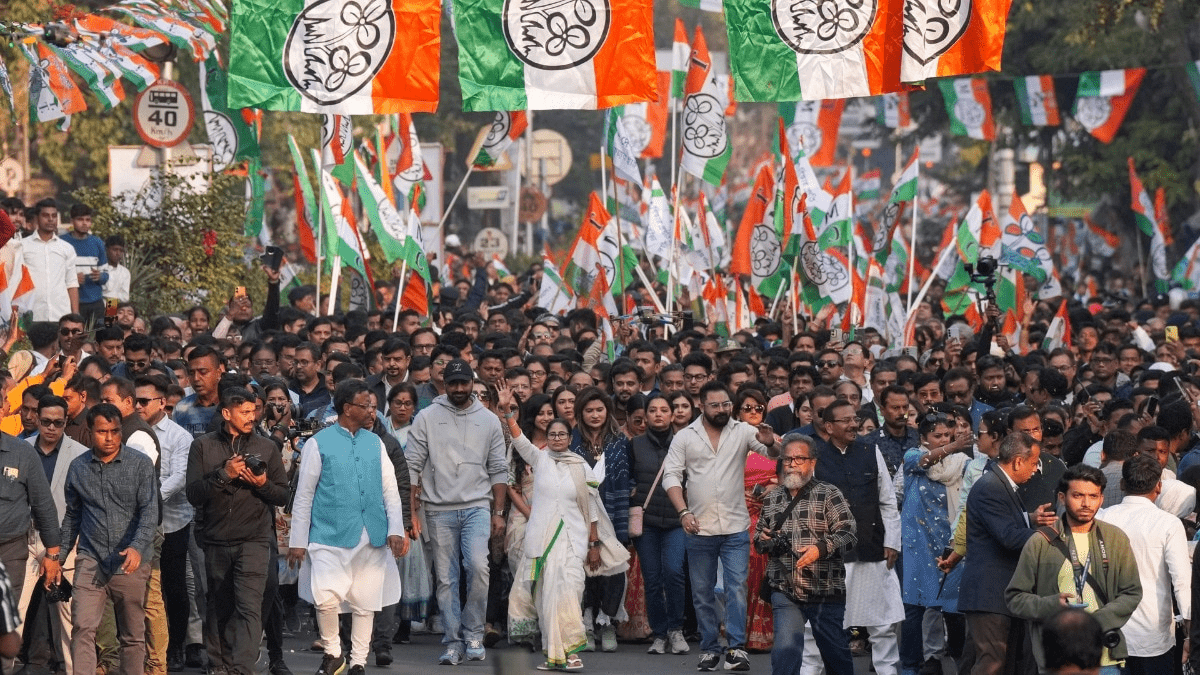
Now the high-stakes political machinery of West Bengal and Tamil Nadu is undergoing a silent transformation. The TMC and DMK are moving to insulate their 2026 election campaigns from the ongoing scrutiny surrounding I-PAC. Therefore, the consultancy that once held near-total control over electoral strategy is being slowly replaced by robust in-house systems. Specifically, the raids on I-PAC leadership have prompted a decisive shift toward internal data units and booth management teams.
Meanwhile, both parties insist that the ground-level momentum remains undisturbed.
But the “cautious recalibration” suggests a long-term change in how regional giants approach electioneering.
Also Read | Imran Khan and Bushra Bibi Sentenced to 17 Years in Jail
Why the TMC is Moving Beyond the I-PAC Lifeline
Now the Trinamool Congress (TMC) has been preparing for this moment since 2021. While Prashant Kishor’s I-PAC was central to the last assembly victory, the party has since built parallel internal teams. Therefore, calling I-PAC a “lifeline” is now considered an exaggeration by senior party sources.
Building Parallel Systems
First, under Abhishek Banerjee’s watch, the TMC developed its own data and booth management architecture. Then, these teams began handling voter outreach directly. Thus, the party has successfully recalibrated its reliance on external consultants over the last three years.
Next, the party has not “pushed the panic button” despite the recent legal heat. Therefore, the internal war rooms are already operational and filling the gaps.
“Alternative systems are now fully operational,” a TMC source confirmed.
Prateek Jain: The Data Architect Behind Abhishek Banerjee’s Rise
Now one specific figure remains at the center of the TMC’s campaign ecosystem. Prateek Jain is known for his granular understanding of voter sentiment in West Bengal. Therefore, his recent summons by the ED is a notable development for the party’s war room.
Outreach and Strategy
First, Jain was the brain behind the successful Nabo Jowar campaign. This statewide yatra positioned Abhishek Banerjee as a grassroots leader. Then, he designed the strategy for the 2023 panchayat polls. Thus, he helped the party understand and correct the optics of rural violence from previous years.
Next, his data instincts were crucial in the 2024 Lok Sabha elections. Therefore, Mamata Banerjee has remained a staunch defender of Jain and the I-PAC team throughout the raids.
Family Oversight
First, the PEN unit is overseen by Sabareesan, the son-in-law of Chief Minister MK Stalin. Then, this unit works closely with on-ground political messaging. Thus, the party has kept the ultimate control of the campaign within the family and core leadership.
Next, the DMK source described this as a way to minimize risk. Therefore, any disruption at I-PAC does not stop the “electoral engine” of the Dravidian major.
Rishiraj Singh and the Coordination Crisis in Chennai
Now Rishiraj Singh has been the critical interface for the DMK. He acted as the primary bridge between I-PAC’s data and the party leadership. Therefore, his current legal challenges are being watched closely in Chennai.
Direct Access
First, Singh reportedly had direct access to the CM and top decision-makers. Then, he aligned campaign inputs with the DMK’s internal machinery. Thus, he ensured that metrics and data-driven insights were integrated into the daily political messaging.
Next, his role was focused on monitoring the impact of campaigns in real-time. Therefore, his absence from the top-tier strategy meetings has forced a shift back toward traditional party veterans.
Also Read | Imran Khan and Bushra Bibi Sentenced to 17 Years in Jail
Showtime Consulting: DMK’s Secondary Strategy Layer
Now the DMK is not putting all its eggs in one basket. They have also been working with Robbin Sharma of Showtime Consulting. Therefore, the party has a diverse portfolio of advisors to draw from.
Cross-State Experience
First, Sharma has previously handled campaigns for leaders like Eknath Shinde and Chandrababu Naidu. Then, his firm provides an alternative perspective on political messaging in Tamil Nadu. Thus, the DMK is protected from a total strategy collapse if any single agency is compromised.
Next, this multi-agency approach allows the DMK to cross-verify data. Therefore, the 2026 campaign is perhaps the most technically “insured” effort in the party’s history.
Political Fallout: BJP’s Crackdown vs. Bengali Identity
Now the TMC is turning the legal heat into a political narrative. They are highlighting that many I-PAC professionals are young Bengalis. Therefore, the party is framing the raids as an attack on the youth and the state’s identity.
Backfire Potential
First, senior leaders like Derek O’Brien have underlined their commitment to these professionals. Then, they have argued that this “crackdown” will only backfire for the BJP in the polls. Thus, the legal struggle is being morphed into a campaign theme of “Delhi vs. Bengal.”
Next, the party is mindful of the careers of these young professionals. Therefore, they are offering legal and moral support to the I-PAC staff caught in the crossfire.
The ‘Work from Home’ Reality for I-PAC Professionals
Now the ground reality for I-PAC staff has changed overnight. Many professionals have shifted to remote locations. Therefore, the “physical” war rooms may look thinned, but the digital campaign continues.
Remote Monitoring
First, most staff are choosing to work from home to avoid the disruption of ongoing raids. Then, they continue to monitor voter sentiment and social media trends digitally. Thus, the “output” remains steady even if the optics suggest turbulence.
Next, the TMC has assured that they will not allow this to jeopardize the campaign’s final stretch. Therefore, the reliance on cloud-based strategy tools is now at an all-time high.
Also Read | Imran Khan and Bushra Bibi Sentenced to 17 Years in Jail
Ensuring Continuity in the Final 10 Days of the Campaign
Now we are in the most critical phase of the 2026 election cycle. Continuity is the primary goal for both the TMC and the DMK. Therefore, the strategy is simple: minimize risk and maximize internal capacity.
The Last Mile
First, ground activity—like rallies and door-to-door outreach—remains steady. Then, the internal units are taking over the high-level decision-making from I-PAC leadership. Thus, the “electoral engine” continues to run without missing a beat.
Next, both parties are walking a careful line to ensure the voters don’t perceive any internal chaos. Therefore, on the ground, it remains “business as usual.”
Common Questions Answered
Why is the TMC shifting away from I-PAC? Now the party has built parallel internal teams over the last three years to reduce dependence. Therefore, the recent legal scrutiny on I-PAC hasn’t halted their campaign.
Who is Prateek Jain? First, he is a pivotal data architect for the TMC. Then, he is known for designing campaigns like Nabo Jowar. Thus, his role in shaping Abhishek Banerjee’s leadership was central.
What is the DMK’s ‘PEN’ unit? Next, it is an internal DMK unit overseen by Sabareesan. Therefore, it handles campaign work and serves as a hedge against external consultancy risks.
Are I-PAC professionals still working? So yes, many continue to monitor the campaign remotely or from home. Thus, the digital output remains steady despite the raids.
How has the BJP crackdown impacted the polls? Finally, the TMC is framing it as an attack on Bengali youth. Therefore, they believe the “raid narrative” might actually help them with the local electorate.
Also Read | Imran Khan and Bushra Bibi Sentenced to 17 Years in Jail
End…

