

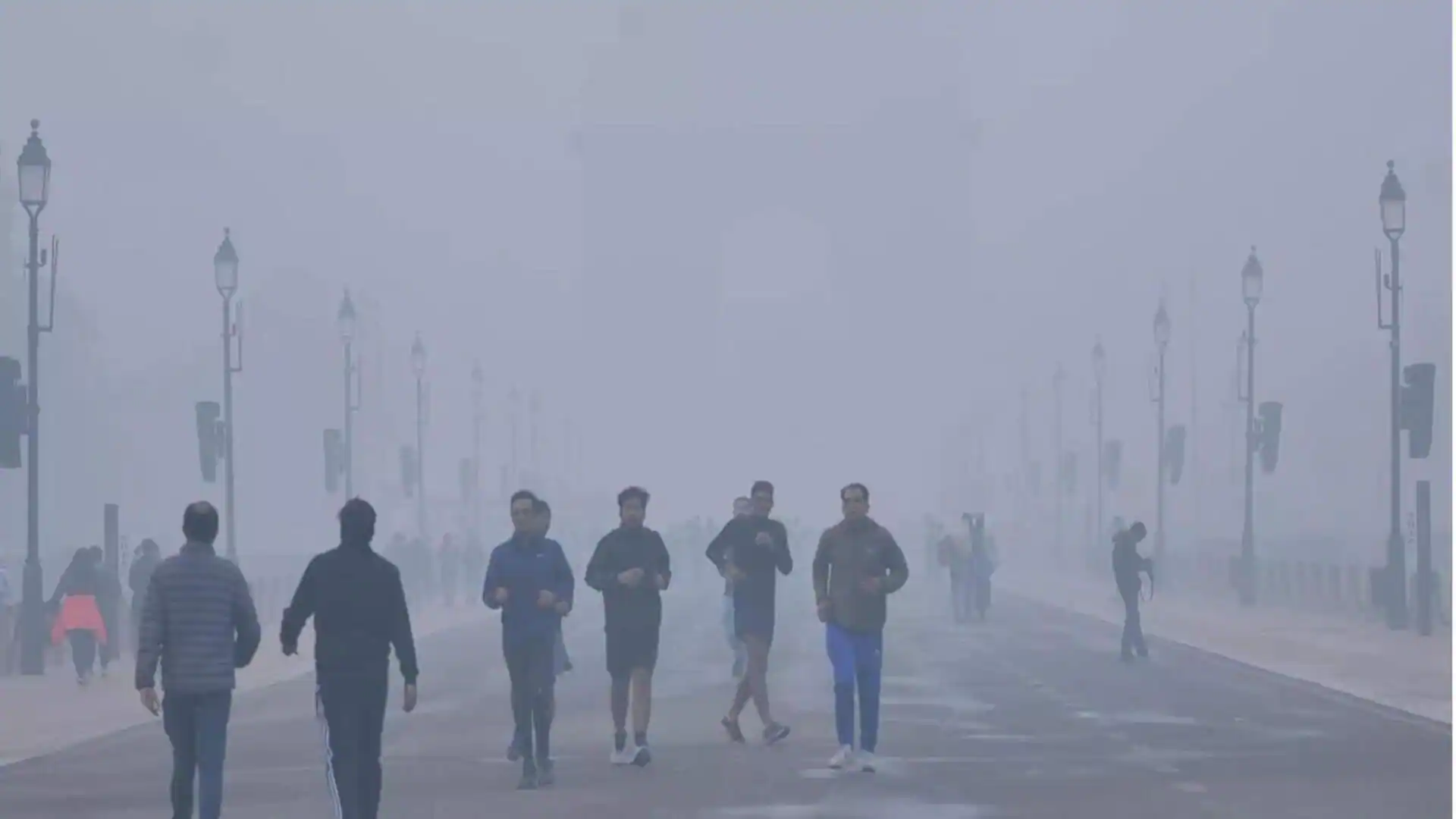
Delhi’s usual transition into summer has been abruptly halted. Instead of the expected March heat, the National Capital Region is currently gripped by a late-winter atmosphere. Today, Saturday, March 21, 2026, the city remains under a thick blanket of moisture and mist that feels more like January than spring.
Also Read | Imran Khan and Bushra Bibi Sentenced to 17 Years in Jail
Temperature & Humidity Breakdown
The Safdarjung Observatory recorded a sharp dip this morning. At 7:20 AM, the mercury sat at 14°C. Combined with 100% humidity, the dew point was reached early, resulting in dense fog that disrupted early morning commutes and Eid prayers.
The “1,000-km” Rain Band
This weather event isn’t just local. Experts have identified a linear rain band stretching nearly 1,000 kilometers from Afghanistan through Pakistan into the Indian heartland.
-
Dynamics: A western disturbance collided with moisture-laden winds from the Arabian Sea.
-
Intensity: This system has been described by some meteorologists as the most “massive” western disturbance seen in years, preponing the pre-monsoon phase usually reserved for late April.
AQI Improvement: A 5-Month Milestone
For the first time in 161 days, Delhiites can breathe freely. The continuous rain acted as a “scrubber,” washing away PM2.5 and PM10 particles.
-
Current AQI: 93 (Satisfactory)
-
Previous Record: October 9, 2025 (AQI 99) While the IMD warns this air quality may slip back to “Moderate” as the ground dries, the current respite is a rare environmental win for the capital.
Also Read | Imran Khan and Bushra Bibi Sentenced to 17 Years in Jail
Reality Check
While the cool weather is a welcome relief from the 38°C peaks seen just last week, it is temporary. The IMD has not issued any major alerts for Saturday, indicating that the system is moving eastward toward Bihar and West Bengal. However, a fresh western disturbance is already being monitored for Monday, March 23, which could bring another round of lightning and light showers.
The Loopholes
The IMD claims this is “weather-driven haze.” In fact, this is a “Hygroscopic Loophole”—when humidity exceeds 70%, even low levels of pollution can appear as dense fog because the particles absorb water and swell. Therefore, while the air is cleaner (AQI 93), the visibility is worse than on some high-pollution days. Still, the “Summer Loophole” remains; by late next week, temperatures are expected to bounce back to 33°C as the heatwave potential returns.
Also Read | Imran Khan and Bushra Bibi Sentenced to 17 Years in Jail
What This Means for You
If you are living in Delhi-NCR, keep the light woolens out. First, realize that morning dampness may lead to a spike in seasonal allergies as mold and pollen count fluctuates.
Then, if you are a driver, understand that visibility in areas near the Yamuna or open fields (like Noida Sector 122) will remain low until approximately 10:00 AM. Finally, understand that Monday’s commute could be impacted by another spell of thunderstorms; plan your travel around the late afternoon window when the next system is expected to hit.
What’s Next
Expect daytime temperatures to rise to 27–29°C by Sunday, March 22, as the cloud cover breaks. Then, look for IMD’s updated forecast on Sunday evening regarding the intensity of the March 23 rain. Finally, expect AQI levels to remain below 150 for the next 48 hours before the return of northwesterly winds brings back dust from the Rajasthan desert.
Also Read | Imran Khan and Bushra Bibi Sentenced to 17 Years in Jail
End…


