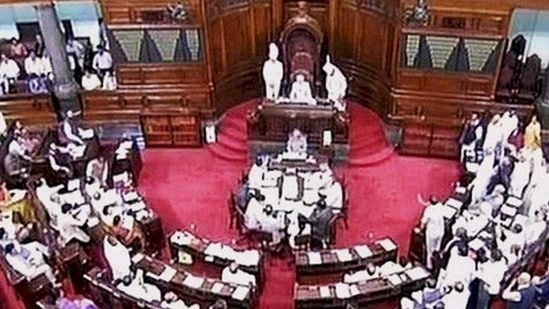
The Election Commission of India (ECI) announced biennial elections for 37 Rajya Sabha seats Wednesday. Polling is scheduled for March 16, with counting to follow the same evening at 5 p.m.
The move addresses vacancies arising in April 2026 as sitting members complete their six-year terms. These elections serve as a critical barometer for party strength within state Assemblies. The ECI confirmed that the entire electoral process will be finalized by March 20, 2026.
Also Read | Imran Khan and Bushra Bibi Sentenced to 17 Years in Jail
2026 Biennial Election Schedule
The formal election process begins with the issuance of notifications on February 26. Candidates must file their nominations by March 5, after which the ECI will conduct scrutiny on March 6. The final date for withdrawal of candidatures is March 9.
Meanwhile, prominent members set to retire include NCP founder Sharad Pawar and Union Minister Ramdas Athawale. Congress veteran Abhishek Manu Singhvi and TMC leader Saket Gokhale also feature on the list. In fact, Rajya Sabha Deputy Chairman Harivansh Narayan Singh will also complete his term this April.
State-wise Vacancy Breakdown
Maharashtra leads the list with seven vacancies, followed by Tamil Nadu with six seats. West Bengal and Bihar will each see five members retiring this April. These four states represent the bulk of the contest, accounting for 62% of the total seats.
Next, Odisha will fill four seats, while Assam has three vacancies. Smaller numbers are reported in Telangana, Haryana, and Chhattisgarh, which have two seats each. Himachal Pradesh rounds out the list with a single vacancy. Therefore, the results in Maharashtra and Tamil Nadu will be the most significant for the Upper House’s overall composition.
Also Read | Imran Khan and Bushra Bibi Sentenced to 17 Years in Jail
The “Violet Pen” Mandate
The ECI issued strict procedural instructions regarding the voting process. Legislators must use only the integrated violet sketch pens provided by the Returning Officer. In fact, using any other writing instrument will result in the ballot being declared invalid.
Observers will be appointed to ensure the elections remain free and fair. At that time, in 2020, the BJP and its allies secured a dominant share in states like Assam and Bihar. Still, the current numerical strength in state Assemblies has shifted significantly in several regions.
Reality Check
The ECI calls these “biennial elections” to ensure House continuity. Still, the indirect election process often turns these polls into a mere formality for parties with clear majorities. Therefore, the “contest” is often decided in party offices long before the March 16 vote. In fact, the only real suspense occurs in states like Maharashtra, where recent party splits have blurred traditional arithmetic.
The Loopholes
The “violet sketch pen” rule is designed to prevent secret coding or marking on ballots. In fact, past elections have seen ballots rejected over the slightest deviation in ink. Therefore, the Returning Officer’s pen is the only legal tool for an MLA. Still, political parties often bypass the spirit of secrecy by issuing strict “whips,” effectively turning a secret ballot into a mandated show of strength.
Also Read | Imran Khan and Bushra Bibi Sentenced to 17 Years in Jail
What This Means for You
If you track parliamentary legislation, realize that these elections could alter the Rajya Sabha’s balance of power. First, monitor the nomination process in Maharashtra and West Bengal; these states often produce the most contentious picks. Then, look for how many new members are first-time MPs versus returning veterans.
Finally, realize that the Rajya Sabha’s composition directly impacts the government’s ability to pass critical bills. You should watch for changes in the “nominated” member category, which the President fills separately. Before the next session begins, expect a significant reshuffle in committee leadership as veteran members exit.
What’s Next
The ECI will issue the formal notification on February 26, 2026. Then, political parties will finalize their candidate lists by the first week of March. Finally, the newly elected members will take their oaths in April, coinciding with the start of the summer session of Parliament.
Also Read | Imran Khan and Bushra Bibi Sentenced to 17 Years in Jail
End…