

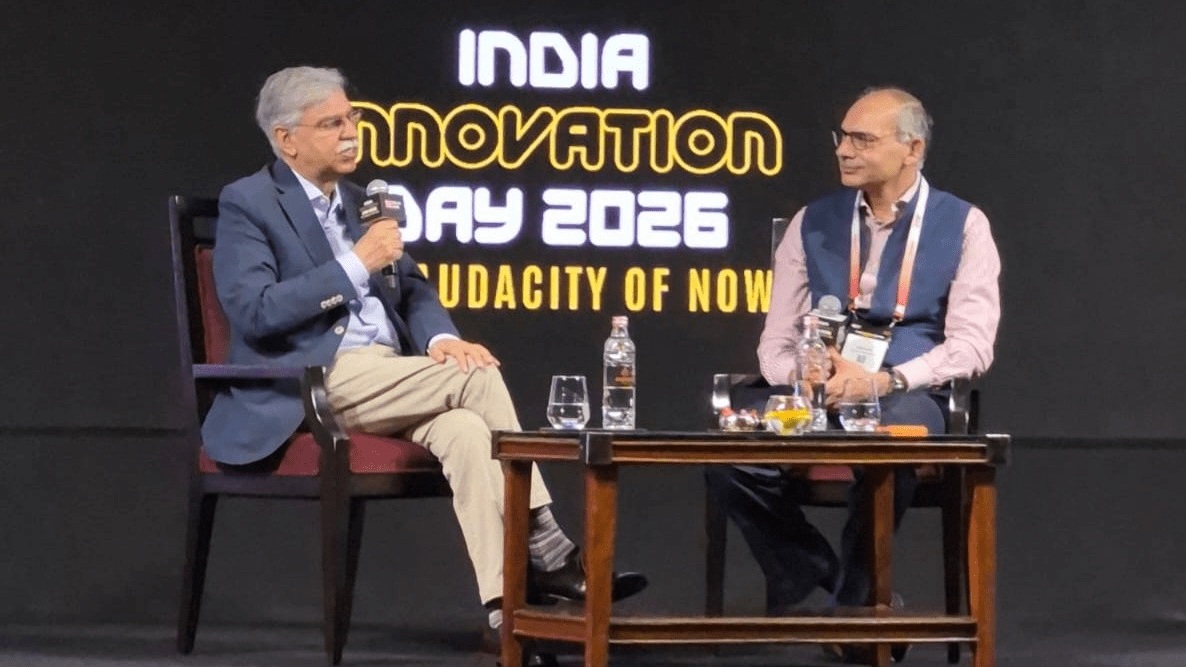
Now the industrial core of India’s digital ecosystem is undergoing a profound structural evolution. TiE Delhi-NCR successfully concluded the landmark 15th edition of India Innovation Day (iDay) 2026 at The Leela Ambience in Gurugram, drawing over 1,200 elite founders, policymakers, and venture capital syndicates. Therefore, the summit served to formally mark the subcontinent’s transition from a standard internet-first marketplace to an innovation-first intellectual powerhouse. Meanwhile, macroeconomic indicators reveal a spectacular acceleration in domestic enterprise creation, with over 55,200 startups recognized during the FY 2025–26 window. Following high-level panel completions, this rapid scale-up acts as a mechanical necessity to secure India’s ambitious $10 trillion sovereign economic roadmap.
Also Read | Imran Khan and Bushra Bibi Sentenced to 17 Years in Jail
At a Glance: India Innovation Day (iDay) 2026 Parameters
| ECOSYSTEM METRIC | LATEST FISCAL DATA TRACKS | YEAR-ON-YEAR GROWTH STATUS |
| Recognized Startups | 55,200+ Active Enterprises | +50% Exponential Spike |
| DeepTech Capital Pool | $2.3 Billion Total Funding | +37% Institutional Allocation |
| Summit Framework | Themed “Audacity of Now” | Formerly India Internet Day |
| Core AI Perspectives | Delivered by OpenAI and Sarvam AI | Focus on Reducing Onboarding Friction |
| Live Investment Track | TiE The Knot Season 14 | Target Range: ₹3–8 Crore per Deal |
| Creative Segment | Future Frames Initiative | AI-Powered Cinematography Showcases |
The Audacity of Now: iDay 2026 Convenes Silicon Valley’s Elite in Gurugram
Now the geographic alignment of corporate technical excellence shifted entirely toward the national capital region early Monday morning. The 15th edition of the summit, explicitly re-branded as India Innovation Day to reflect deeper technical integration, operated under the anchor theme “Audacity of Now.” Therefore, standard software delivery models were discarded in favor of frontier technology explorations.
First, the delegate registry brought together top-tier visionaries, including Sunil Kant Munjal of Hero Enterprise and Deep Kalra of MakeMyTrip. Next, the sessions focused on charting out localized supply chains for quantum computing, biotechnology, and space systems. Thus, the platform provided a clean environment to synchronize corporate investments with national policy declarations.
So the grand ballroom was packed with institutional allocators seeking to identify high-potential deep-tech platforms. This dense participation highlights that the domestic technology landscape has moved past simple e-commerce copycat setups. Meanwhile, specialized tech enablers are reviewing the incoming patent applications to measure genuine sector maturity. Therefore, the Gurugram summit has established an incredibly ambitious benchmark for the 2026 calendar year.
OpenAI’s India Strategy: Pragya Misra on Navigating Complex Micro-Markets
Now the operational rules governing the distribution of generative artificial intelligence models are facing a major localized rewrite. Delivering a highly anticipated keynote, Pragya Misra, Head of Strategy & Global Affairs for India at OpenAI, emphasized that the domestic landmass cannot be approached as a single uniform market. Therefore, engineering setups must adapt to vastly fluctuating digital maturity tiers across provinces.
First, Misra pointed out that true scalability in the subcontinent requires product designers to abandon simple price-cutting strategies. Next, she stated that developers must focus heavily on reducing interface friction and building intuitive, guidance-led deployment tracks. Thus, the mechanical necessity of simplifying digital onboarding loops remains the defining factor for unlocking rural consumer adoption.
[Traditional Software Approach: Price War Cuts] ──► Fails to Capture Fragmented Markets
                                                             │
                                                             ▼ (The AI Era Transition)
[OpenAI 2026 Strategy: Friction Reduction]         ──► Builds Guidance-Led Local Interfaces
                                                             │
                                                             ▼
[Result: Scalable Omnichannel Adoption]            ──► Taps Into India's Non-Homogeneous Users
So companies that invest resources into studying these unique local micro-markets will claim a dominant volume share. The tech giant is actively evaluating how localized language variations interact with core LLM token efficiency rates. Meanwhile, developers are leveraging these specific insights to construct lightweight enterprise tools for regional small businesses. Therefore, Misra’s perspective positions friction removal as the ultimate competitive battlefield.
Also Read | Imran Khan and Bushra Bibi Sentenced to 17 Years in Jail
Sovereign Foundational Architecture: Sarvam AI Outlines Compute Priorities
Now the geopolitical implications of model ownership have stepped directly into the center of national security planning. Speaking on the industrial landscape, Vivek Raghavan, the Co-founder of Sarvam AI, clarified that consuming Western models is entirely insufficient for a nation with global superpower targets. Therefore, constructing independent foundational models is being treated as a vital national priority.
First, Raghavan explained that sovereign innovation requires localized control over the entire compute stack, including specialized silicon layouts and customized training datasets. Next, he stated that India’s vast tech talent pool is perfectly positioned to transition from backend maintenance roles to foundational model creation. Thus, this structural push serves to insulate the local economy from unexpected export restrictions imposed by overseas technology providers.
So the organization is collaborating with state agencies to open up safe, representative public data networks for training purposes. This ensures that the resulting systems are naturally aligned with regional compliance rules and cultural nuances. Meanwhile, domestic cloud networks are expanding their GPU cluster setups to process these custom architectures efficiently. Therefore, the sovereign AI push creates a secure perimeter around India’s long-term intelligence assets.
DeepTech Capitalization: Parsing the $2.3 Billion Venture Inflow
Now the macro-level validation backing these foundational ambitions is clearly visible across recent investment data sets. Institutional tracking data reveals that domestic DeepTech capital allocations experienced an exceptional 37 per cent vertical surge, hitting an all-time high of $2.3 billion. Therefore, venture capital funds are aggressively moving away from consumer internet bets to back hard engineering platforms.
DeepTech Institutional Allocation Split (2026):
-
Sovereign Infrastructure: 34% of funds deployed into building domestic high-performance computing arrays.
-
Biotech & Cellular Agriculture: 28% targeted at gene-therapy platforms and localized health diagnostics.
-
Aerospace & SpaceTech: 22% captured by private launch vehicle providers and satellite constellations.
-
Quantum & Applied Materials: 16% allocated to secure cryptographic links and custom industrial alloys.
First, this multi-billion dollar capital injection guarantees that local research labs possess the financial runway to sustain multi-year development cycles. Next, the entry of specialized funds like Chiratae Ventures ensures that early-stage builders receive expert guidance alongside pure liquidity. Thus, the mechanical necessity of capital-heavy funding is fully satisfied by a highly supportive venture ecosystem.
TiE The Knot Season 14: Real-Time Liquid Capital Allocation Mechanics
Now the practical mechanism for distributing this ready capital was put on vivid display during the summit’s flagship investment track. TiE The Knot returned for its 14th successive season, operating as a high-stakes, real-time live funding arena. Therefore, selected founders faced immediate, rigorous cross-examination from leading institutional allocators on the main stage.
First, the current season restricted entry exclusively to growth-stage enterprises looking to lock in tranches between ₹3 crore and ₹8 crore. Next, the historical data index for the program shows that out of 69 startups that previously stepped onto the pitch floor, exactly 31 successfully walked away with structured funding. Thus, the format has successfully cleared over ₹110 crore in aggregate commitments over its operational history.
So the live interaction loop cuts out months of traditional backroom diligence negotiations, accelerating the operational speeds of local startups. Meanwhile, arriving venture firms are utilizing these public pitches to gauge real-time valuation trends across competing sub-sectors. Therefore, the live funding engine transforms abstract investment logic into immediate, liquid corporate assets.
Also Read | Imran Khan and Bushra Bibi Sentenced to 17 Years in Jail
Future Frames: The Intersections of Generative Video and Storytelling
Now in a highly progressive structural move, iDay 2026 expanded its parameters to explore how artificial intelligence is disrupting creative industries. The summit introduced Future Frames, a specialized AI-powered film festival showcasing advanced storytelling mediums. Therefore, the event drew a unique audience of independent filmmakers, software engineers, and digital artists.
First, the participants demonstrated how advanced text-to-video pipelines can compress cinematic production timelines from months down to a few days. Next, academic researchers from Amity Education Group highlighted that these tools democratize elite visual effects architecture for young students. Thus, the mechanical necessity of mastering digital prompt engineering is becoming standard across media university curriculums.
So the showcase featured short cinematic pieces generated entirely through advanced tools powered by models like Google’s Veo. Meanwhile, entertainment executives are reviewing these highly efficient production workflows to reduce overhead costs for upcoming digital streaming releases. Therefore, the Future Frames segment proves that generative tools are reshaping corporate entertainment design parallel to standard industrial software.
Ecosystem Consolidation: Scaling Biotechnology and Infrastructure Fronts
Now the overarching consensus holding the Gurugram summit together is that India’s technical acceleration must cover all primary physical engineering fronts. Deep panel sessions highlighted massive breakthroughs in cellular therapeutics, spearheaded by platforms like ImmunoACT. Therefore, the national strategy is successfully merging advanced software layers with complex biological research.
First, local drone infrastructure leaders like Aereo explained how integrated AI mapping systems are modernizing rural land asset audits. Next, public sector enablers including STPI and BIRAC are building joint incubators to offer founders clean room facilities alongside standard office space. Thus, technical excellence is being systematically supported by robust physical infrastructure networks across the country.
So the collective momentum generated across iDay 2026 will serve to direct corporate investment strategies through the upcoming quarters. Meanwhile, prominent corporate partners like Tally Solutions and Kalaari Capital are strengthening their developer grants to foster grassroots experimentation. Therefore, this comprehensive ecosystem consolidation ensures that India’s digital trajectory remains completely locked into global leadership coordinates.
FAQ: Key Takeaways from the TiE Delhi-NCR Innovation Summit
1. What major startup milestone was highlighted at India Innovation Day 2026? Now, the summit revealed that India has achieved a spectacular startup surge, with over 55,200 startups recognized in FY 2025–26, tracking a 50% year-on-year expansion.
2. How much funding has India’s DeepTech sector captured recently? First, institutional capital allocations to the domestic DeepTech sector experienced a massive 37% surge, hitting an all-time high of $2.3 billion.
3. What was the central advice shared by OpenAI’s Pragya Misra? So, she emphasized that because India is a non-homogeneous market, tech founders must move past simple price wars and focus entirely on reducing onboarding friction and simplifying product experiences.
4. Why is sovereign AI considered critical according to Sarvam AI? Next, Co-founder Vivek Raghavan clarified that independent foundational models are a mechanical necessity to protect national digital security and prevent dependence on overseas tech providers.
5. What is “TiE The Knot” and how does it benefit growth-stage founders? Now, it is a high-visibility live investment arena where founders pitch directly to venture capitalists for real-time commitments, focusing on funding rounds between ₹3 crore and ₹8 crore.
6. What creative initiative was introduced at iDay 2026? Finally, the summit introduced Future Frames, a specialized AI film festival designed to showcase advanced cinematic storytelling formats powered by cutting-edge generative video tools.
Also Read | Imran Khan and Bushra Bibi Sentenced to 17 Years in Jail
End…

