

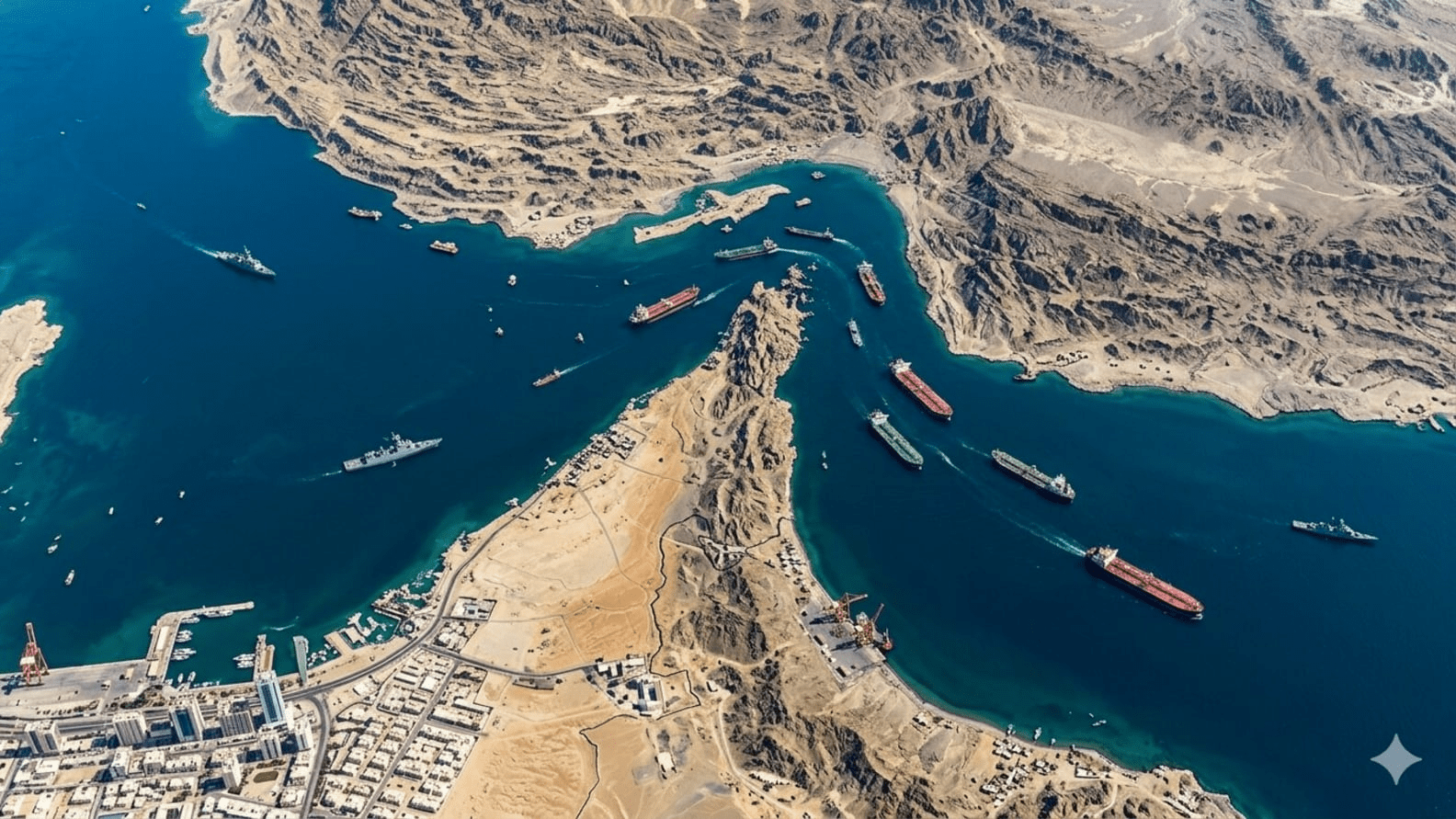
Now the theoretical warnings of energy analysts have materialized into a brutal reality for India’s industrial heartland. The Strait of Hormuz oil crisis 2026 is no longer just a headline on a trading screen; it is a direct threat to the production lines of Noida and the National Capital Region (NCR). First, the International Energy Agency (IEA) has cautioned that current market prices “don’t yet reflect the severity” of the blockade. Therefore, as crude flows face historic disruptions, manufacturers are battling a lethal combination of skyrocketing logistics costs and a sharp reversal in labor participation. Meanwhile, the physical market is showing signs of “desperation,” with certain blends trading nearly 50% above futures prices.
Also Read | Imran Khan and Bushra Bibi Sentenced to 17 Years in Jail
From Hormuz to Noida: The Anatomy of a Structural Squeeze
Now we must analyze how a naval blockade in West Asia translates to a job loss in Noida. First, India’s exposure is entirely structural. Therefore, because the country imports up to 87 percent of its crude, the Strait of Hormuz oil crisis 2026 causes an immediate spike in the cost of every raw material arriving at factory floors.
Next, manufacturers in the NCR are being hit by rising logistics costs just as the Rupee remains under immense pressure. Thus, the ability of these factories to absorb price shocks has vanished.
Meanwhile, the result is a “slow squeeze” where production becomes economically unviable. Therefore, the stress is surfacing not on Wall Street, but on the factory floors where the pressure is already building. So the war for the Strait has effectively arrived in the Delhi-NCR industrial belt.
The IEA Warning: 13 Million Barrels Missing from Global Supply
So how severe is the actual shortage? First, IEA Executive Director Fatih Birol has revealed that 13 million barrels per day of supply has been “shut in.” Therefore, the Strait of Hormuz oil crisis 2026 is officially the largest supply disruption in modern history.
Next, more than 80 energy facilities have been damaged across the region, with recovery timelines stretching up to two years. Thus, even if the blockade ended tomorrow, the supply chain cannot “snap back.”
Disruption Stats (April 2026):
-
Shut-in Supply: 13 million barrels per day (BPD).
-
Market Shortage: 10 to 12 million BPD (unfillable gap).
-
Damage: 80+ key energy facilities across the Hormuz corridor.
Meanwhile, Ursula von der Leyen has issued a stark warning to Europeans to “stay home and don’t drive.” Therefore, the messaging from global leaders suggests they have very few levers left to pull.
Desperation in the Spot Market: Why Forties Blend Hit $149
Now let’s look at the “price of desperation.” First, there is a massive widening gap between paper and physical markets. Therefore, while Brent futures might be at $100, the Strait of Hormuz oil crisis 2026 is better reflected in “spot” prices.
Next, analyst Vinod Sreenivasan noted that the Forties Blend spot price has hit $149. Thus, refiners are essentially “fighting each other” for whatever physical barrel exists right now.
The Price Divergence:
-
Futures Price: $100 (Pricing risk/expectations).
-
Spot Price: $149 (Pricing absolute desperation).
-
Cargo Status: Deliveries into Asia stopped around April 1.
Meanwhile, Sreenivasan warned that once current cargoes—loaded before February 28—clear the system, refineries will start “cutting runs.” Therefore, the next phase of the crisis is a total shortage of refined products.
Also Read | Imran Khan and Bushra Bibi Sentenced to 17 Years in Jail
Blue-Collar Reversal: The Shifting Trends in India’s Workforce
So how is this affecting the 300 million blue-collar workers in India? First, data from the job portal Apna shows a “sharp reversal” in participation. Therefore, the Strait of Hormuz oil crisis 2026 is colliding with a workforce that is already losing momentum.
Next, participation swung from a 2.5 percent increase in early 2025 to a 5.6 percent decline in 2026. Thus, as input costs rise, factories are likely letting go of staff or cutting shifts to stay afloat.
Meanwhile, this shift makes it even harder for the economy to maintain its growth trajectory. Therefore, the manufacturing stress in places like Noida is leading to a direct “participation crisis.” So the question “Is your job next?” is becoming a standard conversation in NCR labor colonies.
1990 Gulf War Parallel: PIMCO’s Warning on Financial Shocks
Now we must consider the duration of the shock. First, PIMCO has warned that “it’s not the oil spike that breaks risk appetite, it’s how long it sticks around.” Therefore, the Strait of Hormuz oil crisis 2026 is entering a dangerous “persistence” phase.
Next, the firm noted that current trends resemble the early phase of the 1990 Gulf War. Thus, the deeper financial shock usually arrives several months after the initial supply hit.
Historical Comparison:
-
1990 Gulf War: Initial spike followed by a long-term recession as disruption persisted.
-
2026 Crisis: Historic facilities damage means “time is not your friend.”
-
Timelines: Recovery of 80+ facilities could take up to 24 months.
Meanwhile, the markets are still “lagging the reality” on the ground. Therefore, the actual economic pain is likely much deeper than the current stock market indices suggest.
Monsoon and Inflation: The Double Blow to Indian Growth
So why is the timing for India particularly bad? First, the country is likely to see below-average monsoon rains for the first time in three years. Therefore, the Strait of Hormuz oil crisis 2026 is happening alongside a potential agricultural crisis.
Next, economist Radhika Rao of DBS Bank noted that March inflation numbers were already signaling “the first round of price pressures.” Thus, the RBI has limited room to lower interest rates to help struggling factories.
Meanwhile, farm output concerns will only further fuel food inflation. Therefore, the average worker in Noida is being squeezed by both higher transport costs and more expensive groceries. So the “double blow” of climate and conflict is a massive hurdle for 2026 GDP targets.
Also Read | Imran Khan and Bushra Bibi Sentenced to 17 Years in Jail
Strait Blockade Timeline: April 1 as the Last Cargo Cutoff
Now let’s look at the “cargo clock.” First, pre-war deliveries into Asia reportedly stopped around April 1. Therefore, the Strait of Hormuz oil crisis 2026 has already “cut the cord” for new physical supply.
Next, the cargoes currently being processed were loaded before February 28. Thus, once these remaining ships clear the refineries, the “dry spell” begins in earnest.
Meanwhile, the system is under “severe strain” as refineries begin to cut runs. Therefore, the availability of fuel at petrol pumps in Noida could see a dramatic shift within the next 30 days. So the “buffer” of current transit stock is almost gone.
Rationing Risks: Why Diesel and Jet Fuel are Next
Finally, what happens if the blockade lasts more than three months? First, analysts warn that the system will move from “high prices” to “rationing.” Therefore, the Strait of Hormuz oil crisis 2026 could see jet fuel and diesel being restricted.
Next, IEA members have committed 400 million barrels of emergency reserves, but this is a finite resource. Thus, once the reserves hit a critical low, governments will have to prioritize essential services.
The Rationing Escalation:
-
Phase 1 (Current): Higher prices and spot market desperation.
-
Phase 2 (Month 3): Rationing of Jet Fuel (Impact on global travel).
-
Phase 3 (Month 4+): Rationing of Diesel (Impact on Noida’s logistics and power backup).
Meanwhile, this scenario would bring manufacturing in the NCR to a grinding halt. Therefore, the “slow squeeze” could turn into a full “stop” by the summer of 2026.
Common Questions Answered
How is the Strait of Hormuz oil crisis 2026 affecting Noida? Now manufacturers are facing higher fuel and logistics costs. Therefore, combined with a 5.6% drop in blue-collar participation, it is leading to a production “squeeze.”
What is the difference between Brent futures and spot prices? First, Brent futures are at $100, while physical spot prices like Forties Blend have hit $149. Thus, “desperation” in the physical market is driving prices far higher than paper trading.
Is there an oil shortage right now? Next, yes. The IEA says 13 million barrels per day have been shut in due to war and facility damage. Therefore, the market is short by at least 10-12 million BPD.
How long will the energy facilities take to recover? So Fatih Birol of the IEA stated that recovery timelines for the 80+ damaged facilities could stretch up to two years. Thus, the supply disruption is structural and long-term.
What are the emergency reserves status? Finally, IEA members have 400 million barrels of emergency reserves. However, analysts warn the system is under “severe strain” and fuel rationing (Jet fuel/Diesel) is possible.
Will the 2026 monsoon affect the situation? Actually, yes. India is expecting below-average rains, which will stoke food inflation. Therefore, the economy is facing a “double blow” of high energy costs and potential crop failure.
Also Read | Imran Khan and Bushra Bibi Sentenced to 17 Years in Jail
End…

