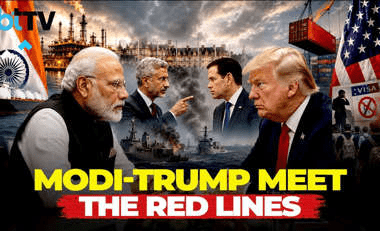
North Block tracks severe energy sabotage vulnerabilities and frozen infrastructure corridors across Chabahar while utilizing the newly operational Oman CEPA to shield regional shipping networks.
The wave of diplomatic optimism following the recent memorandum of understanding between Washington and Tehran has provided temporary relief to global markets, but the underlying structural friction points remain highly volatile. As international observers praise the initial framework, security desks note that Israel’s highly cautious stance highlights the delicate nature of the truce. For policymakers in New Delhi, evaluating the US Iran peace deal economic risk India faces is not an abstract foreign policy exercise; it is a vital step required to protect the nation’s fiscal stability and secure its long-term trade corridors.
The economic stakes could not be higher.
While the sudden reopening of the Strait of Hormuz pulled Brent crude prices back down to a stable $83 per barrel, any breakdown in negotiations would instantly revive maritime conflict in West Asia.
Because the sub-continent relies on imports for over 85% of its crude needs, a return to high-seas hostilities would trigger a major expansion in the country’s trade deficit, placing intense pressure on household budgets and state finances.
Also Read | Imran Khan and Bushra Bibi Sentenced to 17 Years in Jail
Twin Vulnerabilities: Energy Sabotage and the Freezing of Strategic Gateways
A breakdown of the peace framework would target two critical vulnerabilities across India’s macroeconomic architecture, forcing a rapid reorganization of energy logistics and infrastructure investments.
1. The Energy Sabotage Threat
The Strait of Hormuz serves as the primary trade artery for global energy, handling over 20% of international oil traffic. If diplomatic channels fail, a return to active maritime conflict would send Brent crude futures soaring well past the $115 per barrel mark.
This price surge would immediately widen the country’s Current Account Deficit (CAD), forcing a sharp increase in retail prices for petrol, diesel, CNG, and LPG, while driving up manufacturing expenses across the country.
2. The Frozen Infrastructure Corridors
On the logistics front, a re-imposition of heavy U.S. secondary sanctions would instantly paralyze India’s long-term investments in Iran’s Chabahar Port and the wider International North-South Transport Corridor (INSTC).
Despite hard-won commercial agreements signed between New Delhi and Tehran, global shipping lines and international banks would rapidly withdraw from the region to shield themselves from strict U.S. Treasury penalties, effectively freezing India’s main sovereign gateway to Central Asia.
Slicing Through the Corridor Halts and Resource Risks
A prolonged conflict across the Levant would also disrupt long-term connectivity plans, shifting trade parameters across several vital economic sectors:
| Monitored Logistics Vector | Baseline Operational Status | Post-Collapse Crisis Scenario | Direct Consequence for Indian Industry |
| Strait of Hormuz Pass | 100% open under the new MoU. | Instant revival of naval blockades. | Triggers sudden fuel price spikes; delays crude deliveries to local refiners. |
| Chabahar Port Asset | Active development; trade expanding. | Total freeze via secondary U.S. sanctions. | Shuts down the primary alternative trade route leading to Central Asian markets. |
| IMEC Infrastructure | Ongoing diplomatic planning. | Indefinite hold across the Levant. | Blocks the creation of a seamless rail-and-sea link connecting India to Europe. |
| Red Sea Shipping Lanes | Open to standard merchant fleets. | High-velocity missile strikes return. | Drives up ocean freight rates and marine insurance premiums for exporters. |
Note: A prolonged maritime crisis in the Persian Gulf also poses a direct threat to the livelihoods and multi-billion-dollar remittance flows of the nine million Indian expatriates working across the Gulf region, impacting household incomes across several states.
The underlying text of the economic update shows that managing these supply risks requires a significant expansion of the nation’s internal defense networks.
Official reports submitted to the Rajya Sabha reveal that the Indian Strategic Petroleum Reserves Limited (ISPRL) maintains 5.33 million metric tonnes (MMT) of underground storage capacity across caverns in Visakhapatnam, Mangaluru, and Padur, providing roughly 9.5 days of emergency crude coverage.
To boost this buffer, the government has approved a Phase-II expansion under a Public-Private Partnership (PPP) model, adding 6.5 MMT of new storage in Chandikhol and Padur to build a stronger shield against sudden global supply stops.
Also Read | Imran Khan and Bushra Bibi Sentenced to 17 Years in Jail
Three Strategic Countermeasures Defining the Way Forward
To build long-term economic resilience and protect local supply chains from West Asian volatility, India’s economic and defense teams are deploying a three-front mitigation strategy:
The balance of trade security requires moving quickly from planning to execution. The operationalization of the Oman CEPA on June 1, which grants immediate duty-free access to over 99% of Indian exports by value, provides a ready-made logistical shield.
By anchoring regional trade at ports outside the narrow chokepoints of the Gulf and expanding sovereign oil storage buffers, the country can successfully navigate international friction lines.
Taking these proactive steps protects our vital transport networks, insulates local manufacturing from global shocks, and ensures the nation remains on a steady, self-reliant path toward long-term development.
FAQ Section
What is the primary US Iran peace deal economic risk India faces if negotiations break down?
The primary risk is a sudden, severe energy shock. If the preliminary peace agreement collapses, maritime hostilities would likely resume in the Strait of Hormuz, a critical chokepoint handling over 20% of global oil traffic. A disruption there would drive Brent crude prices back past $115 per barrel, widening India’s trade deficit and increasing retail prices for everyday fuels like petrol, diesel, and LPG.
How would a return to U.S. sanctions impact India’s regional infrastructure investments?
A re-imposition of strict U.S. secondary sanctions would instantly freeze foreign investments and cargo logistics at Iran’s Chabahar Port and across the International North-South Transport Corridor (INSTC). Because international banking networks and major shipping lines will withdraw from the region to avoid severe penalties from the U.S. Treasury, India’s main alternative trade route into Central Asia would be effectively blocked.
How does the newly operational India-Oman CEPA protect subcontinental trade?
The India-Oman Comprehensive Economic Partnership Agreement (CEPA), which officially entered into force on June 1, 2026, acts as a vital trade bypass. By granting preferential access to strategic Omani ports like Sohar, Salalah, and Duqm, the treaty allows Indian merchant vessels to unload goods safely outside the volatile Strait of Hormuz, securing an uninterrupted supply line to the wider Gulf Cooperation Council (GCC) markets.
Also Read | Imran Khan and Bushra Bibi Sentenced to 17 Years in Jail
End…