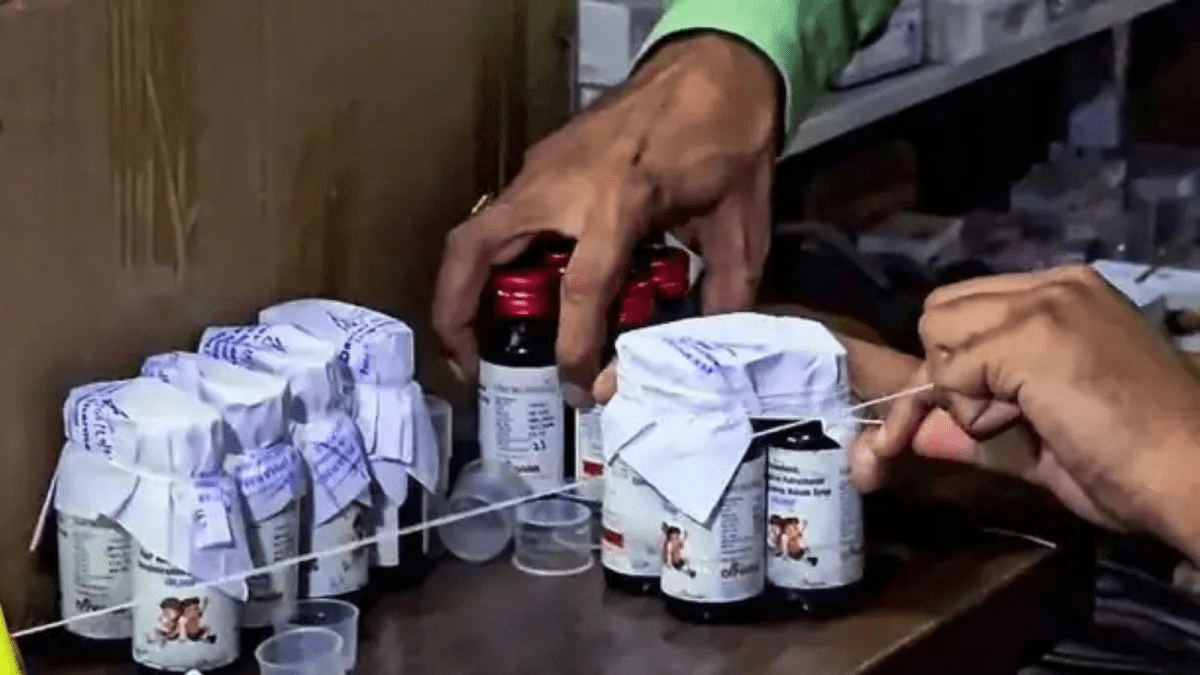
The Health Ministry passes the Drugs Fifth Amendment Rules 2026, removing liquid formulations from the Schedule K exemption list to secure rural public health lines.
The regulatory framework governing the distribution, retail sale, and availability of everyday consumer medicines across the country has experienced a major structural tightening. Issuing a gazette notification on Tuesday, June 16, 2026, the Ministry of Health and Family Welfare officially launched a strict cough syrup prescription mandatory India policy. The central decree completely bans the over-the-counter (OTC) sale of all syrup-based formulations, requiring consumers to present a valid slip from a registered medical practitioner before purchasing.
The sweeping legal update was introduced by enacting the Drugs (Fifth Amendment) Rules, 2026.
The amendment targets the long-standing Drugs Rules of 1945, specifically striking the word “syrups” from a special class of exempted products managed under Schedule K.
By removing this historical classification, federal regulators have brought liquid medications back under standard oversight to prevent substance misuse and protect public safety.
Also Read | Imran Khan and Bushra Bibi Sentenced to 17 Years in Jail
The End of Schedule K Exemptions: Closing the Village Loophole
The primary impact of this legislative change will be felt across rural retail distribution channels. Historically, Schedule K served as a regulatory relief mechanism, relaxing strict licensing requirements to ensure remote populations could access basic health supplies easily.
Before Tuesday’s amendment, the law allowed small shops in villages with a population of less than 1,000 residents to stock and sell common cough syrups without holding a formal retail pharmacy license.
With the new amendment active, this rural loophole is completely closed.
Moving forward, every single bottle of liquid cough medicine sold in the country must flow through a fully licensed pharmacy that complies with the explicit standards of the Drugs and Cosmetics Act of 1940.
Slicing Through the Revised Pharmaceutical Retail Rules
The updated compliance parameters change how consumers, local retailers, and manufacturing plants must handle liquid formulations:
| Monitored Retail Metric | Pre-Amendment OTC Protocols | Revised 2026 Legal Framework | Direct Real-World Impact on Consumers |
| Primary Purchase Prerequisite | Available freely as a basic over-the-counter item. | Valid Doctor’s Prescription Required. | Consumers must consult a physician to obtain a slip before buying. |
| Rural Sales Exemption | Allowed in hamlets under 1,000 people without a license. | Exemption completely removed. | Small village kiosks are legally prohibited from stocking syrups. |
| Dispensing Point Rules | General grocery stores could distribute select lines. | Restricted strictly to licensed pharmacies. | Concentrates all sales under qualified, registered pharmacists. |
| Corporate Audit Mandate | Standard batch tracking profiles. | High-security sales and distribution audits. | Manufacturers must verify that supply chains match licensed outlets. |
Note: The Health Ministry has advised all regional drug controllers to conduct surprise inspections at independent medical stores to ensure immediate compliance with the new prescription tracking rules.
The driving force behind this major policy shift centers on boosting public safety and cleaning up domestic supply chains.
By removing syrups from the un-monitored Schedule K category, the government aims to curb self-medication trends and prevent the misuse of cough formulations containing active sedatives.
Additionally, the tightening of retail rules aligns the country’s domestic market with global manufacturing and safety standards, strengthening international confidence in the quality of locally produced pharmaceuticals.
Also Read | Imran Khan and Bushra Bibi Sentenced to 17 Years in Jail
Five Sequence Steps Enforced on Pharmacies as the OTC Ban Lands
To ensure full compliance with the updated Drugs and Cosmetics Act without facing heavy financial penalties, retail medical storefronts are deploying this five-step verification sequence:
While the transition to a prescription-only model adds an extra step for families treating minor seasonal colds, health experts emphasize that the long-term benefits are substantial.
By eliminating unlicensed sales loops in small villages and tracking every bottle distributed, the country is building a safer, more transparent medical network.
Staying informed and consulting with local clinics early ensures your family has the right guidance to access authentic, safe medications seamlessly as we move toward a healthier future.
FAQ Section
Why did the government make a cough syrup prescription mandatory India rule active this week?
The rule was enacted via the Drugs (Fifth Amendment) Rules, 2026, to tighten regulatory control over liquid medications. By removing “syrups” from the Schedule K exemption list, the Health Ministry aims to prevent self-medication risks, stamp out substance misuse, and ensure all liquid medicines are distributed safely through authorized, verified channels.
Can a local grocery store in a remote village continue to sell basic cough syrups?
No. Under the updated law, the historical population-based exemption has been completely canceled. Previously, small shops in villages with fewer than 1,000 residents could sell cough syrups without a retail license. Now, all syrup formulations must be sold exclusively through fully licensed pharmacies that meet strict national compliance standards.
What should a consumer look for when purchasing liquid cold medications under the new rules?
To buy cough syrup legally, you must first consult a registered doctor to receive a valid prescription showing their license credentials. When you bring the slip to a licensed pharmacy, the pharmacist will log your details alongside the medicine’s batch code and stamp your prescription to complete the sale securely.
Also Read | Imran Khan and Bushra Bibi Sentenced to 17 Years in Jail
End….