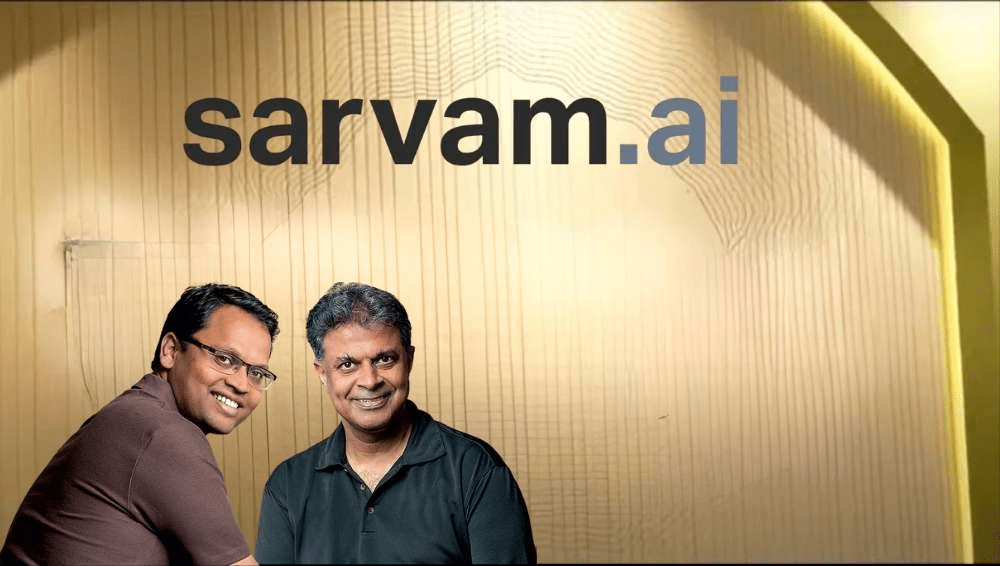
HCLTech leads the blockbuster Series B first close with a strategic $150 million bet, helping the full-stack developer deploy advanced agentic models across the country’s multi-lingual infrastructure.
The institutional push to establish complete technology independence and insulate subcontinental enterprises from international software controls has hit a massive milestone. Closing its highly competitive Series B first-round filings, the enterprise developer officially confirmed that Sarvam joins India AI unicorn club. The fresh injection of $234 million in capital propels the Bengaluru-based platform to a commanding post-money valuation of $1.5 billion, validating its position as the nation’s leading full-stack developer of independent artificial intelligence.
The timing of this capital raise is highly strategic for the country’s technology sector.
The announcement arrives immediately after fresh U.S. regulatory updates required global platforms like Anthropic to freeze foreign national access to their latest advanced frontier models.
By building its systems entirely from the ground up on domestic soil, the startup offers corporate boards and government departments a secure, self-reliant alternative that is completely immune to overseas policy shifts.
Also Read | Imran Khan and Bushra Bibi Sentenced to 17 Years in Jail
The Capital Blueprint: Unpacking the Strategic Tech Alignment
The funding round features a powerful mix of major global venture firms and deep corporate partnerships. Lead investor HCLTech committed $150 million in cash, securing a 10.46% strategic stake in the startup as part of its plan to transition from a traditional IT services provider into a global AI platform powerhouse.
The headline round also drew significant participation from a group of elite global financial groups.
New investor Bessemer Venture Partners joined the registry alongside long-time early-stage backers Khosla Ventures and Peak XV Partners.
The company confirms it is actively working to expand total secured commitments to a $300 million target before locking down its final Series B ledgers later this summer.
Slicing Through the Sarvam Real-World Deployment Matrix
Unlike standard tech companies that simply build basic applications on top of foreign frameworks, the startup builds across every layer of the digital stack—including foundation models, local languages, and enterprise systems:
| Monitored Operational Metric | Baseline FY25 Financials | Current FY26 Performance | Achieved Growth Velocity | Real-World Scale and Impact achieved |
| Annualized Gross Revenue | ₹1.5 Crore Baseline | ₹45.10 Crore Unaudited | 30x Year-on-Year Spike | Reflects rapid commercial adoption across enterprise verticals. |
| Daily Conversational Volume | Short-term test loops. | 2 Million+ Live Checks | Exponential Expansion | Manages real-time voice and text queries for mass audiences. |
| Platform API Requests | Fixed inner-circle logs. | 10 Million+ Every 24 Hours | Systemic Core Integration | Processes high-volume data requests for developers and startups. |
| Audio Processing Capacity | Minor voice transcription. | 500,000+ Hours Per Month | Massive Scaling Move | Translates complex local dialects into clean data pools. |
Note: To lower the cost of deploying advanced models for local engineers, the company slashed prices for its multi-lingual document intelligence platform, Sarvam Vision, by a steep 67%. The platform now digitizes over 35 million pages across all 22 official Indian languages.
The true power of the platform’s multi-lingual stack is highlighted by its massive real-world use cases.
Working with the Ministry of Agriculture and Farmers Welfare, the company deployed automated voice agents to gather real-time data from 17 million farmers in their native dialects.
Concurrently, its conversational engines supported policy renewals for 45 million insurance customers, while a major fintech provider utilized its agentic AI software to support a sales network of over 350,000 field personnel.
Also Read | Imran Khan and Bushra Bibi Sentenced to 17 Years in Jail
Five Sequence Steps Targeted to Scale National Tech Assets
To invest this fresh capital efficiently and accelerate the rollout of its enterprise platforms, the management team has locked down a five-step execution roadmap:
Ultimately, the company’s entry into the elite tech club marks a major turning point for the nation’s digital economy. As tech leaders like Microsoft’s Satya Nadella warn corporate boards against handing their data over to overseas monopolies, building independent technology capability has become an economic necessity.
By combining top-tier research with robust computing power and real-world commercial scale, the country is proving it can build competitive, sovereign technology.
Taking these proactive steps protects our vital data assets, cuts operational costs for businesses, and ensures the nation remains on a steady, self-reliant path toward long-term development.
FAQ Section
Why is the news that Sarvam joins India AI unicorn club significant for the economy?
The milestone is highly significant because it marks the rise of India’s first full-stack sovereign AI unicorn. Rather than just building simple applications on top of western platforms, Sarvam creates its own foundational models (like Sarvam 105B) and localized data software. This independence ensures domestic firms can deploy AI tools safely without risking data exposure to foreign platforms.
How will the strategic partnership with HCLTech directly affect the company’s growth?
HCLTech led the Series B first close with a major $150 million investment, acquiring a 10.46% stake in the startup. This partnership allows Sarvam to pair its advanced machine learning models with HCLTech’s massive engineering team, software intellectual property, and global enterprise networks, creating an immediate path to roll out secure AI solutions to large corporations and government bodies.
What real-world applications are currently running on Sarvam’s AI platforms?
Sarvam’s systems are currently operating at a massive, population-scale baseline. Key deployments include automated multilingual voice agents that collected vital information from 17 million farmers for the Ministry of Agriculture, outreach programs that processed policy renewals for 45 million insurance customers, and autonomous agentic software supporting over 350,000 fintech sales professionals.
Also Read | Imran Khan and Bushra Bibi Sentenced to 17 Years in Jail
End…