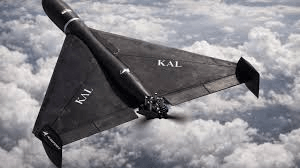
The 5 Base Repair Depot at Sulur takes the helm as the nodal agency, mandating 100% intellectual property rights ownership for the military alongside strict bans on Chinese-origin raw materials.
The strategic framework regulating the development and deployment of unmanned strike systems across the subcontinent’s borders has entered a highly advanced, self-reliant phase. Issuing a localized limited tender enquiry to top-tier domestic defense firms on Tuesday, June 16, 2026, air headquarters officially launched the IAF indigenous kamikaze drones fixed wing project. The military initiative is designed to co-develop fixed-wing, One-Way Attack Unmanned Aerial Systems (OWA-UAS)—commonly referred to as loitering munitions—to establish deep-strike superiority.
The structural design of this program breaks away from traditional defense acquisition methods.
Instead of waiting for third-party vendors to build a product based on pre-set requirements, the Air Force is embedding its own design engineers directly into the private sector assembly line.
Managed directly by the 5 Base Repair Depot (BRD) at Sulur in Coimbatore, this joint development model ensures the military retains absolute control over modifications, keeping the entire platform agile.
Also Read | Imran Khan and Bushra Bibi Sentenced to 17 Years in Jail
The Architecture of the Tender: Retaining the Sovereign IPR Shield
The defining feature of this defense contract is a strict requirement regarding Intellectual Property Rights (IPR). The Air Force has mandated that all core software codes, aerodynamic designs, and electronic circuit blueprints remain the exclusive property of the military.
This strict legal framework eliminates the risk of vendor lock-in that has historically slowed down upgrades for imported equipment.
By holding 100% ownership over the system’s design codes, the service can easily alter software logic, integrate new sensors, or swap payload types as battlefield demands shift.
This enables fast capability updates without being limited by commercial trade blocks or third-party license limits.
Slicing Through the Technical and Mission Parameters
The technical guidelines released by the nodal engineering depot require a highly durable, versatile airframe built to operate smoothly across tough high-altitude borders:
| Monitored Performance Field | Required Military Threshold | Core Strategic Design Parameter | Operational Advantage on the Border |
| Operational Ceiling | Up to 16,000 Feet Target | High-altitude aerodynamic optimization. | Easily clears tough mountain peaks across northern and western borders. |
| Payload Capacity Scale | Minimum 30 kg Net Pool | Modular electronic or explosive bays. | Supports precision warheads, data relays, or multi-sensor cameras. |
| Mission Visibility Track | 24/7 Day and Night Cycles | Infrared and electro-optical stabilization. | Guarantees strike capabilities under complete darkness or low-visibility fog. |
| System Autonomy Code | Fully Autonomous Flight | Waypoint navigation with minimal human input. | Bypasses enemy electronic jamming by executing pre-programmed strike logic. |
Note: While the platforms are engineered as one-way strike weapons, the technical guidelines require developers to build a smart return-to-base backup mode. This safety loop preserves the aircraft if a mission is canceled or a target is not acquired during over-border operations.
The underlying text of the defense brief highlights a strict focus on supply chain security.
The Air Force has implemented an absolute ban on all Chinese-origin components, software algorithms, sub-assemblies, and raw materials.
This strict requirement eliminates the risk of hidden backdoor vulnerabilities, protecting the system from cyber tampering or hardware-based espionage during high-stakes border operations.
Also Read | Imran Khan and Bushra Bibi Sentenced to 17 Years in Jail
Five Sequence Steps Enforced on Developers to Secure Prototype Approval
To qualify for field trials across high-altitude firing ranges, defense engineering clusters must execute this five-step compliance sequence:
Ultimately, the launch of this program marks a major milestone for the domestic aerospace sector. While sovereign AI firms like Bengaluru’s Sarvam are building independent software foundations for businesses, defense teams are proving they can deliver high-end hardware for national security.
By combining the industrial capacity of private tech firms with the design experience of 5 BRD Sulur, the military is securing its own supply of affordable, high-precision weapons.
Taking these proactive steps protects our vital borders, strengthens local manufacturing networks, and ensures the country remains on a steady, independent path toward long-term defense security.
FAQ Section
What is the main objective of the new IAF indigenous kamikaze drones fixed wing project?
The primary goal is to jointly design, develop, and manufacture advanced, fixed-wing one-way attack drones in partnership with domestic private firms. By embedding Air Force engineers from 5 BRD Sulur into the development loop, the military aims to build a scalable strike capability while maintaining absolute ownership over the technology.
Why is the Air Force insisting on holding 100% Intellectual Property Rights for this system?
Holding the IPR protects the military from vendor lock-in, which frequently limits modifications on standard commercial equipment. With full ownership of the source codes and structural designs, the Air Force can independently upgrade software, add new sensors, or modify the airframe to counter evolving electronic threats without needing vendor approval.
What are the core performance requirements for these new loitering munitions?
According to the official technical guidelines, the fixed-wing drones must be capable of operating efficiently at altitudes up to 16,000 feet in both day and night conditions. They must carry a modular payload of at least 30 kg, navigate autonomously via pre-programmed waypoints, and feature a return-to-base backup mode for aborted missions.
Also Read | Imran Khan and Bushra Bibi Sentenced to 17 Years in Jail
End….